
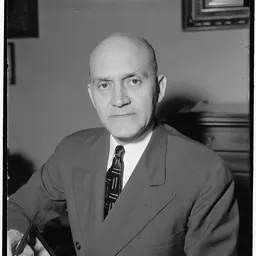
Werner Streib
German general and fighter pilot during World War II
About Werner Streib
Lived 1911 – 1986 (aged 75). Werner Streib was a German military officer, aircraft pilot and bundeswehr.
Werner Streib (13 June 1911 – 15 June 1986) was a German Luftwaffe military aviator during World War II, a night fighter ace credited with 68—one daytime and 67 nighttime—enemy aircraft shot down in about 150 combat missions. All of his nocturnal victories were claimed over the Western Front in Defense of the Reich missions against the Royal Air Force's Bomber Command.
Born in Pforzheim, Streib grew up in the Weimar Republic and Third Reich. Following graduation from school, he began military service in the Reichswehr in 1934 and in 1936, transferred to the Luftwaffe. After training at various postings, he served with Zerstörergeschwader 1 (ZG 1—1st Destroyer Wing) flying a Messerschmitt Bf 110 heavy fighter at the outbreak of World War II. On 10 May 1940, Streib claimed his first aerial victory. In June 1940, he was appointed Staffelkapitän (squadron leader) of the 2. Staffel (2nd squadron) of ZG 1. Shortly later, this squadron became 2. Staffel of Nachtjagdgeschwader 1 (NJG 1—1st Night Fighter Wing). On the night of 19/20 July, Streib claimed his first nocturnal aerial victory. In October 1940, he was appointed Gruppenkommandeur (group commander) of the I. Gruppe of NJG 1 and by end-1940 was credited with nine aerial victories. In 1943, Streib was involved in evaluating the then new Heinkel He 219. Flying the He 219, he claimed five aircraft destroyed on 11/12 June 1943. Streib was appointed Geschwaderkommodore (wing commander) of NJG 1 on 1 July 1943. On 11 March 1944, he was awarded the Knight's Cross of the Iron Cross with Oak Leaves and Swords, the highest award in the military and paramilitary forces of Nazi Germany during World War II, for 66 confirmed victories. In March 1944, he was made Inspector of Night Fighters and he would stay in this post until the end of the war.
Early life Streib, the son of a merchant, was born on 13 June 1911 in Pforzheim, at the time located in the Grand Duchy of Baden of the German Empire. Following graduation from school with his Abitur (university-preparatory high school diploma) and a commercial education in 1934, Streib joined the military service in the Reichswehr with Infanterie-Regiment 14, a regiment of the 5. Infanterie-Division based in Konstanz, as a Fahnenjunker (officer cadet). On 1 October 1935, then an Oberfähnrich (officer candidate), Streib transferred to the newly emerging Luftwaffe (air force) and was promoted to Leutnant (second lieutenant) on 1 April 1936. Streib first served as an air observer with an aerial reconnaissance unit before in 1938, he was posted to the II. Gruppe (2nd group) of Jagdgeschwader 132 "Richthofen", named after the World War I fighter ace Manfred von Richthofen. This unit was later renamed to I. Gruppe (1st group) of Zerstörergeschwader 1 (ZG 1—1st Destroyer Wing).
World War II On Friday 1 September 1939, German forces invaded Poland starting World War II in Europe. At the time, Streib was serving with the Flughafenbetriebskompanie (airport operational company) of I./ZG 1 before becoming a pilot. On 10 May 1940, the first day of the Battle of France, Streib claimed his first aerial victory. Flying a Messerschmitt Bf 110 heavy fighter, he was credited with shooting down a Royal Air Force (RAF) Bristol Blenheim bomber. For this achievement he was awarded the Iron Cross 2nd Class on 17 May 1940. On 6 June 1940, he was appointed Staffelkapitän (squadron leader) of the 2. Staffel (2nd squadron) of ZG 1. This squadron became 2. Staffel of Nachtjagdgeschwader 1 (NJG 1—1st Night Fighter Wing) on 26 June 1940.
Night fighter career In May 1940 the creation of the Nachtjagd (night fighter force) had commenced and I. Gruppe of NJG 1 flew out of Gütersloh airfield. On the night of 19/20 July, Streib claimed his first nocturnal aerial victory over a RAF Armstrong Whitworth Whitley shot down at 02:15 near Saerbeck. Two nights later at 01:22, Streib claimed his second nocturnal, his third overall, victory over another Whitley shot down north of Münster. On 30/31 August 1940, Streib claimed two aerial victories. He was credited with shooting down a Vickers Wellington at 23:24 north-northeast of Emmerich am Rhein and a Handley Page Hampden at 00:32 near Arnhem. On the night of 30 September to 1 October, Streib was victorious over two Wellington and one Hampden bombers. He claimed the first Wellington at 22:49 near Bersenbruck and the second at 23:35 near Menslage. The Hampden was shot down at 23:19 near Badbergen. This took his total to eight victories in overall, including seven by night and one by day. He was also awarded the Knight's Cross of the Iron Cross on 6 October 1940 as Oberleutnant (first lieutenant) and Staffelkapitän of the 2./NJG 1. After Wolfgang Falck, Streib was the second member of the night fighter force and first pilot to receive this distinction. On 7 October, he was promoted to Hauptmann (captain) and appointed Gruppenkommandeur (group commander) of the I. Gruppe of NJG 1.
On the night of 14/15 October, Streib was credited with the destruction of another Hampden at 03:05 northeast of Calbe, this was also his last of 1940 and ninth overall. For these achievements he received the German Cross in Gold , awarded on 26 February 1941. At 22:18 on 10/11 March 1941, Streib claimed his ninth nocturnal victory when he shot down a Hampden southwest of Venlo. Four nights later, on 14/15 March 1941, a Wellington shot down at 22:32 near Helenaveen became his tenth, eleventh overall, aerial victory. On 10/11 April 1941, he was credited with shooting down a Hampden at 22:49 west of Roggel and a second Hampden at 23:02 near Ittervoort. A Wellington claimed at 23:39 on 17/18 April 1941 east of Weert became his 13th, 14th overall, victory. One Whitley shot down on each night of 30 June to 1 July and 3/4 July 1941 respectively, took his total to 16 aerial victories overall. The first Whitley was claimed at 01:19 northwest of Waldfeucht while the second was recorded at 02:33 east of Asten. Two Wellingtons fell to his guns on the night of 15/16 July. The first aircraft was claimed at 00:54 near Someren and the second at 01:45 near Geyspers.
Kammhuber Line A map of part of the Kammhuber Line. The 'belt' and night fighter 'boxes' are shown. By mid-1940 by Generalmajor (Brigadier General) Josef Kammhuber had established a night air defense system dubbed the Kammhuber Line. It consisted of a series of control sectors equipped with radars and searchlights and an associated night fighter. Each sector named a Himmelbett (canopy bed) would direct the night fighter into visual range with target bombers. At 02:19 on the night of 6/7 August, Streib claimed his 18th nocturnal victory over a Whitley shot down northeast of Eindhoven. Streib claimed his 20th nocturnal victory on the night of 16/17 August. At 02:05 he claimed an Avro Manchester bomber shot down northeast of Sittard and at 02:52 a Whitley bomber north of Roermond. On the night of 27/28 December, Streib claimed his last victories of 1941 taking his total to 23, including one daytime victory. At 20:15 and at 20:45, he claimed a Wellington and a Whitley, both over the Zuiderzee.
Two Wellington's claimed on 26/27 March 1942, were his first on 1942. The first Wellington was shot down at 23:51 in the vicinity of Enkhuizen and the second at 23:58 southeast of Zutphen. He again claimed two Wellington's two weeks later. On 10/11 April at 00:41, a first Wellington was shot down south Nijmegen, the second at southwest of Venlo. At 00:56, southeast of Tilburg, and at 02:05, near 's-Hertogenbosch, on the night of 30/31 May, Streib was credited with two Whitleys shot down.
Streib claimed his last victory of 1942 on the night of 20/21 December. He shot down a Wellington at 20:13, southeast of 's-Hertogenbosch. His first victory of 1943, his 40th nocturnal, was claimed on the night of 9/10 January when he shot down an Avro Lancaster bomber at 19:15, west of Venlo. Four nights later, he claimed two further Lancasters shot down, the first at 19:16 southwest of Apeldoorn and the second at 19:44, southwest of Hoog Soeren. On the night of 2/3 February 1943, Streib was credited with shooting down a Lancaster bomber at 21:12, south of Eindhoven followed by four-engines bomber of unknown type at 21:30, south of Venlo. These two claims took his total to 45 aerial victories, including one by day. On 26 February 1943, Streib was awarded the Knight's Cross of the Iron Cross with Oak Leaves as Major and Gruppenkommandeur of the I./NJG 1. He was the 197th member of the German armed forces to be so honored. He received the Oak Leaves from Adolf Hitler personally at his office in the New Reich Chancellery in Berlin on 11 May 1943. During the night of the 29/30 March he shot down Wellington HE545 from No. 166 Squadron RAF. Pilot Officer James Robert Arthur Hodgson and his crew were posted missing. On the night of the 3/4 April 1943 Streib claimed a trio of Halifax bombers on an operation to attack Essen. One of the bombers was Halifax II DT723, LQ-F, crewed by Royal Canadian Air Force (RCAF) personnel from No. 504 Squadron RAF and piloted by Pilot Officer L. Lago. All the crew with the exception of Flight Sergeant W. S. Beaty survived to be taken prisoner of war.
Testing the Heinkel He 219 Streib was involved in evaluating the then new Heinkel He 219 for its suitability as night fighter. On 25 March 1943, Streib flew He 219 V1 in mock combat against a Junkers Ju 188 E-1, piloted by Oberst Viktor von Loßberg, at the Erprobungstelle Rechlin, the primary Luftwaffe aviation service-test facility, located just south of Rechlin. In this test the He 219 proved itself to be more than faster than the Ju 188. The He 219 also easily outmaneuvered the Ju 188 in this test. The theoretically greater rate of climb of the Ju 188 proved to be incorrect.
On the night of 11/12 June 1943, Streib, together with radio operator (Bordfunker) Unteroffizier Helmut Fischer, flew the prototype version He 219 V9, with the pre-production label A-0/R2 "G9+FB" (Werknummer 190 009—factory number), in combat against the RAF and claimed five aerial victories. That night, Bomber Command had sent a force of 783 heavy bombers on an attack against Düsseldorf. Of this attack force, made up of Wellington, Handley Page Halifax, Short Stirling and Avro Lancaster bombers, 693 aircraft actually hit the target. His five victory claims included a Halifax shot down at 01:05 in location southeast of Roermond, a second Halifax shot down at 01:20 in location southwest of Rheinberg, a third Halifax shot down at 01:55 in location north of Mook, a Lancaster shot down at 02:16 in location southwest of Nijmegen in the center of Mill, and a fourth Halifax shot down at 02:22 in location west of Sambeek. This "ace-in-a-day" achievement took his total to 55 nocturnal aerial victories.
However, when returning to Venlo, Streib crashed the He 219 during landing. Low on fuel, Streib reported that during the landing approach the cockpit iced up, impairing his vision, necessitating an instrument approach. He activated the electrically controlled flaps and lowered the landing gear. Unnoticed by Streib, the flaps did not lock down and the electrically controlled flaps retracted themselves. Subsequently, his airspeed was too high during the final approach. Streib, misjudging his airspeed, flared the aircraft and slammed it into the runway. The resulting shockwave ruptured the tires; the starboard engine and cockpit were torn off the aircraft. Both Streib and Fischer escaped with minor injuries.
High command At 01:30 on the night of 12/13 June, Streib was credited with the destruction of a Lancaster south of Doetinchem. A Stirling claimed at 01:30 on 22 June northwest of Venlo took his total to 57 nocturnal victories. On 24/25 June 1943, he was credited with a victory over Halifax claimed at 00:51 near Kempen. Streib was appointed Geschwaderkommodore (wing commander) of NJG 1 on 1 July 1943, succeeding Falck in this capacity. On the night of 25/26 July 1943, Streib claimed four aerial victories, the second of which his 60th nocturnal. At 00:28, he claimed to have shot down a Stirling bomber approximately northeast of Eindhoven. His second of the night and 60th nocturnal overall was claimed over a Lancaster at 00:46 about north of Helmond. The third claim that night, a Halifax was made at 01:20 in a position southeast of Oisterwijk, and the fourth, another Lancaster, at 01:42 approximately northeast of 's-Hertogenbosch. One of the bombers was Halifax JA855, PM-A, from No. 103 Squadron RAF. Squadron leader G. R. Carpenter was captured but only three other members survived.
On 11 March 1944, he was awarded the Knight's Cross of the Iron Cross with Oak Leaves and Swords for 66 confirmed victories. The presentation was made by Hitler at the Berghof in Berchtesgaden on 4 April. On 23 March 1944, he was made Inspector of Night Fighters and he would stay in this post as Oberst until the end of the war. In consequence of this appointment, command of NJG 1 was given to Oberstleutnant Hans-Joachim Jabs. On 11 November, Reichsmarschall (Marshal of the Realm) Hermann Göring, in his role as commander-in-chief of the Luftwaffe, organized a meeting of high-ranking Luftwaffe officers, including Streib. The meeting, also referred to as the "Areopag" was held at the Luftkriegsakademie (air war academy) at Berlin-Gatow. This Luftwaffe version of the Greek Areopagus—a court of justice—aimed at finding solutions to the deteriorating air war situation over Germany.
Often called 'Father of the Nachtjagd''' Streib helped develop the operational tactics used by the Nachtjagd during the early to mid-war years, and along with the likes of Falck made the Luftwaffes night fighter force an effective fighting force against the RAF Bomber Command offensive. He is mentioned in the book Almost a Lifetime by John McMahon when he shot down John's Lancaster, killing all but John.
Later life After the war he worked in the grocery business before joining the Bundeswehr on 16 March 1956. Streib was asked to testify in the aftermaths of the 1961 F-84 Thunderstreak incident. For three years he commanded the pilot school A in Landsberg am Lech, equipped with the T-6 Texan. He was responsible for training the beginner pilots in the West German Air Force. Brigadegeneral Streib's military career ended with his retirement on 31 March 1966. His last position was Inspizient Fliegende Verbände (Inspector of Flying Forces). He died on 15 June 1986 in Munich and was buried at the Ostfriedhof (Eastern Cemetery) in Munich with military honors.
Summary of career
Aerial victory claims According to US historian David T. Zabecki, Streib was credited with 66 aerial victories. Obermaier and Scutts list Streib with 68—one daytime and 67 nighttime—aerial victories, claimed in about 150 combat missions. Spick also states that Streib was credited with 66 aerial victories, including one by day. Boiten lists him with 65 confirmed plus one further unconfirmed aerial victory. Foreman, Parry and Mathews, authors of Luftwaffe Night Fighter Claims 1939 – 1945, researched the German Federal Archives and found records for 67 nocturnal victory claims. Mathews and Foreman also published Luftwaffe Aces — Biographies and Victory Claims, listing Streib with 66 claims, including one as a Zerstörer pilot, plus two further unconfirmed claims.
Chronicle of aerial victories Claim(total) Claim(nocturnal) Date Time Type Location Serial No./Squadron No. – 3. Staffel of Zerstörergeschwader 1 – 1 10 May 1940 12:00 Blenheim Waalhaven – 2. Staffel of Nachtjagdgeschwader 1 – 2 1 20 July 1940 02:15 Whitley Saerbeck 3 2 22 July 1940 01:22 Whitley north Münster Whitley N1487/No. 78 Squadron RAF 4 3 30 August 1940 01:22 Wellington north-northeast Emmerich am Rhein Wellington T2559/No. 214 Squadron RAF 5 4 30 August 1940 23:24 Hampden Arnhem Hampden L4079/No. 50 Squadron RAF 6 5 30 September 1940 22:49 Wellington Bersenbruck 7 6 30 September 1940 23:19 Hampden Badbergen 8 7 30 September 1940 23:35 Wellington Menslage 9 8 15 October 1940 03:05 Hampden northeast Calbe – Stab I. Gruppe of Nachtjagdgeschwader 1 – 10 9 10 March 1941 22:18 Hampden southwest Venlo 11 10 14 March 1941 22:32 Wellington Helenaveen 12 11 10 April 1941 22:49 Hampden west Roggel 13 12 10 April 1941 23:02 Hampden Ittervoort 14 13 17 April 1941 23:39 Hampden east Weert Wellington R1599/No. 311 Squadron RAF 15 14 1 July 1941 01:19 Whitley northwest Waldfeucht 16 15 4 July 1941 01:19 Whitley east Asten 17 16 16 July 1941 01:19 Wellington Someren 18 17 16 July 1941 01:45 Wellington Geyspers 19 18 7 August 1941 02:19 Whitley northeast Eindhoven Whitley Z6488/No. 51 Squadron RAF 20 19 17 August 1941 02:19 Manchester northeast Sittard 21 20 17 August 1941 02:19 Whitley north Roermond 22 21 27 December 1941 20:15 Wellington Zuiderzee 23 22 27 December 1941 20:45 Whitley Zuiderzee 23? 26 March 1942 23:51 Wellington Enkhuizen 24? 26 March 1942 23:58 Wellington southeast Zutphen 24 25 11 April 1942 00:41 Wellington south Nijmegen 25 26 11 April 1942 00:49 Wellington southwest Venlo Wellington R1230/No. 304 Polish Bomber Squadron 26 27 31 May 1942 00:56 Whitley southeast Tilburg 27 28 31 May 1942 02:05 Whitley 's-Hertogenbosch 28 29 2 June 1942 00:46 Wellington south-southeast Venlo 29 30 3 June 1942 00:46 Wellington west Viersen 30 31 1 August 1942 00:35 Blenheim south-southeast Kevelaer Blenheim V6432/No. 18 Squadron RAF 31 32 1 August 1942 01:44 Wellington north Stokkem 32 33 1 August 1942 02:28 Wellington southwest Venlo 33 34 6 August 1942 01:18 Halifax north Eindhoven 34 35 27 August 1942 23:57 Wellington Eindhoven 35 36 28 August 1942 01:04 Stirling Eichem 36 37 11 September 1942 00:34 Wellington east 's-Hertogenbosch 37 38 17 September 1942 01:12 Wellington southeast Eindhoven 38 39 20 December 1942 20:13 Wellington southeast 's-Hertogenbosch 39 40 9 January 1943 19:15 Lancaster west Venlo Lancaster R5738/No. 97 Squadron RAF 40 41 13 January 1943 19:16 Lancaster southwest Apeldoorn Lancaster W4261/No. 106 Squadron RAF 41 42 13 January 1943 19:44 Lancaster southwest Hoog Soeren 42 43 2 February 1943 21:12 Lancaster south Eindhoven Lancaster ED440/No. 49 Squadron RAF 43 44 2 February 1943 21:30 four-engined bomber southwest Venlo Lancaster ED488/No. 50 Squadron RAF 44 45 29 March 1943 23:15 Wellington north Arnhem Wellington HE545/No. 166 Squadron RAF 45 46 3 April 1943 22:52 Halifax west Arnhem 46 47 3 April 1943 23:00 Halifax northwest Kleve Halifax DT808/No. 405 (Vancouver) Squadron RCAF 47 48 3 April 1943 23:30 Halifax north Roermond Halifax DT635/No. 158 Squadron RAF 48 49 9 April 1943 23:25 Halifax northeast 's-Hertogenbosch 49 50 28 May 1943 23:25 Lancaster northwest Arnhem 50 51♠ 12 June 1943 01:05 Halifax southeast Roermond Lancaster W4983/No. 467 Squadron RAAF 51 52♠ 12 June 1943 01:20 Halifax southwest Rheinberg Halifax JB972/No. 408 Squadron RCAF 52 53♠ 12 June 1943 01:55 Halifax north Mook Halifax HR719/No. 158 Squadron RAF 53 54♠ 12 June 1943 02:16 Lancaster southwest Nijmegen Lancaster DS647/No. 115 Squadron RAF 54 55♠ 12 June 1943 02:22 Halifax west Sambeek Halifax W7932/No. 78 Squadron RAF 55 56 13 June 1943 01:30 Lancaster south Doetinchem 56 57 22 June 1943 01:30 Stirling northwest Venlo 57 58 25 June 1943 00:51 Halifax Kempen Halifax HR816/No. 405 (Vancouver) Squadron RCAF – Stab of Nachtjagdgeschwader 1 – 58 59 26 July 1943 00:28 Stirling northeast Eindhoven Stirling EE906/No. 620 Squadron RAF 59 60 26 July 1943 00:46 Lancaster north Helmond 60 61 26 July 1943 01:20 Halifax southeast Oisterwijk Halifax JD207/No. 10 Squadron RAF 61 62 26 July 1943 01:42 Lancaster northeast 's-Hertogenbosch Lancaster ED734/No. 156 Squadron RAF 62 63 30 July 1943 01:45 Halifax northwest Stade 63 64 24 August 1943 01:23 Halifax Heiligensee Halifax HR944/No. 158 Squadron RAF 64 65 20 September 1943 01:01 Halifax Zenderen southeast Eindhoven 65 66 4 December 1943 02:15 Lancaster Braunschweig Lancaster DS733/No. 426 (Thunderbird) Squadron RCAF 66 67 4 December 1943 02:50 Lancaster near Lingen
Awards Wound Badge in Black Front Flying Clasp of the Luftwaffe for Night Fighters in Gold Combined Pilots-Observation Badge Iron Cross (1939) 2nd Class (17 May 1940) 1st Class (20 June 1940) German Cross in Gold on 26 February 1942 as Hauptmann in the I./Nachtjagdgeschwader 1 Knight's Cross of the Iron Cross with Oak Leaves and Swords Knight's Cross on 6 October 1940 as Oberleutnant and Staffelkapitän of the 2./Nachtjagdgeschwader 1 197th Oak Leaves on 26 February 1943 as Major and Gruppenkommandeur of the I./Nachtjagdgeschwader 1 54th Swords on 11 March 1944 as Major and Geschwaderkommodore of Nachtjagdgeschwader'' 1
Don’t just read it —
keep it.
Full-length biographies made to live with: read them, listen on the way to work, watch them tonight.
- E-book
- Audio
- Video
Instant download · yours to keep · every purchase keeps this site free
Important facts
People in Werner Streib's life
Named in this biography and alive at the same time





Related people
Same field, nearest in time


Contemporaries
People whose lives overlapped Werner Streib's






Frequently asked questions
Who was Werner Streib?
German general and fighter pilot during World War II (1911–1986)
When was Werner Streib born?
Werner Streib was born on 13 June 1911 in Pforzheim.
When did Werner Streib die?
Werner Streib died on 15 June 1986 in Munich.
What was Werner Streib's occupation?
Werner Streib was a military officer, aircraft pilot and bundeswehr.
What nationality was Werner Streib?
Werner Streib was German.
Sources & further reading
Cite this page
APA: Biography.guide. (2026). Werner Streib. https://biography.guide/werner-streib/
MLA: "Werner Streib." Biography.guide, https://biography.guide/werner-streib/.
Chicago: "Werner Streib." Biography.guide. https://biography.guide/werner-streib/.
Data last updated: 2026-09-20 · Spot an error? Report a correction.
Page generated 2026-09-27 05:32 UTC