
About Werner E. Mosse
Lived 1918 – 2001 (aged 83). Werner E. Mosse was a British and German historian and university teacher.
Werner Eugen Emil Mosse (5 February 1918 – 30 April 2001) was a German-born British historian specialising in 19th-century European diplomacy and German-Jewish economic history. Fleeing Nazi persecution as a Jewish refugee, he became a prominent scholar of Imperial Russia and the Crimean War. His scholarship is recognised for its critical analysis of Great power politics and international relations.
Early life and education Mosse was raised in a German-Jewish upper-middle-class family in Charlottenburg and Stangenhagen, near Berlin. His father was a wealthy newspaper owner, as was his great-uncle Rudolf Mosse. He and his two younger siblings were sent by their parents to safety in Great Britain in 1933; his father died the same year while on the way to a concentration camp, allegedly by suicide. Mosse attended St Paul's School and Corpus Christi College, Cambridge, where he was awarded a first-class degree in history in 1939.
Research and major works Mosse's scholarship focused on two areas: European diplomacy and German-Jewish economic history.
Diplomatic history His seminal work, The Rise and Fall of the Crimean System, 1855–1871 (1963), analysed the collapse of the post-Crimean War settlement. Mosse highlighted the fragility of the Black Sea clauses, arguing that they were untenable due to Russia's resurgence and Great Power hypocrisy.
German-Jewish economic history In later decades, Mosse shifted focus to German-Jewish entrepreneurship. His 1987 book Jews in the German Economy documented the outsized role of Jewish industrialists in pre-Nazi Germany, countering stereotypes of Jews as solely financiers.
Other works Alexander II and the Modernization of Russia (1958) examined reforms under Tsar Alexander II. The European Powers and the German Question, 1848–1871 (1958) explored diplomatic tensions before German unification.
Reception and legacy Mosse's work was praised for its archival rigour and interdisciplinary approach. Historian Geoffrey Hosking noted his "ability to bridge Russian and German historiography." His papers are archived at the University of East Anglia and the Leo Baeck Institute.
Important publications The European Powers and the German Question 1848–1871, New York 1981 (zuerst 1958). Alexander II and the Modernization of Russia, 2nd, expanded edition, London 1992 (first published 1958). The Rise and Fall of the Crimean System 1855–1871, London and New York 1963. (Ed.): Decisive Year 1932. On the Jewish Question in the Final Phase of the Weimar Republic. An anthology (= Series of Scientific Papers of the Leo Baeck Institute, Vol. 13), 2nd, revised and expanded edition, Tübingen 1966 (first published 1965). (Ed., with Arnold Paucker ): German Jewry in War and Revolution 1916 to 1923. An anthology (= series of scientific papers of the Leo Baeck Institute, vol. 25), Tübingen 1971, and . Liberal Europe. The Age of Bourgeois Realism 1848–1875, London and New York 1974. (Ed., with Arnold Paucker): Jews in Wilhelminian Germany 1890–1914. An anthology (= series of scientific papers of the Leo Baeck Institute, vol. 33), 2nd, with a preface, supplemented edition, Tübingen 1998 (first published 1976), (first published ), including pp. 57–113 Mosse's essay The Jews in Economy and Society. (Ed.): Revolution and Evolution 1848 in German-Jewish History (= series of scientific papers of the Leo Baeck Institute, Vol. 39), Festschrift for Robert Weltsch, Tübingen 1981. Nobility and bourgeoisie in 19th-century Europe, in: Jürgen Kocka (ed.): Bourgeoisie in the 19th century, vol. 2, Munich 1988, pp. 276–314. The German-Jewish Economic Élite 1820–1935. A Socio-cultural Profile, Oxford and New York 1989. (Ed., together with Julius Carlebach ): Second Chance. Two Centuries of German-speaking Jews in the United Kingdom (= Series of scientific papers of the Leo Baeck Institute, Vol. 48), Tübingen 1991. (Ed., together with Hans Pohl ): Jewish entrepreneurs in Germany in the 19th and 20th centuries (= Journal of Business History, Supplement 64), Stuttgart 1992. Introduction to: Albert and Lina Mosse: Almost Like My Own Country. Letters from Japan 1886–1889, edited by Shirô Ishii et al., Munich 1995. An economic history of Russia 1856–1914, London 1996, u. .
literature Biographical Handbook of German-speaking Emigration after 1933, edited by Werner Röder and Herbert A. Strauss, Vol. 2, T. 2, Munich et al. 1983, p. 836. Elisabeth Kraus, The Mosse Family. German-Jewish Bourgeoisie in the 19th and 20th Centuries, Munich 1999, Peter Pulzer, Obituary. Professor Werner Eugen Mosse, 1918–2001, in: Rainer Liedtke and David Rechter (eds.): Towards normality? Acculturation and Modern German Jewry (= Series of scientific papers of the Leo Baeck Institute, Vol. 68), Tübingen 2003, pp. V ff..
Don’t just read it —
keep it.
Full-length biographies made to live with: read them, listen on the way to work, watch them tonight.
- E-book
- Audio
- Video
Instant download · yours to keep · every purchase keeps this site free
Important facts
People in Werner E. Mosse's life
Named in this biography and alive at the same time
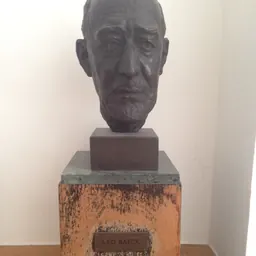





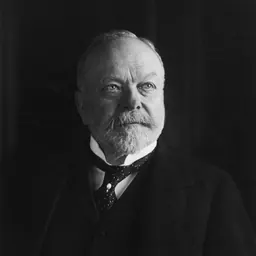
Related people
Same field, nearest in time
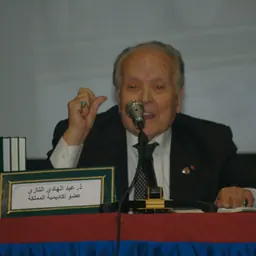
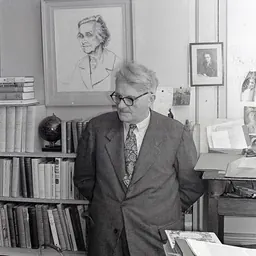
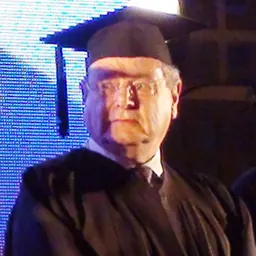
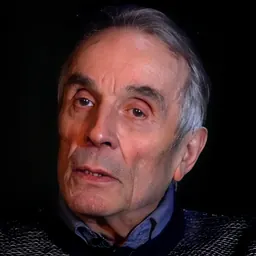
Contemporaries
People whose lives overlapped Werner E. Mosse's

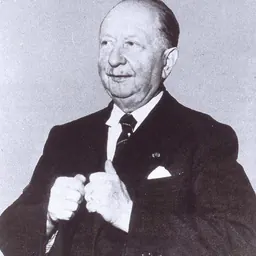
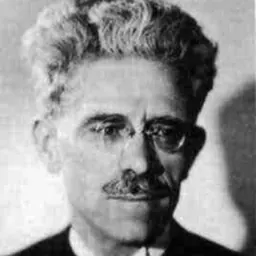

Frequently asked questions
Who was Werner E. Mosse?
British historian (1918-2001)
When was Werner E. Mosse born?
Werner E. Mosse was born on 5 February 1918 in Berlin.
When did Werner E. Mosse die?
Werner E. Mosse died on 30 April 2001.
What was Werner E. Mosse's occupation?
Werner E. Mosse was a historian and university teacher.
What nationality was Werner E. Mosse?
Werner E. Mosse was British and German.
Sources & further reading
Cite this page
APA: Biography.guide. (2026). Werner E. Mosse. https://biography.guide/werner-e-mosse/
MLA: "Werner E. Mosse." Biography.guide, https://biography.guide/werner-e-mosse/.
Chicago: "Werner E. Mosse." Biography.guide. https://biography.guide/werner-e-mosse/.
Data last updated: 2026-09-20 · Spot an error? Report a correction.
Page generated 2026-09-27 05:15 UTC