
About Wendy Hall
Born 1952. Wendy Hall is a British computer scientist, mathematician and university teacher, known for Web science.
Dame Wendy Hall (born 25 October 1952) is a British computer scientist. She is Regius Professor of Computer Science at the University of Southampton.
Early life and education Wendy Hall was born in west London and educated at Ealing Grammar School for Girls. She studied for undergraduate and postgraduate degrees in mathematics at the University of Southampton. She completed her Bachelor of Science (BSc) degree in 1974, and her Doctor of Philosophy (PhD) degree in 1977. She later completed a Master of Science degree in Computing at City University London. Her team invented the Microcosm hypermedia system (before the World Wide Web existed), which was commercialised as a start-up company, Multicosm Ltd.
Wendy Hall and Hugh Davis led the Multimedia Research Group at the University of Southampton, which created commercial systems near the beginning of the hypertext and database system era, including: Microcosm 1994 (which used link services) Distributed Link Services 1995 Multicosm 1998 Portal Maximizer 2001 These systems used a separate server to hold a linkbase and recorded links from anchor points within a Word or pdf document, similar to Vannevar Bush’s original vision of hypertext documents. This linkbase could then be updated and maintained as a separate database to create a separate, flexible overlay for any document.
Hall was appointed the university's first female professor of engineering in 1994. She then served as Head of the School of Electronics and Computer Science from 2002 to 2007.
In 2006, along with Tim Berners-Lee, Nigel Shadbolt and Daniel Weitzner, Hall became a founding director of the Web Science Research Initiative (WSRI). Now known as the Web Science Trust, the WSRI was originally a collaboration between the University of Southampton (ECS) and MIT (CSAIL) which aimed to coordinate and support the study of the World Wide Web. The WSRI's activities helped to formally establish the concept of Web Science,
Hall was President of the British Computer Society from 2003 to 2004 and of the Association for Computing Machinery from 2008 to 2010. Since 2014, she has served as a Commissioner for the Global Commission on Internet Governance.
In 2017, Hall was appointed Regius Professor of Computer Science at the University of Southampton.
In 2020, she was appointed as Chair of the Ada Lovelace Institute by the Nuffield Foundation – the organisation's independent funder, succeeding Alan Wilson.
Since 2022, Hall has been the Editor-in-Chief of Royal Society Open Science and served as the Chair of the Royal Society Publishing Board from 2017 to 2022.
Awards and honours Hall was appointed Commander of the Order of the British Empire (CBE) in the 2000 Birthday Honours. She was promoted to Dame Commander of the Order of the British Empire (DBE) in the 2009 New Year Honours.
Hall also has honorary degrees from Oxford Brookes University, Glamorgan University, Cardiff University, Open University of Catalonia and the University of Pretoria. She is a Fellow of the British Computer Society (FBCS) (also serving as president) and a Fellow of the Institution of Engineering and Technology (FIET). In 2002, she was appointed a Fellow of the City and Guilds (FCGI). Hall was elected a Fellow of the Royal Society (FRS) in 2009.
Her nomination for the Royal Society reads:
In 2006, she was the winner of the ABIE Award for Technical Leadership from the Anita Borg Institute.
In 2010, she was named a Fellow of the ACM "for contributions to the semantic web and web science and for service to ACM and the international computing community." In 2016, she was named a Kluge Chair in Technology and society at the Library of Congress. She is a member of the Advisory Council for the Campaign for Science and Engineering, and a member of the Academia Europaea.
She was one of the 30 women identified in the BCS Women in IT Campaign in 2014 and was featured in the e-book of these 30 women in IT, "Women in IT: Inspiring the next generation" produced by the BCS, The Chartered Institute for IT, as a free download e-book, from various sources.
In February 2013, she was assessed as one of the 100 most powerful women in the United Kingdom by Woman's Hour on BBC Radio 4. In her Desert Island Discs in 2014, on the same radio channel, she chose Wikipedia as the book she would most like if abandoned on a desert island.
Personal life Hall is married to Peter Chandler, a plasma physicist.
Don’t just read it —
keep it.
Full-length biographies made to live with: read them, listen on the way to work, watch them tonight.
- E-book
- Audio
- Video
Instant download · yours to keep · every purchase keeps this site free
Important facts
People in Wendy Hall's life
Named in this biography and alive at the same time


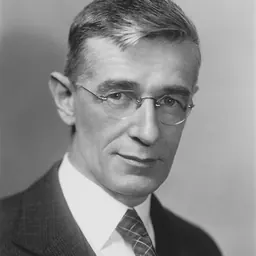
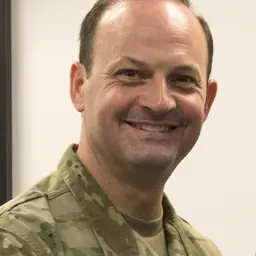

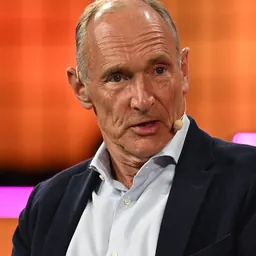


Related people
Same field, nearest in time
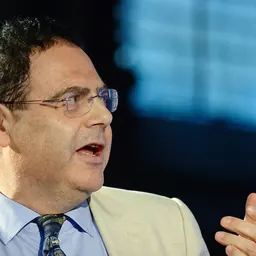



Contemporaries
People whose lives overlapped Wendy Hall's



Frequently asked questions
Who is Wendy Hall?
British computer scientist (1952-)
When was Wendy Hall born?
Wendy Hall was born on 25 October 1952 in London.
What is Wendy Hall's occupation?
Wendy Hall is a computer scientist, mathematician and university teacher.
What is Wendy Hall known for?
Wendy Hall is known for Web science.
What nationality is Wendy Hall?
Wendy Hall is British.
Sources & further reading
Cite this page
APA: Biography.guide. (2026). Wendy Hall. https://biography.guide/wendy-hall/
MLA: "Wendy Hall." Biography.guide, https://biography.guide/wendy-hall/.
Chicago: "Wendy Hall." Biography.guide. https://biography.guide/wendy-hall/.
Data last updated: 2026-09-27 · Spot an error? Report a correction.
Page generated 2026-09-27 05:16 UTC