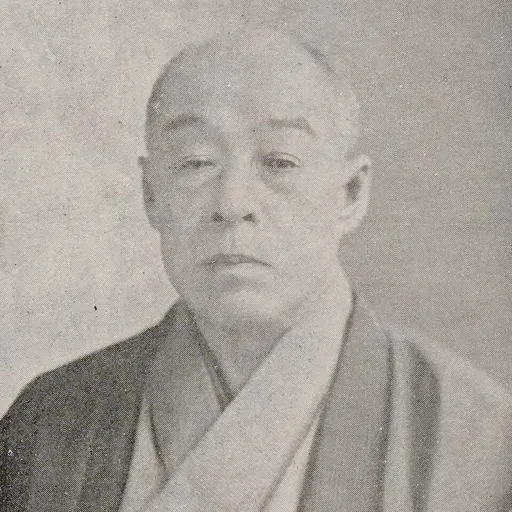
About Watanabe Shōtei
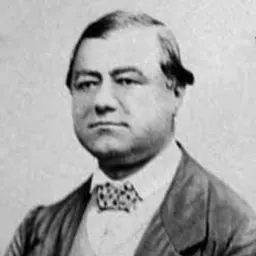
Lived 1852 – 1918 (aged 65–66). Watanabe Shōtei was a Japanese painter, printmaker and illustrator.
, also known as Watanabe Shōtei, was a Japanese Nihonga painter who was one of the first Japanese painters to visit Europe, attending the 1878 International Exhibition in Paris and being awarded a medal. He blended Western realism with the delicate colours and washes of the Kikuchi Yōsai school, introducing a new approach to kachōga (bird-and-flower painting).
Biography Born as Yoshikawa Yoshimata in Edo, he was later adopted by the family of his father's literary friend, Watanabe Mitsue. His early studies were at age sixteen under Kikuchi Yōsai (1788–1878) after which he spent a brief time in the studio of the painter and lacquer artist, Shibata Zeshin (1807–1891).
In 1878 he travelled in the United States and Europe, remaining in Paris for three years and becoming the first Nihonga artist to live in Europe with the aim of studying Western painting.
Travel abroad was extremely difficult for Japanese artists in the early Meiji period (1868–1912), and it is unknown how Shōtei managed this. A few years earlier, in 1875, he had produced designs for an export company, which may have provided him with the necessary contacts. His works have enjoyed great popularity in the West, and a large number are to be seen in both European and American collections.
Summer. Blooming wisteria and fish, National Museum in Kraków
On his return from Europe, Seitei created designs for ceramics and cloisonné, working with the cloisonné artist Namikawa Sosuke (1847–1910), leading to acclaim from abroad. He maintained a prodigious output of paintings and illustrations, producing three outstanding albums: ('Picture album of Seitei's bird and flower'), 1890–91; ('Bird and flower album'), 1903; and the last series published in 1916 also entitled .
Watanabe Shotei also edited and contributed to the art magazine (The World of Art), of which the first number was published by Wada Tokutaro in the year Meiji 23 (1890) and printed by Yoshida Ichimatsu with the blockcuts carried out by Goto Tokujiro. Besides Watanabe's illustration and that of Yoshitoshi Kyosai, there were ten other artists who contributed. Twenty-two of his bird and flower prints were published by Okura Yasugorō in 1916.
During his life he received many awards, in expositions in and out of Japan. He became a major inspiration to the following generation of Nihonga artists, notably Mizuno Toshikata (1866–1908) and Kaburagi Kiyokata (1878–1973).
Gallery
Don’t just read it —
keep it.
Full-length biographies made to live with: read them, listen on the way to work, watch them tonight.
- E-book
- Audio
- Video
Instant download · yours to keep · every purchase keeps this site free
Important facts
People in Watanabe Shōtei's life
Named in this biography and alive at the same time

Related people
Same field, nearest in time
Contemporaries
People whose lives overlapped Watanabe Shōtei's





Frequently asked questions
Who was Watanabe Shōtei?
Japanese painter (1852-1918)
When was Watanabe Shōtei born?
Watanabe Shōtei was born on 18 January 1852 in Kanda-Sakumachō.
When did Watanabe Shōtei die?
Watanabe Shōtei died in 1918 in Nihonbashi-Hamachō.
What was Watanabe Shōtei's occupation?
Watanabe Shōtei was a painter, printmaker and illustrator.
What nationality was Watanabe Shōtei?
Watanabe Shōtei was Japanese.
Sources & further reading
Cite this page
APA: Biography.guide. (2026). Watanabe Shōtei. https://biography.guide/watanabe-shotei/
MLA: "Watanabe Shōtei." Biography.guide, https://biography.guide/watanabe-shotei/.
Chicago: "Watanabe Shōtei." Biography.guide. https://biography.guide/watanabe-shotei/.
Data last updated: 2026-09-23 · Spot an error? Report a correction.
Portrait: Wikimedia Commons · author & licence
Page generated 2026-09-27 05:07 UTC