
About Warren Church
Lived 1929 – 2017 (aged 87). Warren Church was an American politician and beekeeper.
Warren Church (October 19, 1929 – September 2, 2017) was an American politician and educator who served on the Monterey County Board of Supervisors from 1965 to 1977. He was a Democrat who represented District 1 which at that time encompassed the northern parts of Monterey County. He served on various committees and published books on local history and genealogy. He was a native of Monterey County.
Warren Church has been acknowledged as the father of the Monterey County parks system.
Early life, education, and career Warren Church was born in northern Monterey County and spent all his life in the county, graduating from King City High School in 1947. He was a high school athlete as well as being active with both student government and the school newspaper. At the age of 15, Church worked in the stock room of the King City J.C. Penney department store. He graduated from California Polytechnic State College in 1962, earning a bachelor's degree in social sciences and a Master of Arts Degree in education-social sciences. He also received both elementary and secondary teaching credentials. He was also on the staff of the college newspaper, "El Mustang." In 1974, Church was awarded the Honored Alumni Award by Cal Poly University's alumni association.
Church served in the Korean War and served with the 987th Armored Field Artillery Battalion and was wounded while serving, receiving a Purple Heart. He was eventually discharged as a Corporal on April 17, 1953.
Church taught at the Pajaro Elementary and the Jefferson school in San Benito.
In the June 1964 primary, Chester Deaver had finished far in front of his challengers; Deaver 2,927, Church 1,374, Allmond 1,116, Simon 938, Bayer 650, Coffill 391 (unofficial results). However, the runoff of the top two candidates led to the election of Church to the Monterey County Board of Supervisors November 3, 1964. Church defeated incumbent Deaver, "with a 1,066 vote margin". At the time, The supervisor position was part-time and came with a typewriter and $300 a month for incidentals.
In 1972, the Salinas Californian endorsed Church for Supervisor, while saying that they have disagreed with him many times and probably will continue to do so as "the interests of the city of Salinas seen to be a fairly low priority item with him... Nevertheless... he is head and shoulders above his opponents." Church won reelection for his third term June 6, 1972. He won with 53% of the vote. His challengers were Jack Simon and Andrew Hollenstain.
In 1972 Church was invited to a Salinas Board of Realtors meeting to discuss campaign issues in a private setting. Church declined stating:
In November 1972, the Board heard arguments for relaxing zoning ordinances for mobile homes in North Monterey County. Arguments for relaxing were due to very high home prices that made owning a home in the county difficult. Arguments against were that mobile homeowners used the county services equally as a homeowner but paid lower taxes. There was also a concern about a reduction of lot sizes, allowing the county to double in population since 1963 when 11,000 residents lived in the unincorporated area of North County (excluding Castroville). Appearance of mobile homes, fire safety, and environmental concerns were also a consideration. Church stated that all attendees at the meeting that approved of the ban lived in North Monterey County, and those arguing about the ban were people who lived outside the area and had a financial interest. One Pacific Grove resident, Art Woodfin, complained about the ban stating that he "had an option on 15 acres of land in North County and planned to put mobile homes on it." Church replied, "'Then you're coming to rape the North County?'"
The Salinas Californian stated in 1975 that although the Californian has criticized Church, "he's given us about as good as he's got in rebuttal... its hard not to admire the man's independence." There was a serious recall effort for Church's seat in 1974 which failed. Despite losing several elections, "Defeat doesn't discourage him... Church doesn't scare worth a darn." In August 1975, Church announced that he would not seek re-election to the Board of Supervisors saying, "'12 years is as long as anyone should consecutively hold any one elective or appointive position... New ideas are necessary for proper functioning of government.'" He hinted that he might run for the State Senate seat that was being vacated by Republican Donald Grunsky.
Church had a perfect meeting attendance record. In the 12 years of Church's tenure, he did not miss a single board meeting. Church remembers at his farewell Supervisor meeting that he "attended 558 consecutive regular board meetings and 100 or more special meetings." When running for the board position in 1964 his "main plank was a county park system." Prior to 1966, Monterey County did not have a parks department, and was one of the last counties in California to have one. There had been interest in 1944 when the county made a parks plan, but nothing happened. Church blames a '"conservative viewpoint that didn't push for public services.'" for the reason it took until 1966 to give Monterey County its first public park, Royal Oaks Park. He spearheaded the purchase of a former turkey ranch, for Royal Oaks Park ($122,000 – it was $1,000 an acre), which opened on Labor Day in 1966 and also saw establishment of the Monterey County Parks Department that same year. His tenure on the Board of Supervisors also saw the creation of a number of other parks including Manzanita Park near Castroville, Toro Park in Salinas, Jacks Peak in Monterey and San Lorenzo Park near King City.
At the 25th anniversary of the founding of the Monterey County Parks Department, Republican Charmaine Cruchett thanked Church and said, "The little fox I recently saw dashing across Castroville Boulevard into Manzanita Park may not know who provided that haven, but certainly all North Countians should. I thank you Warren. My children thank you. And if we're lucky, our human progeny can share your parks progeny forever." The county administrative office released a memorandum October 2, 2006, at the 40th anniversary of the Parks Department saying, "The highlight of the event was the attendance of Warren Church... who was instrumental in establishing the Parks Department and Charter Park Commissioners, from 1966." In 1977 Church said he had tried to protect
... the people's land, the people's water... for the people's descendants who haven't even been born. Church felt that rather than using property taxes to support county governments, a percentage of federal or state income tax could be set aside.
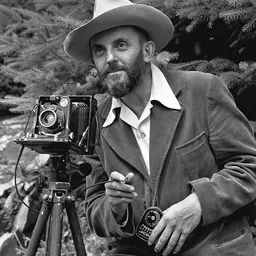
At the end of his tenure, the Californian stated that Church was a strong supporter of the library system and initiated the first family planning program in Monterey County. "It is not just the Humble Oil refinery we are fighting at Moss Landing," said Carmel Highlands photographer Ansel Adams prior to the decision. "It is the whole industrial complex which will inevitability follow and change the whole complexion of this Monterey County."
The Humble project was approved, but the planning commission (which had previously rejected the project by a 5–4 vote) had imposed 36 conditions many that had never been imposed on an industry before. Church added three more which included for parking, sulfur recovery and carbon monoxide emissions. As a part of the imposed conditions on the approval for Humble Oil, Church asked that three air-pollution stations be set up in Monterey County to monitor air quality for two-years prior to Humble starting to build. Church said that the county needed to do so in order to "obtain 'guidelines' to determine what pollutants an oil refinery may contribute." Church's intentions were that Humble be required to pay for and maintain the stations. The Salinas Californian stated, "It is conceivable in the future that other areas debating the admittance of an oil refinery will look at Monterey County as an example of strict regulations. The conditions are that unique." Although not identifying himself as the supervisor switching his position on Humble, it is widely accepted that it was Church who refused to back a larger refinery unless Humble could "prove" that a smaller one would comply with the county's restrictions. Public outcry and a legal challenge plus engineering problems also discouraged Humble Oil, and they eventually pulled out of Monterey County and decided to build a bigger refinery up north in more-welcoming Benicia. Monterey-Santa Cruz County Unified Air Pollution Control District – District Board of Directors from 1968 to 1975. San Felipe Committee (California Central Coast Water Importation) Special Tax Committees of the County Supervisors Association of California Local Applications Advisory Board, created in 1965 to "approve applications for migrant housing, education and health care". Church was succeeded by John Ventura, Fresno County Supervisor in 1967.
Personal life Church had a number of business ventures, including beekeeping in high school and college, nursery supply and Christmas Tree farms. He has grown Christmas trees in properties in Hidden Valley, at Omo Ranch, CA., Egremont, Ma., and Wadena, Mn. The Californian September 2, 2017, article, quotes Church's son Glenn Church on the manner of his father's death, "He had no hesitation. He took the (fatal) prescription with conviction and certainty." Church's cause of death was recorded as cachexia (the syndrome he had) in accordance of the End of Life Option Act.
Publications
Don’t just read it —
keep it.
Full-length biographies made to live with: read them, listen on the way to work, watch them tonight.
- E-book
- Audio
- Video
Instant download · yours to keep · every purchase keeps this site free
Important facts
People in Warren Church's life
Named in this biography and alive at the same time



Related people
Same field, nearest in time






Contemporaries
People whose lives overlapped Warren Church's
Frequently asked questions
Who was Warren Church?
American politician
When was Warren Church born?
Warren Church was born on 19 October 1929 in Elkhorn, California.
When did Warren Church die?
Warren Church died on 2 September 2017 in Monterey County.
What was Warren Church's occupation?
Warren Church was a politician and beekeeper.
What nationality was Warren Church?
Warren Church was American.
Sources & further reading
· DBpedia: Warren Church (politician)
Cite this page
APA: Biography.guide. (2026). Warren Church. https://biography.guide/warren-church/
MLA: "Warren Church." Biography.guide, https://biography.guide/warren-church/.
Chicago: "Warren Church." Biography.guide. https://biography.guide/warren-church/.
Data last updated: 2026-09-20 · Spot an error? Report a correction.
Page generated 2026-09-27 05:33 UTC