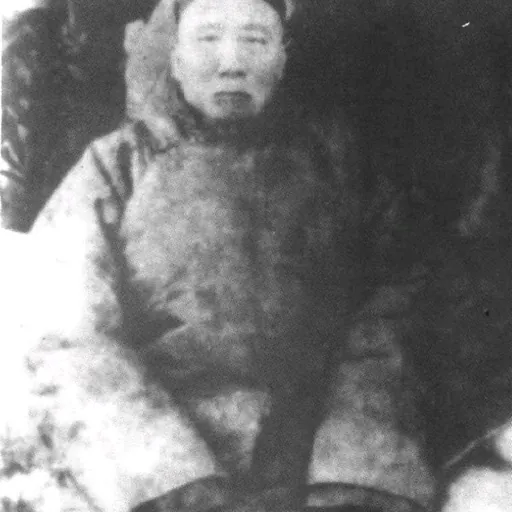
About Wang Xianqian
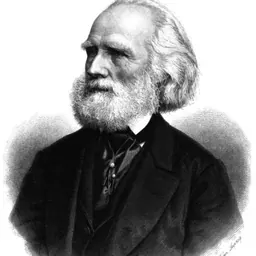
Lived 1842 – 1917 (aged 74–75). Wang Xianqian was a Chinese historian.
Wang Xianqian (; 1842–1918 ), courtesy names Yuwu (益吾) and Kuiyuan (葵園), was a versatile Confucian scholar and philologist of the late Qing dynasty.
Life Wang Xianqian was a native of Changsha, Hunan. A member of the prestigious Hanlin Academy, he was well versed in the Confucian Classics as well as classical prose and poetry. He taught at the Yuelu Academy—where he also served as director—and at the Chengnan Academy (Chengnan shuyuan 城南书院), both located in Changsha.
Among his major works is his continuation of the Huang Qing jingjie 皇清经解, known as Xu Huang Qing jingjie 续皇清经解 or Huang Qing jingjie xubian 皇清经解续编. Comprising 1,430 juan, it contains 209 treatises on the Confucian Classics written during the Jiaqing and Guangxu reigns and first published at the Nanjing Academy (Nanjing shuyuan 南菁书院) in Jiangyin. He also compiled the Xu gu wen ci lei zuan 续古文辞类纂. Wang authored a wide range of works esteemed among Chinese scholars, including the Collected Commentaries on the Xunzi (Xunzi jijie 荀子集解), the Zhuangzi (Zhuangzi jijie 庄子集解), and his supplemental commentary on the Book of Han (Hanshu buzhu 汉书补注), among others.
While in Jiangyin, he also published works such as Nanjing shuyuan congshu 南菁书院丛书, Qingjia ji 清嘉集, and Jiangzuo zhiyi jicun 江左制义辑存 , the latter referring to writings from the Jiangzuo 江左 region, i.e., Jiangsu or the lower Yangtze area.
During the Hundred Days' Reform in 1898, Wang opposed the radical ideas promoted by Kang Youwei and Liang Qichao. Nevertheless, he advocated the study of Western scientific knowledge. He was also involved in mining development and railway enterprises.
Selected works
For a detailed list, see „Wang Xianqians Schriften" (“Wang Xianqian’s writings") in Wang Weijiang's dissertation (pp. 235 ff.) . His studies of early Chinese texts listed in the bibliography of the Hanyu da zidian (HYDZD) include studies to the following works:
Maoshi 毛诗 / Shi 诗 (Shi sanjia yi jishu 诗三家义集疏; Zhonghua shuju 1987) Nanhua zhenjing 南华真经 / Zhuangzi 庄子 (Zhuangzi jijie 庄子集解; Zhuzi jicheng 诸子集成, Zhonghua shuju 1980 facsimile) Xunzi 荀子 (Xunzi jijie 荀子集解; Zhuzi jicheng 诸子集成, Zhonghua shuju 1974) Ban Gu 班固: Hanshu 汉书 (Hanshu buzhu 汉书补注; Xushoutang edition, facsimile Zhonghua shuju 1983) Liu Xi 刘熙: Shiming 释名 (Shiming shuzheng bu 释名疏证补; Shanghai guji 1984 facsimile) Fan Ye 范晔: Hou Hanshu 后汉书 (Hou Hanshu jijie 后汉书集解; Zhonghua shuju 1984 facsimile) Li Daoyuan 郦道元: Shuijing zhu 水经注 (Hejiao Shuijing zhu 合校水经注; Bashu shushe 1985 facsimile) Wei Shou 魏收: Weishu 魏书 (Weishu jiaokan ji 魏书校勘记; Guangya shuju congshu)
Don’t just read it —
keep it.
Full-length biographies made to live with: read them, listen on the way to work, watch them tonight.
- E-book
- Audio
- Video
Instant download · yours to keep · every purchase keeps this site free
Important facts
People in Wang Xianqian's life
Named in this biography and alive at the same time

Related people
Same field, nearest in time


Contemporaries
People whose lives overlapped Wang Xianqian's
Frequently asked questions
Who was Wang Xianqian?
Republic of China person CBDB = 69172
When was Wang Xianqian born?
Wang Xianqian was born in 1842.
When did Wang Xianqian die?
Wang Xianqian died in 1917.
What was Wang Xianqian's occupation?
Wang Xianqian was a historian.
What nationality was Wang Xianqian?
Wang Xianqian was Chinese.
Sources & further reading
Cite this page
APA: Biography.guide. (2026). Wang Xianqian. https://biography.guide/wang-xianqian/
MLA: "Wang Xianqian." Biography.guide, https://biography.guide/wang-xianqian/.
Chicago: "Wang Xianqian." Biography.guide. https://biography.guide/wang-xianqian/.
Data last updated: 2026-09-21 · Spot an error? Report a correction.
Portrait: Wikimedia Commons · author & licence
Page generated 2026-09-27 04:58 UTC