
About Wang Li
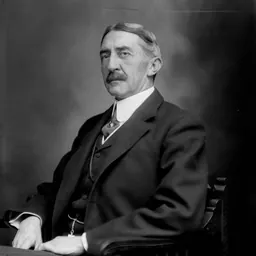
Lived 1900 – 1986 (aged 85). Wang Li was a Chinese lexicographer, linguist, university teacher and translator.
Wang Li (; 10 August 19003 May 1986), courtesy name Wang Liaoyi and birth name Wang Xiangying , was a Chinese linguist, educator, translator and poet, described as the founder of Chinese linguistics. His work expands a wide range in Chinese linguistics, including phonology, grammar and lexicography, historical linguistics and dialectal studies. He was also the founder of the first Chinese Linguistics Department at Tsinghua University. He brought the western modern linguistic methodologies back to China and strove for the modernization and reformation of Chinese grammar throughout his whole life. His most famous books include Zhongguo Yinyunxue 中国音韵学 (Chinese Phonology), Zhongguo Wenfa Chutan 中国文法初探 (An Exploratory Study of Chinese Grammar), and Wang Li Guhanyu Zidian 王力古汉语字典 (Wang Li's Character Dictionary of Ancient Chinese).
Early life
Early education Wang Li was born to a poor family in Bobai County, Guangxi, China. He first discovered his interest in literature and novels at the age of seven, inspired by one of the four Great Classical Chinese novels Romance of the Three Kingdoms. However, after he graduated from primary school at the age of 14, his family could no longer support his education. As a result, Wang started to educate himself by reading a large number of books. At the age of seventeen, Wang Li also began to tutor his little brother Xiangrui while the family stilled struggled under poverty and could not provide the money for Xiangrui to go to primary school. Wang Li's talent as a tutor brought him several other young children from the county to study with him. Gradually, Wang built a private school at his house. Wang did not adopt the general teaching style employed by other private schools at the time, which emphasized memorization of text over comprehension. Instead, Wang provided explicit explanation of each text by thoroughly analyzing the syntactic and semantic components of the texts. At the age of 21, Wang was invited to one of his students' house for dinner. He accidentally found fourteen boxes of books, ranging from history to astronomy to medicine, accompanied by the authors' footnotes and literature reviews of various works. Wang asked the host of the family whether he could borrow them and the host kindly lent them to him. Later in his life, Wang considered the discovery of the fourteen boxes of books one turning point of his life.
In the same year, Wang was hired by a local school to teach primary school students Chinese. Three years later, he was funded by his colleagues and the Principal of the school to further pursue his studies in Shanghai. Wang said that "While Liang encourages innovation, Chao emphasizes practicality, both of which are indispensable to the study of linguistics".
Early career Five years later, Wang finished his education in France with a doctorate degree in the study of Bobai phonology. He first focused on dialects in Liangguang region, which includes Guangdong and Guangxi in Southern China. Based on his observation and intuition as a first language speaker of the Bobai dialect, Wang presumed that cuōkǒu (撮口, "round mouth"), one of the four traditional ways of classifying syllable finals of Mandarin dialects, does not exist in Liangguang area, as it does not exist in the Bobai dialect. However, Chao pointed out in his letters to Wang that it was wrong for him to overgeneralize the dialectal patterns in a large area with multiple dialects solely based on the linguistic behaviors of one single dialect. While Wang taught General Linguistics and Chinese Phonology for two years at Tsinghua University, his several dozen translations of various works became one of the reasons why he was not offered the expected professorship after two years' teaching. In order to compensate for the unbalanced attention he gave to his job at the university, Wang immersed himself in the study of linguistics and wrote An Exploratory Study of Chinese Grammar , which earned him the professorship after four years' lecturing at Tsinghua University. In the book, Wang underlines the importance of using the comparative methodologies used in historical linguistics to compare the feature of Chinese and western languages, to build an independent system of Chinese grammar. He considered this work as a "manifesto" that directed his later works and research in Chinese linguistics. In one of Wang's essays, Salaries, he pointed out that the word salaries "薪(firewood)水(water)" originally refers to money to buy firewood and water—money needed for sustenance. However, Wang derided the miserly pay for labor from the Chinese government by saying that with salaries being so low, 薪水 should be renamed 茶(tea)水(water) or 风(wind)水(water), as the only thing people could buy with the scarce amount of money was tea or wind. Such stories resonated with those who suffered during wartime and those who worked and lived at the bottom of society.
Later life
Later career After the war, Wang started to teach at Sun Yat-sen University in Guangdong in 1946 and founded the first Linguistics Department among Chinese universities. Wang himself designed the course syllabi and content for most of the courses. He integrated his research into teaching and used his own research as teaching materials. He believed that "students should not be taught through books bought by the teacher but through books written by the teacher". By then, Wang served as the department chair of the Department of Chinese Language Studies at Peking University, and was also a member of the advisory board of the Chinese Academy of Social Sciences and State Commission on Language Reform. The History of Chinese Phonology, and The Dictionary of Paronyms. He also started to revise the A Draft History of the Chinese Language at the age of 80, and expanded his original work A Draft History of the Chinese Language into History of Chinese Phonology, History of Chinese Syntax and History of Chinese Lexicography.
Major publications Hanyu Shigao 漢語史稿 A Draft History of the Chinese Language [3 vols.] (1957; 1980, revised ed., 1996 one-volume reprint) Hanyu Shilüxue 漢語詩律學 A Study of the Metrical Rules of Chinese Poetry (1958) Gudai Hanyu 古代漢語 Ancient Chinese [4 vols.] (1962, editor-in-chief; 1999, 3rd ed. with Guo Xiliang as editor-in-chief) Guhanyu Changyongzi Zidian 古汉语常用字字典 A Dictionary of Commonly Used Characters in Ancient Chinese (1980, leader of Compilation Group; 2018, 5th ed. in Simplified Chinese) (2017, 4th ed. in Traditional Chinese) Tongyuan Zidian 同源字典 A Dictionary of Word Families (1982) Wang Li Guhanyu Zidian 王力古漢語字典 The Wang Li Character Dictionary of Ancient Chinese (2000, originator and leader of Compilation Group; completed posthumously by students and colleagues)
Don’t just read it —
keep it.
Full-length biographies made to live with: read them, listen on the way to work, watch them tonight.
- E-book
- Audio
- Video
Instant download · yours to keep · every purchase keeps this site free
Important facts
People in Wang Li's life
Named in this biography and alive at the same time

Related people
Same field, nearest in time



Contemporaries
People whose lives overlapped Wang Li's




Frequently asked questions
Who was Wang Li?
Chinese linguist (1900–1986)
When was Wang Li born?
Wang Li was born on 10 August 1900 in Bobai County.
When did Wang Li die?
Wang Li died on 3 May 1986 in Beijing.
What was Wang Li's occupation?
Wang Li was a lexicographer, linguist, university teacher and translator.
What nationality was Wang Li?
Wang Li was Chinese.
Sources & further reading
Cite this page
APA: Biography.guide. (2026). Wang Li. https://biography.guide/wang-li-lexicographer/
MLA: "Wang Li." Biography.guide, https://biography.guide/wang-li-lexicographer/.
Chicago: "Wang Li." Biography.guide. https://biography.guide/wang-li-lexicographer/.
Data last updated: 2026-09-20 · Spot an error? Report a correction.
Page generated 2026-09-27 05:32 UTC