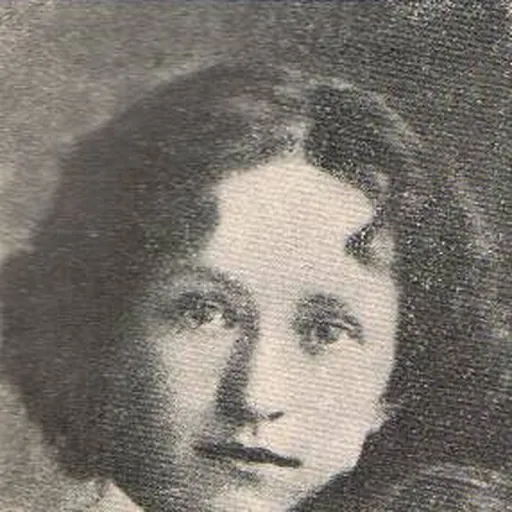
Wanda Krahelska-Filipowicz
Polish Socialist Party activist, founder of Żegota
About Wanda Krahelska-Filipowicz
Lived 1886 – 1968 (aged 81). Wanda Krahelska-Filipowicz was a Polish politician, journalist, political activist, revolutionary, editing staff and visual artist.
Wanda Krahelska-Filipowicz (15 December 1886–1968), code name "Alinka" or "Alicja", was a leading figure in Warsaw’s underground resistance movement throughout the years of German occupation during World War II in Poland, co-founder of Żegota. As the well-connected wife of a former ambassador to Washington, she used her contacts with both the military and political leadership of the Polish Underground to materially influence the underground's policy of aiding Poland's Jewish population during the war.
Early on, Krahelska-Filipowicz used her influence to persuade the Government in Exile, including members of the Delegatura and its military counterpart, the AK, of the importance of setting up a central organization to help Poland's Jews, and to back the policy with significant funding.
Krahelska-Filipowicz also personally sheltered Jews in her own home early during the German occupation, regardless of the punishment announced by the Nazi German occupants of Poland for any Pole doing this, which was death. Among the refugees was the widow of the Jewish historian Szymon Aszkenazy.
A Catholic Socialist activist and a devout Democrat, she was the editor of the Polish art magazine "Arkady".
In the pre-World War I partitioned Poland, on 18 August 1906, at the age of twenty she took part in an assassination attempt on the Russian governor-general of Warsaw, Georgi Skalon. She threw three 'dynamite bombs' on the governor's coach; two did explode and slightly injured three persons in governor's entourage. Afterwards, she fled to Kraków in Austrian part of Poland, entered into fictional marriage with painter Adam Dobrodzicki and became citizen of Austria-Hungary. Austria refused to extradite her to Russia and instead arranged a trial in Wadowice, starting on 16 February 1908. Wanda Dobrodzicka had confessed but was acquitted.
Don’t just read it —
keep it.
Full-length biographies made to live with: read them, listen on the way to work, watch them tonight.
- E-book
- Audio
- Video
Instant download · yours to keep · every purchase keeps this site free
Important facts
Related people
Same field, nearest in time




Contemporaries
People whose lives overlapped Wanda Krahelska-Filipowicz's



Frequently asked questions
Who was Wanda Krahelska-Filipowicz?
Polish Socialist Party activist, founder of Żegota (1886–1968)
When was Wanda Krahelska-Filipowicz born?
Wanda Krahelska-Filipowicz was born on 15 December 1886 in Saviejkі.
When did Wanda Krahelska-Filipowicz die?
Wanda Krahelska-Filipowicz died on 5 February 1968 in Warsaw.
What was Wanda Krahelska-Filipowicz's occupation?
Wanda Krahelska-Filipowicz was a politician, journalist, political activist, revolutionary, editing staff and visual artist.
What nationality was Wanda Krahelska-Filipowicz?
Wanda Krahelska-Filipowicz was Polish.
Sources & further reading
· Wikipedia: Wanda Krahelska-Filipowicz
· DBpedia: Wanda Krahelska-Filipowicz
Cite this page
APA: Biography.guide. (2026). Wanda Krahelska-Filipowicz. https://biography.guide/wanda-krahelska-filipowicz/
MLA: "Wanda Krahelska-Filipowicz." Biography.guide, https://biography.guide/wanda-krahelska-filipowicz/.
Chicago: "Wanda Krahelska-Filipowicz." Biography.guide. https://biography.guide/wanda-krahelska-filipowicz/.
Data last updated: 2026-09-21 · Spot an error? Report a correction.
Portrait: Wikimedia Commons · author & licence
Page generated 2026-09-27 05:00 UTC