
About Walther Spring
Lived 1848 – 1911 (aged 63). Walther Spring was a Belgian chemist and physicist.
Walthère Victor Spring (6 March 1848 – 17 July 1911) was a Belgian experimental chemist and a professor at the University of Liège who conducted early experiments in mechanochemistry, sometimes relating his findings to geologic phenomena. Spring also conducted research on the effect of carbon dioxide in the atmosphere and the greenhouse effect. He also took an interest in the study of light scattering and the Tyndall effect and examined the cause of the colour of the sky and water.
Biography Spring was born in Liège, to physician and professor of medicine, Antoine Frédéric Spring who was of Bavarian ancestry. As a child, Spring showed little interest in academic subjects, while showing a natural aptitude for hands-on mechanical skills and crafting physical objects, all despite his father's encouragement. Initially, he did not pass his university entrance examinations. Spring went to work as a gunsmith, and this employment enhanced Spring's mechanical skills, which became useful to him in his research career.
Greenhouse gases In 1886 Spring gave a presentation at the academy on variability of carbon dioxide content in the atmosphere and noted that the city of Liège had a higher concentration than the surrounding countryside, possibly due to the use of coal for heating homes and the slow burning of grisou in the Saint-Jacques district which produced methane. Along with he examined weather measurements and noted that the air cooled less slowly due to the water vapour and carbon dioxide. Spring contended that the higher temperatures in the Liège vicinity was a greenhouse effect of carbon dioxide. In this respect, Spring's observations were a forerunner of global greenhouse effects, later articulated by Svante Arrhenius and others.
In contrast to the work of Arrhenius, Spring's early reports on greenhouse effects of carbon dioxide indicated that these were local effects rather than global. An English translation of Spring's observations of greenhouse effects are, "the atmosphere charged with water vapor and CO2 protects the earth against a cooling as does a greenhouse”. Using his apparatus for an early demonstration of powder metallurgy, Spring found that high pressures could fuse metal powders into solid metallic objects. Further, he found that the high pressures generated by his apparatus could combine mixtures of powdered copper and powdered zinc into layers of brass, this transformation occurring at the interface between the two types of powders. These experiments showed that metal alloys could be formed under sufficiently high pressures.
Beginning in 1883, criticism emerged of Spring's experimental methods relating to difficulties in reproducibility of Spring's experimental findings. Despite his mechanical skills, the pistons in his compression apparatus were not perfectly matched in diameter leading to a mechanical shear on his test specimens in addition to effects of pressure alone. The presence of trace amounts of water appeared to also affect results in the hands of different experimentalists. Spring rebutted much of the criticism and showed skeptics the reproducibility of his findings with his apparatus.
Cape Walthère Spring in the Antarctic was named after him by the Belgian Antarctic Expedition.
The Belgian Chemical Society published Spring's collective works in 1914 to 1923.
Spring was a member of the German Chemical Society.
Don’t just read it —
keep it.
Full-length biographies made to live with: read them, listen on the way to work, watch them tonight.
- E-book
- Audio
- Video
Instant download · yours to keep · every purchase keeps this site free
Important facts
People in Walther Spring's life
Named in this biography and alive at the same time

Related people
Same field, nearest in time

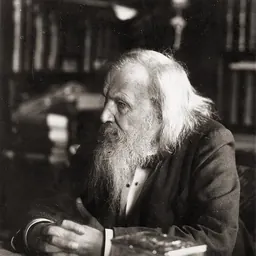
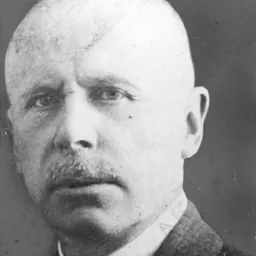

Contemporaries
People whose lives overlapped Walther Spring's

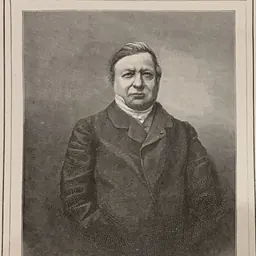
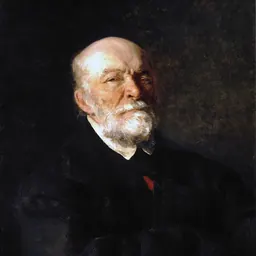


Frequently asked questions
Who was Walther Spring?
Belgian chemist
When was Walther Spring born?
Walther Spring was born on 6 March 1848 in Liège.
When did Walther Spring die?
Walther Spring died on 17 July 1911 in Liège.
What was Walther Spring's occupation?
Walther Spring was a chemist and physicist.
What nationality was Walther Spring?
Walther Spring was Belgian.
Sources & further reading
· DBpedia: Walthère Victor Spring
Cite this page
APA: Biography.guide. (2026). Walther Spring. https://biography.guide/walther-spring/
MLA: "Walther Spring." Biography.guide, https://biography.guide/walther-spring/.
Chicago: "Walther Spring." Biography.guide. https://biography.guide/walther-spring/.
Data last updated: 2026-09-20 · Spot an error? Report a correction.
Page generated 2026-09-27 05:20 UTC