
About Walter Wriston
Lived 1919 – 2005 (aged 85). Walter Wriston was an American banker, economist and chairman, known for Chairman.
Walter Bigelow Wriston (August 3, 1919 – January 19, 2005) was an American banker and former chairman and CEO of Citicorp. As chief executive of Citibank / Citicorp (later Citigroup) from 1967 to 1984, Wriston was widely regarded as the single most influential commercial banker of his time.
During his tenure as CEO, the bank introduced, among other innovations, automated teller machines, interstate banking, the negotiable certificate of deposit, and "pursued the credit card business in a way that no other bank was doing at the time". With then New York Governor Hugh Carey and investment banker Felix Rohatyn, Wriston helped save New York City from bankruptcy in the mid-1970s by setting up the Financial Control Board and the Municipal Assistance Corporation, and persuading the city's union pension funds and banks to buy the latter corporation's bonds.
Early life and career Wriston was born in Middletown, Connecticut, to Ruth Bigelow Wriston, a chemistry teacher, and Henry Wriston, a history professor at Wesleyan University who was later president of Lawrence College and Brown University.
Wriston attended grade school and high school in Appleton, Wisconsin. Reared as a traditional Methodist, he was not allowed to listen to the radio or go to the movie theater on Sundays. Wriston was an Eagle Scout and recipient of the Distinguished Eagle Scout Award.
He attended Wesleyan University, where he received a Bachelor of Arts degree in 1941. While there, he was a member of the Eclectic Society and received the "Parker Prize" ("Awarded to a sophomore or junior who excels in public speaking" ). He received a Master's Degree from Tufts University's Fletcher School of Law and Diplomacy in 1942.
After graduate school, Wriston became a junior Foreign Service officer at the State Department, where he helped negotiate the exchange of Japanese interned in the United States for Americans held prisoner in the Empire of Japan. Drafted into the U.S. Army in 1942, he served in the U.S. Army for four years, being with the Signal Corps on Cebu in the Philippines during his service.
Career
Politics Wriston was an opponent of John F. Kennedy, stating "Who is this upstart President interfering with the free flow of capital?"
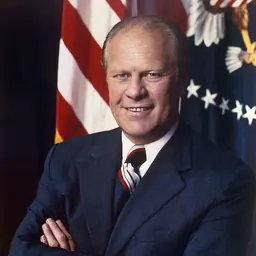
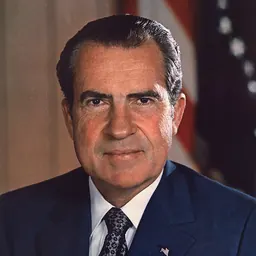
Wriston was twice offered the job of Secretary of the Treasury, once by Richard Nixon and once by Gerald Ford, but turned down both offers. From 1982 to 1989, Wriston was chairman of President Ronald Reagan's Economic Policy Advisory Board.
Awards and honors In 1987, the Manhattan Institute of Policy Research initiated a lecture series in honor of Wriston.
In 2004, the Idea Channel organized a seven-part series of interviews with him.
In June 2004, Wriston was awarded the Presidential Medal of Freedom, the nation's highest civil honor, by President George W. Bush.
Personal life In 1942, Walter Wriston married Barbara Brengle, with whom he had one daughter. Two years after her death in 1966, he married lawyer and businesswoman Kathryn Dineen.
Wriston died on January 19, 2005, in Manhattan, New York City, New York, at the age of 85.
Legacy Wriston's papers, including the text of hundreds of speeches and articles spanning his lengthy career, are at Tufts University's Archives. Many have been digitized and are available in the Tufts Digital Library.
Quotes Capital goes where it's welcome and stays where it's well treated. Information about money has become almost as important as money itself Countries don't go bust The 800 number and the piece of plastic have made time and space obsolete The Eurodollar market exists in London because people believe that the British government is not about to close it down It is inconceivable that any major bank would walk away from any subsidiary of its holding company. If your name is on the door, all of your capital funds are going to be behind it in the real world. Lawyers can say you have separation, but the marketplace is persuasive, and it would not see it that way.
Books The Twilight of Sovereignty (1992) Risk and Other Four-Letter Words (1986) Bits, Bytes and Balance Sheets (2007)
Don’t just read it —
keep it.
Full-length biographies made to live with: read them, listen on the way to work, watch them tonight.
- E-book
- Audio
- Video
Instant download · yours to keep · every purchase keeps this site free
Important facts
People in Walter Wriston's life
Named in this biography and alive at the same time



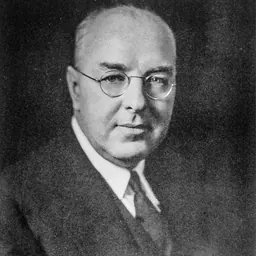
Related people
Same field, nearest in time


Contemporaries
People whose lives overlapped Walter Wriston's



Frequently asked questions
Who was Walter Wriston?
American commercial banker (1919-2005)
When was Walter Wriston born?
Walter Wriston was born on 3 August 1919 in Middletown.
When did Walter Wriston die?
Walter Wriston died on 19 January 2005 in Manhattan.
What was Walter Wriston's occupation?
Walter Wriston was a banker, economist and chairman.
What was Walter Wriston known for?
Walter Wriston was known for Chairman.
What nationality was Walter Wriston?
Walter Wriston was American.
Sources & further reading
Cite this page
APA: Biography.guide. (2026). Walter Wriston. https://biography.guide/walter-wriston/
MLA: "Walter Wriston." Biography.guide, https://biography.guide/walter-wriston/.
Chicago: "Walter Wriston." Biography.guide. https://biography.guide/walter-wriston/.
Data last updated: 2026-09-26 · Spot an error? Report a correction.
Page generated 2026-09-27 05:15 UTC