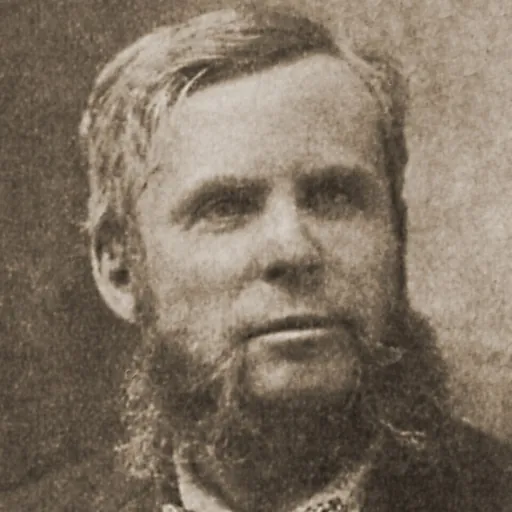
About Walter Thomas Mills
Lived 1856 – 1942 (aged 85–86). Walter Thomas Mills was a New Zealand newspaper editor and editor.
Walter Thomas Mills (May 11, 1856 – May 7, 1942) was an American socialist activist, educator, lecturer, writer, and newspaper publisher. He is best remembered for the role he played in the Socialist Party of America during the first decade of the 20th Century as one of the leaders of the organization's moderate wing. He also was a key actor in the labor movement of New Zealand as a founder of the United Labour Party in 1912. He returned to the United States in 1914 with the advent of World War I and worked unsuccessfully to keep the country out of the bloody European conflict, eventually leaving the socialist movement in the 1920s.
Biography
Early years
Walter Thomas Mills — he was known by his contemporaries by his full name — was born May 11, 1856, in Duane, New York, the son of a Quaker farmer, Charles Mills, and his wife, Mahetabel Ladd Mills. The family moved to Iowa when Walter was a boy and he worked at a variety of jobs in his youth to save up enough money to put himself through college. His first book, The Science of Politics, was published by Funk and Wagnalls one year later.
Driven by his beliefs to public speaking on political themes, Mills soon developed oratorical expertise which was acknowledged by political friends and enemies alike. This reputation as a vigorous platform speaker, combined with Mills' shortness of stature — he stood just 4 feet and 6 inches (1.37 meters) tall He repeated this basic plan in Kansas City, Missouri, renting a cavernous building on adjacent to the city's stockyards, furnishing it at great expense, soliciting annual subscriptions to a publication called The Socialist Teacher, and then quitting the project after just three months.
In the summer of 1903, moderate socialists won majority control of Central Branch of Local Seattle of the Socialist Party — the largest of seven branches in the city — and brought Mills to Seattle on behalf of the local. Mills was anathema to radical newspaper publisher Hermon F. Titus, the head of the powerful left wing faction in the Socialist Party of Washington, who saw Mills as a living embodiment of middle class reformism.
After hearing Mills' presentation, a committee of the Local Seattle, Central Branch, headed by William McDevitt, drafted a resolution endorsing Mills as "an uncompromising, class-conscious, and revolutionary Socialist" and upbraiding Hermon Titus's newspaper for participating in a "plan to silence Mills by driving him off the Socialist lecture platform, and by blacklisting him in the eyes of the Socialist Party."
This proved to be a red flag to the Reds. Titus railed against "the Mills men" using "packed" meetings to gain control of the Central Branch and the Seattle City Central Committee in the absence of other delegates. "They will stop at nothing in the way of injustice," Titus indignantly proclaimed.
Throughout early 1907 Mills conducted Sunday afternoon meetings independent or the regularly scheduled Sunday afternoon propaganda meetings of Local Seattle, using these gatherings as a means of making contact with Socialists discontented with the left wing state organization and leadership of the reorganized Local Seattle.
The situation was complex, however. In March 1907, Mills had been charged by the British Columbia Dominion Executive Committee of the Socialist Party of Canada with having advocated "compromise and fusion" in a speech delivered in Victoria on December 28, 1906, in which Mills urged support of the Canadian Labor Party. Having gotten wind of Mills' fusionist heresy, left wing Washington State Committee member Alfred Wagenknecht wrote to the BC Dominion Executive Committee on February 20, 1907, soliciting a complaint against Mills. The Dominion Executive Committee complied on March 6 with a letter to the Washington State Executive Committee, which lead to charges being preferred against Mills. Before the largest mass meeting of Local Seattle in the organization's history, charges were read by J.G. Morgan, Secretary of the Socialist Party of Canada. Mill pleaded "not guilty" and the point was reached where Morgan was to make his opening statement and to introduce his evidence. Suddenly, Mills was given the floor and he made a motion of adjournment, which was quickly seconded and carried amid the whooping and shouting of his supporters.
Despite being outnumbered in the city of Seattle and unable to discipline Mills through Local Seattle, the left wing still held the reins of the State Committee, which continued to mull over the situation into June. At its June 10, 1907, meeting, the State Executive Committee (formerly the Local Quorum) discussed the situation at length and telegraphed a forthcoming action to the membership in a tersely worded report by State Secretary Richard Krueger that he had been instructed "to communicate with all the state committeemen and inform said committeemen of all the facts" regarding the failure of Local Seattle to "deal in a constitutional manner with the charges against Walter Thomas Mills."
On June 23, 1907, the State Executive Committee tabulated a poll of the members of the State Committee and instructed the State Secretary to prepare evidence in proper documentary form and to notify Local Seattle to do likewise, with the deadline for submission of its defense given of 30 minutes before the start of the next scheduled meeting of the SEC. Evidence from both sides was heard at the July 7, 1907, meeting of the SEC, and the evidence sent out to the members of the left wing-dominated State Committee for decision. The results were announced on Sunday, July 21, 1907 — a unanimous vote to revoke the charter of Local Seattle for its failure to take action against Walter Thomas Mills. Hermon Titus's right-hand man at the Seattle Socialist, Harry Ault, claimed to speak for "a large number of members of Local Seattle, perhaps even a majority" when he declared:
"These comrades are disgusted with the rule or ruin policy of the opportunists, who, though they have been defeated in every state convention and in every referendum in which they have crossed swords with the revolutionists, persist in creating strife and dissension in the party in this state. "The importation of Walter Thomas Mills is merely the culminating act of a band of desperate filibusterers, who, having been foiled in their attempts to control the party, resort to this means to disrupt it and organize it anew upon their plan."
In 1911, Mills was invited by the Trades and Labour Councils of New Zealand to tour the country, speaking on the cause of labor unity.
Death and legacy Walter Thomas Mills died May 7, 1942, in Los Angeles, California.
Footnotes
Works
The Science of Politics. New York: Funk and Wagnalls, 1887. The Product-Sharing Village. Chicago : Civic Letters, 1894. How Gouge Went to Heaven. Civic Letters vol. 1, no. 4. Oak Park, IL: Civic Letters, 1894. Tariff: Legislation or Arbitration? Chicago: Thorne, n.d. [1890s]. Is Socialism Anti-Christian in its Tendency? Debate between Mr. W.F. Phillips, Newport, Affirmative, and Professor W.T. Mills, Milwaukee, USA, Negative, at the Workmen's Hall, Nantymoel... Aberdare, Wales: South Wales Divisional Council of the Independent Labour Party, n.d. [1890s]. Evolutionary Politics: Addresses and Essays. Chicago: Charles H. Kerr & Co., 1898. How to Work for Socialism. Chicago: Charles H. Kerr & Co., 1900. What is Socialism? An Address Delivered at the State Convention of the Socialist Party at Sedalia, Mo., October 19th, 1901. Girard, KS: J.A. Wayland, 1901. The Struggle for Existence. Chicago: International School of Social Economy, 1904. How a Socialist Sees Things. Chicago: International School of Social Economy, 1906. What Is Socialism?: A Lecture. Spokane, WA: Workers Publishing Co, n.d. [c. 1911]. —Illustrated 2nd Edition of 1901 Sedalia, Missouri speech. Alcoholic Degeneracy: A Compelling Lecture. Invercargill, NZ: Southland Times, 1911. Proposals for Securing the Industrial and Political Union of All the Labour Organisations of New Zealand: Ready for Action! Are You Ready to Act? Auckland, NZ: New Zealand Worker, 1911. Unity Campaign, a Movement for the Industrial and Political Union of All Labour Organisations: Here are the Proposals: Solidarity, Strength, Progress. Auckland, NZ: New Zealand Worker, 1911. Why a Labour Party in New Zealand? Lower Hutt : Hutt and Petone Chronicle, 1912. The Unity Conference: Easter week, Auckland, March 17, 1912. Auckland, NZ: Voice, 1912. The United Labour Party: Its Constitution and Platform. Wellington, NZ: United Labor Party, 1912. Land Monopoly and How to End It. Wellington, NZ: United Labor Party, 1912. Amended Report of the Unity Scheme: Debate between H. Scott Bennett and Walter Thomas Mills which took place at Auckland on December 8th, 1911: Subject:— "Do the unity proposals embody all the necessary features for sound industrial and political organization of the working class of New Zealand?" Wellington: The Maoriland Workers, 1912. Political Parties and Poverty. Glasgow : Reformer's Bookstall, n.d. [1910s]. "Cooperation and the Labor Movement," The Western Comrade, vol. 2, no. 5 (Sept. 1914), pp. 14–15. War. Mills essay "Make an End to War" along with "Big Business and War" by Charles Edward Russell. Chicago: Socialist Party, 1915. Democracy or Despotism. Berkeley, CA: International School of Social Economy, 1916. The Articles of Association of the National Nonpartisan League: Together with a Discussion of the Democracy of the League's Purposes, the Democracy of its Form of Organization, the Democracy of the Measures Supported by the League, and the Ending of the Autocratic Monopolies and the Triumph of Democracy. St. Paul, MN: National Nonpartisan League, n.d. [c. 1918] Your Choice: Government by Plunderers or Producers. Fargo, ND: North Dakota Nonpartisan League, n.d. [c. 1920]. The Voice of the Sea. Santa Ana, CA: Standard Print. Co., 1933.
Don’t just read it —
keep it.
Full-length biographies made to live with: read them, listen on the way to work, watch them tonight.
- E-book
- Audio
- Video
Instant download · yours to keep · every purchase keeps this site free
Important facts
People in Walter Thomas Mills's life
Named in this biography and alive at the same time






Related people
Same field, nearest in time
Contemporaries
People whose lives overlapped Walter Thomas Mills's



Frequently asked questions
Who was Walter Thomas Mills?
New Zealand politician (1856–1942)
When was Walter Thomas Mills born?
Walter Thomas Mills was born in 1856.
When did Walter Thomas Mills die?
Walter Thomas Mills died in 1942.
What was Walter Thomas Mills's occupation?
Walter Thomas Mills was a newspaper editor and editor.
What nationality was Walter Thomas Mills?
Walter Thomas Mills was New Zealand.
Sources & further reading
· Wikipedia: Walter Thomas Mills
· DBpedia: Walter Thomas Mills
Cite this page
APA: Biography.guide. (2026). Walter Thomas Mills. https://biography.guide/walter-thomas-mills/
MLA: "Walter Thomas Mills." Biography.guide, https://biography.guide/walter-thomas-mills/.
Chicago: "Walter Thomas Mills." Biography.guide. https://biography.guide/walter-thomas-mills/.
Data last updated: 2026-09-22 · Spot an error? Report a correction.
Portrait: Wikimedia Commons · author & licence
Page generated 2026-09-27 05:02 UTC