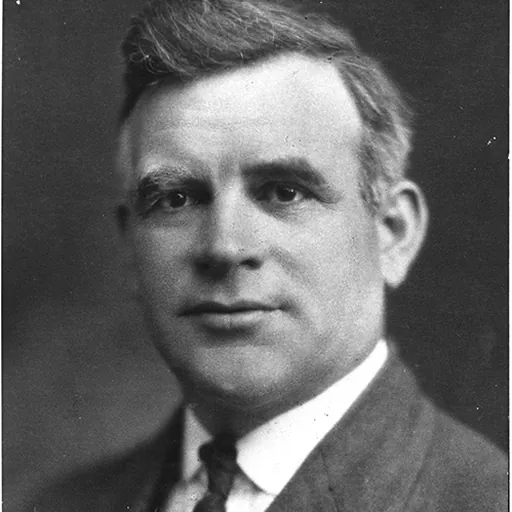
About Walter Ritchie Rollo
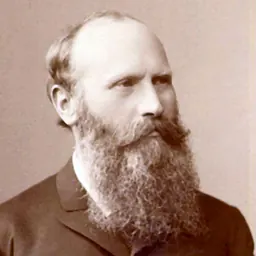
Lived 1875 – 1956 (aged 80). Walter Ritchie Rollo was a Canadian politician and trade unionist.
Labour leader
Rollo was secretary of the Hamilton Trades and Labour Council from 1906 to 1919. In 1919, he also became editor of the Labor News, a Hamilton-based union paper.
Political career
Rollo was involved in politics at all levels. In 1916, he was appointed as a member of Ontario's Organization of Resources Committee which was established to improve Canada's war effort in the Province. He had also been a member of the Board of Education in Hamilton for several years.
In 1907, Rollo was elected as the President of the newly formed Independent Labour Party, and would become its leader in 1917. He stood for election in Hamilton West in the following campaigns:
in the 18 November 1914 by-election, which he lost by only 39 votes, in the federal 1917 general election, where he came in second, in the Ontario 1919 general election, which he won. In his campaign, signs were posted that read: "Your Vote for Walter Rollo is a nail in the coffin of the profiteer."
He and Morrison Mann MacBride were instrumental in negotiating a coalition government between the Independent Labour Party and the United Farmers of Ontario under E.C. Drury, which lasted until 1923. As a result of those negotiations, the ILP had the right to nominate two of its members to the new government: Rollo became the Province's first Minister of Health and Labourin charge of a department that had been created immediately before the election by the previous Conservative government of William Hearst, as well as overseeing the Provincial Board of Health. Harry Mills became the first Minister of Mines. This caused a confrontation within the ILP, as MacBride had sought to be nominated to the Labour position.
During his time as Minister, Rollo brought in several enhancements to Ontario's labour laws:
the Minimum Wage Act, which set minimum wages for female employees, the Wages Act was amended to provide that 70% of any wages due to a worker was exempt from seizure, the One Day's Rest in Seven Act, which provided (with certain exceptions) that employees were entitled to 24 consecutive hours of rest every seven days, improvements to workmen's compensation benefits
Aftermath
After his defeat in the 1923 general election, Rollo was appointed as an adolescent school inspector for the City of Hamilton, and he was still working as a school attendance officer there in 1938, and as a part-time school assessment adviser in 1950.
Electoral record
Don’t just read it —
keep it.
Full-length biographies made to live with: read them, listen on the way to work, watch them tonight.
- E-book
- Audio
- Video
Instant download · yours to keep · every purchase keeps this site free
Important facts
People in Walter Ritchie Rollo's life
Named in this biography and alive at the same time

Related people
Same field, nearest in time





Contemporaries
People whose lives overlapped Walter Ritchie Rollo's


Frequently asked questions
Who was Walter Ritchie Rollo?
Canadian unionist and politician (1875-1956)
When was Walter Ritchie Rollo born?
Walter Ritchie Rollo was born on 25 November 1875 in West Lothian.
When did Walter Ritchie Rollo die?
Walter Ritchie Rollo died on 19 March 1956.
What was Walter Ritchie Rollo's occupation?
Walter Ritchie Rollo was a politician and trade unionist.
What nationality was Walter Ritchie Rollo?
Walter Ritchie Rollo was Canadian.
Sources & further reading
· Wikipedia: Walter Ritchie Rollo
Cite this page
APA: Biography.guide. (2026). Walter Ritchie Rollo. https://biography.guide/walter-ritchie-rollo/
MLA: "Walter Ritchie Rollo." Biography.guide, https://biography.guide/walter-ritchie-rollo/.
Chicago: "Walter Ritchie Rollo." Biography.guide. https://biography.guide/walter-ritchie-rollo/.
Data last updated: 2026-09-20 · Spot an error? Report a correction.
Portrait: Wikimedia Commons · author & licence
Page generated 2026-09-27 04:57 UTC