
About Walter Nurnberg
Lived 1907 – 1991 (aged 84). Walter Nurnberg was a British photographer and writer.
Walter Nurnberg (18 April 1907 – 19 October 1991) was a German-born British photographer known for his industrial photography from 1945 to the 1970s, which he worked on alongside his wife, Rita Nurnberg (; born 1914).
Nurnberg is credited for his use of cinematographic lighting techniques, used in New Objectivity and Bauhaus-style photography, but later turned towards training to be a banker instead, and abandoned his financial career to enrol on its photography course, and under the tutelage of former Bauhaus student Werner Graeff, His first large assignment was to advertise General Post Office greetings telegrams. He later taught at Polytechnic of Central London. In 1983, he was the subject of a revival of interest in relation to industrial photography, and released a Kodak exhibition called The Enchantment of Architecture which toured Britain for three years.
Death and legacy On his retirement in 1974, Nurnberg received an OBE for his services to industrial photography and industry, as well as an Honorary Fellowship of the British Institute of Professional Photography, a Fellowship of the Royal Photographic Society and the Hood Medal which was awarded to him in 1960 for outstanding advances in photography for the public service. Following his death at the age of 84 on 19 October 1991, his work formed the Nurnberg Archive at the National Museum of Photography, Film & Television (now the National Science and Media Museum) in 2004 after it was donated by his family. His Norwich work was exhibited at Norwich Castle Museum in 2024.
Techniques and philosophy Nurnberg often used a tripod-mounted field or technical camera for his more commercial work. For his more dynamic works, he made use of a handheld Rolleiflex twin-lens reflex camera, which included a top-mounted focusing screen and which was often used by press photographers. He often ridiculed the use of 35mm cameras for any professional use other than photojournalism. He used Bauhaus-influenced cinematographic lighting techniques, often supported by large numbers of angled spotlights and large flash equipment.
He frequently made his first inspection of a site without any camera and endeavoured to talk to people at all levels of authority, collecting factual information to prepare before returning to take the photographs. This included the preparation of a detailed "shooting script" for clients to review. He also frequently required that a factory should stop production for the duration of a shoot, though frequently produced many pictures in return, for example producing 700 photographs for his United Steel commission.
With a strong spiritual view of architecture, he believed that physical labour had a spiritual value and that the works of man were a high achievement in this way. He saw light and shadow as psychological forces, using them in his work to convey mood and atmosphere, and writing in an early essay that "light is the medium which, combined with the camera, gives the photographer every chance not only to overcome but to remove the objectivity of the lens." He became particularly interested in the human hand, writing in 1962 that hands "divulge character and human nature undisguised", "have throughout the ages held a symbolic significance", and that "even in a world of automation and mechanical handling the hand of man is still operative, and remains not only just a symbol but a living expression of human genius and adaptability".
Don’t just read it —
keep it.
Full-length biographies made to live with: read them, listen on the way to work, watch them tonight.
- E-book
- Audio
- Video
Instant download · yours to keep · every purchase keeps this site free
Important facts
People in Walter Nurnberg's life
Named in this biography and alive at the same time

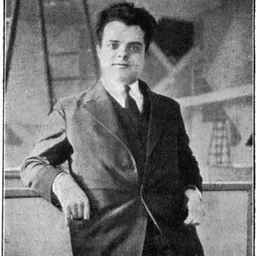
Related people
Same field, nearest in time



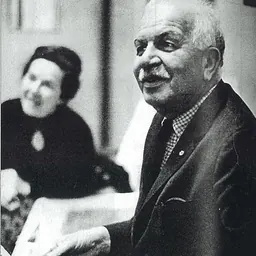
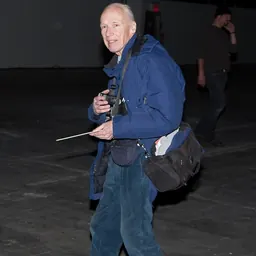
Contemporaries
People whose lives overlapped Walter Nurnberg's
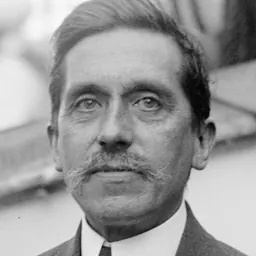


Frequently asked questions
Who was Walter Nurnberg?
British photographer (1907–1991)
When was Walter Nurnberg born?
Walter Nurnberg was born on 18 April 1907 in Berlin.
When did Walter Nurnberg die?
Walter Nurnberg died on 19 October 1991.
What was Walter Nurnberg's occupation?
Walter Nurnberg was a photographer and writer.
What nationality was Walter Nurnberg?
Walter Nurnberg was British.
Sources & further reading
Cite this page
APA: Biography.guide. (2026). Walter Nurnberg. https://biography.guide/walter-nurnberg/
MLA: "Walter Nurnberg." Biography.guide, https://biography.guide/walter-nurnberg/.
Chicago: "Walter Nurnberg." Biography.guide. https://biography.guide/walter-nurnberg/.
Data last updated: 2026-09-20 · Spot an error? Report a correction.
Page generated 2026-09-27 05:21 UTC