
About Walter Kenrick Fisher
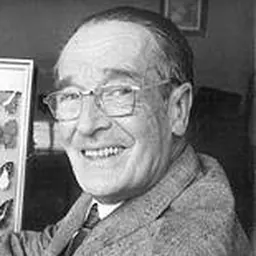
Lived 1878 – 1953 (aged 75). Walter Kenrick Fisher was an American zoologist, botanical collector, artist and biologist.
Walter Kenrick Fisher (February 1, 1878 – November 2, 1953) was an American zoologist, evolutionary biologist, illustrator, and painter. He taught in Stanford University before eventually becoming Emeritus Professor in Zoology until his retirement in 1943. Fisher was the son of ornithologist Albert Kenrick Fisher.
Early life Walter K. Fisher was born on February 1, 1878, in Ossining, New York. His father was Albert Kenrick Fisher and his mother was Alwilda Fisher (née Merritt). As a boy, Fisher explored the countryside around his home in the Hudson Valley, and as he grew older, he conducted similar explorations around Washington, D. C., following his family's relocation to the capital. During these ventures, he collected birds and plants, and he sketched the skulls he collected and the landscapes he encountered. Fisher demonstrated talent as an artist and initially considered pursuing his artistic inclinations. However, he ultimately decided to pursue a career in science, although he continued to paint and draw throughout his life.
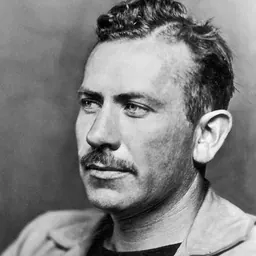
At first he was more interested in botany, studying under William Russell Dudley. However, he was soon to show a preference for invertebrate zoology and this was facilitated by his service as a field naturalist for the US Biological Survey where he worked as an assistant on two of the "M.V. Albatross" expeditions of the United States Fish Commission, in the summers of 1902 and 1904. This experience, the diversity of the specimens collected which he was able to study while on these voyages, and his examination of other invertebrate collections, led him to undertake a specialism in echinoderms. This was followed in 1911 by Asteroidea of the North Pacific and Adjacent Waters, a monograph published by the U. S. National Museum which contained 400 pages, illustrated by Fisher with over 100 plates. The second part of this work came out in 1928, and the third in 1930, parts 2 and 3 combined being almost the same size as part 1. In 1940 the "Asteroidea" of the British "Discovery" Voyages was published. These larger volumes represent a few of Fisher's publications and he published many more specialised scientific papers during his working life, always illustrated by Fisher himself. He continued to work after retirement, studying the collections of the Smithsonian Institution, where he was as a Research Associate, even in the week before his death. For example, he described several new species during the year leading up to his death. The additional staff allowed the Station to widen its educational and research programmes. As director, Fisher was able to keep a balance between the various biological disciplines. During Fisher's time as director of the Hopkins Marine Station he was involved in the zoological training of many graduate students. As a result, it was said that Ricketts would wait for Fisher to be away from the Station to access its library for information, but Fisher still named an echiurid worm, Thalassema steinbecki, for Ricketts' friend, John Steinbeck, in 1946 However, in a letter in response to questions about the validity of Steinbeck's and Ricketts' collaboration on The Log from the Sea of Cortez Steinbeck wrote "Dr. Fisher of the Hopkins Marine Station once said that Ed Ricketts and I together were the best single speculative zoologists in the world, and if he couldn't separate us, I would suggest that you do not try."
Personal life and legacy In 1922 Fisher married Anne Benson (1898–1967), who was a 22 year old bacteriologist when they met but who was to become a notable author of both fiction and non fiction books about California after their marriage. Fisher died in Carmel Valley, California, on November 2, 1953, at the age of 75. Fisher was a member of the Carmel Art Association and frequently exhibited his paintings there and also in other galleries on the Monterey Peninsula.
His journals recording field trips to study mammals and birds in northern California, Nevada, the Sierras, and the Mono Lake region from 1897 to 1901 form the Walter K. Fisher Journals collection which are retained by the Stanford University Libraries Department of Special Collections and University Archives.
Taxa named in his honor The angelfish Centropyge fisheri (Snyder, 1904), Fisher’s seahorse (Hippocampus fisheri), the crinoid Parametra fisheri (Clark, 1908), the sea stars Nepanthia fisheri Rowe & Marsh, 1982, Astroceramus fisheri Koehler, 1909, the chiton Callistochiton fisheri W. H. Dall, 1919 and the peanut worm subgenus Fisherana Stephen, 1965 have all been named in honor of Fisher.
Don’t just read it —
keep it.
Full-length biographies made to live with: read them, listen on the way to work, watch them tonight.
- E-book
- Audio
- Video
Instant download · yours to keep · every purchase keeps this site free
Important facts
People in Walter Kenrick Fisher's life
Named in this biography and alive at the same time


Related people
Same field, nearest in time



Contemporaries
People whose lives overlapped Walter Kenrick Fisher's




Frequently asked questions
Who was Walter Kenrick Fisher?
American marine zoologist (1878–1953)
When was Walter Kenrick Fisher born?
Walter Kenrick Fisher was born on 1 February 1878 in Ossining.
When did Walter Kenrick Fisher die?
Walter Kenrick Fisher died on 2 November 1953.
What was Walter Kenrick Fisher's occupation?
Walter Kenrick Fisher was a zoologist, botanical collector, artist and biologist.
What nationality was Walter Kenrick Fisher?
Walter Kenrick Fisher was American.
Sources & further reading
· Wikipedia: Walter Kenrick Fisher
· DBpedia: Walter Kenrick Fisher
Cite this page
APA: Biography.guide. (2026). Walter Kenrick Fisher. https://biography.guide/walter-kenrick-fisher/
MLA: "Walter Kenrick Fisher." Biography.guide, https://biography.guide/walter-kenrick-fisher/.
Chicago: "Walter Kenrick Fisher." Biography.guide. https://biography.guide/walter-kenrick-fisher/.
Data last updated: 2026-09-20 · Spot an error? Report a correction.
Page generated 2026-09-27 05:25 UTC