
About Walter Heape
Lived 1855 – 1929 (aged 74). Walter Heape was a British zoologist.
Walter Heape FRS (29 April 1855 – 10 September 1929) was a British zoologist and embryologist. Heape is known for the first successful mammalian embryo transfer.
Early life Heape was born 29 April 1855 in Brompton, London to a wealthy family. Until the age of seventeen, he was taught by a private tutor. He then attended Owens College for one year.
From 1873 to 1879, Heape worked for a rice and sugar milling firm, then a merchant firm, and finally a cotton spinning mill before his health deteriorated and he decided to pursue a scientific career. After briefly studying physiology at Arthur Gamgee's laboratory in Owens College and then botany at Marmaduke Alexander Lawson's laboratory in Oxford, Heape went to the University of Cambridge to study physiology under Michael Foster, botany under Sydney Howard Vines, and animal morphology under Francis Maitland Balfour. From 1879 to 1882, Heape concentrated under Balfour on mammalian embryology until Balfour died in a mountain climbing accident.
Career In 1882, Heape became an instructor and demonstrator in animal morphology as an assistant to Adam Sedgwick and remained in that post until 1885. In May 1885, he was appointed the assistant secretary for the Marine Biological Association. On 14 December 1885, the association appointed him resident superintendent to oversee the construction of the marine laboratory at Plymouth and also to conduct surveys of the marine life near Plymouth. He carried out these duties until his resignation on 1 September 1887 due to disagreements with the association's secretary E. Ray Lankester.
Heape left Plymouth in March 1888 and then visited Egypt, Ceylon, India, Burma, and the Straits Settlements before returning to England in 1889. He was awarded a Royal Society Grant-in-Aid and a Balfour Studentship and in December 1889, left for India to collect early embryos from common langurs and rhesus monkeys. After only four months in India, Heape, suffering from illness, returned to England, having failed to collect any early embryos but being successful in preserving many female genital tract specimens of the primates.
Heape worked at Cambridge from 1891 to 1906. In November 1897 he published a second paper on his embryo transfer experiments. In 1906 Heape was elected F.R.S.
In 1918, Heape and Horace B. Grylls introduced their invention, the Heape and Grylls Rapid Cinema Machine, capable of taking from 500 to 5,000 pictures per second and useful for the study of shell bursts and armour penetration.
Personal life Heape married in 1891 and was the father of three children.
Don’t just read it —
keep it.
Full-length biographies made to live with: read them, listen on the way to work, watch them tonight.
- E-book
- Audio
- Video
Instant download · yours to keep · every purchase keeps this site free
Important facts
People in Walter Heape's life
Named in this biography and alive at the same time


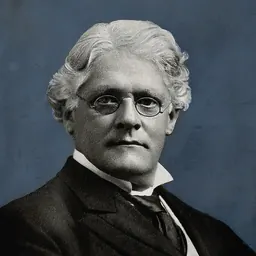
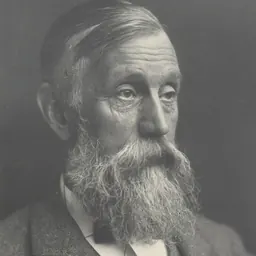
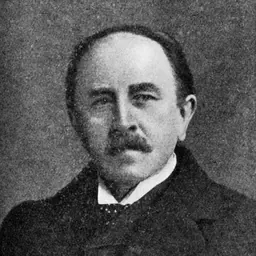
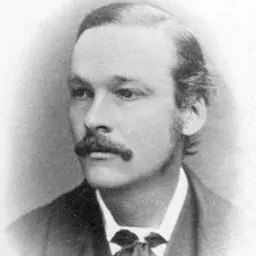


Related people
Same field, nearest in time



Contemporaries
People whose lives overlapped Walter Heape's




Frequently asked questions
Who was Walter Heape?
25 April 1855 - 10 September 1929
When was Walter Heape born?
Walter Heape was born on 25 April 1855 in London.
When did Walter Heape die?
Walter Heape died on 10 September 1929 in Royal Tunbridge Wells.
What was Walter Heape's occupation?
Walter Heape was a zoologist.
What nationality was Walter Heape?
Walter Heape was British.
Sources & further reading
Cite this page
APA: Biography.guide. (2026). Walter Heape. https://biography.guide/walter-heape/
MLA: "Walter Heape." Biography.guide, https://biography.guide/walter-heape/.
Chicago: "Walter Heape." Biography.guide. https://biography.guide/walter-heape/.
Data last updated: 2026-09-20 · Spot an error? Report a correction.
Page generated 2026-09-27 05:23 UTC