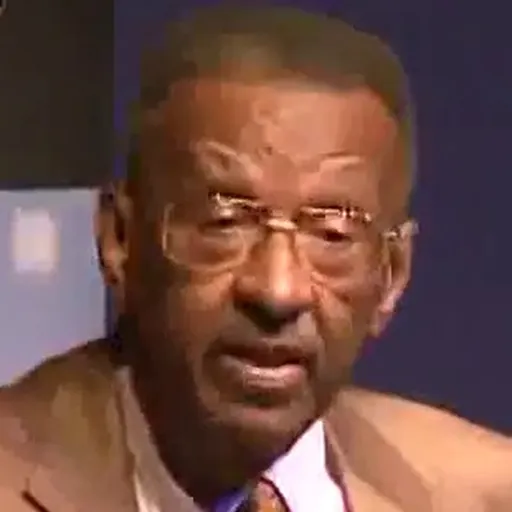
Walter E. Williams
American economist, commentator, and academic
About Walter E. Williams
Lived 1936 – 2020 (aged 84). Walter E. Williams was an American radio personality, economist, university teacher, columnist, journalist and writer.
Walter Edward Williams (March 31, 1936 – December 1, 2020) was an American economist, commentator, and academic. Williams was the John M. Olin Distinguished Professor of Economics at George Mason University, a syndicated columnist, and author. Williams held classical liberal and libertarian views, and wrote frequently for Townhall, WND, and Jewish World Review. Williams was also a popular guest host of The Rush Limbaugh Show when Limbaugh was unavailable.
Early life and education Williams was born in Philadelphia on March 31, 1936. His family during childhood consisted of his mother, his sister, and him; Williams's father played no role in raising Williams or his sister. The family initially lived in West Philadelphia, and later moved to North Philadelphia's Richard Allen housing projects when Williams was ten years old. He attended and graduated from Benjamin Franklin High School in North Philadelphia.
After graduating from high school, Williams traveled to California, where he lived with his father and attended Los Angeles City College for one semester. He later returned to Philadelphia and secured a job as a cab driver for the Yellow Cab Company. In 1959, he was drafted into the military and served as a private in the United States Army.
While stationed in the South, Williams "waged a one-man battle against Jim Crow from inside the army." He challenged the racial order with provocative statements to his fellow soldiers, resulting in an overseeing officer filing a court-martial proceeding against Williams. Williams argued his own case and was found not guilty.
Following his military service, Williams served as a juvenile group supervisor for the Los Angeles County Probation Department from 1963 to 1967. He earned both his master's degree and his PhD in economics from the University of California, Los Angeles (UCLA). Williams's doctoral thesis was titled The Low-Income Market Place.
Speaking of his early college days, Williams said: "I was more than anything a radical. I was more sympathetic to Malcolm X than Martin Luther King, because Malcolm X was more of a radical who was willing to confront discrimination in ways that I thought it should be confronted, including perhaps the use of violence. But I really just wanted to be left alone. I thought some laws, like minimum-wage laws, helped poor people and poor black people and protected workers from exploitation. I thought they were a good thing until I was pressed by professors to look at the evidence." During his time at UCLA, Williams came into contact with economists such as Armen Alchian, James M. Buchanan, and Axel Leijonhufvud who challenged his assumptions. Correspondence between Sowell and Williams appears in "A Man of Letters," a 2007 autobiography authored by Sowell.
Career During his doctoral studies, Williams was an instructor in economics at Los Angeles City College from 1967 to 1969, and at Cal State Los Angeles from 1967 to 1971.
In 1980, Williams joined the economics faculty at George Mason University in Fairfax, Virginia. That same year, Williams began writing a syndicated column, "A Minority View", for Heritage Features Syndicate, which merged with Creators Syndicate in 1991. Williams continued to teach at George Mason until his death in 2020.
In his nearly 50-year career, Williams wrote hundreds of research articles, book reviews, and commentaries for scholarly journals including American Economic Review, Policy Review, and Journal of Labor Research and popular journals including The American Spectator, Newsweek, Reason, and The Wall Street Journal.
Williams was awarded an honorary degree at Universidad Francisco Marroquín. He served on advisory boards including the Review Board of Economics Studies for the National Science Foundation, Reason Foundation, the National Tax Limitation Committee, and the Hoover Institute. He wrote and hosted documentaries for PBS in 1985. The "Good Intentions" documentary was based on his book The State Against Blacks.
Economic and political views As an economist, Williams was a proponent of free market economics and opposed socialist systems of government intervention. Williams believed laissez-faire capitalism to be the most moral, most productive system humans have ever devised.
In the mid-to-late 1970s, Williams conducted research into the Davis–Bacon Act of 1931 and on the impact of minimum wage laws on minority employment. His research led him to conclude the government's interventional programs are harmful. Williams was critical of state programs, including minimum wage and affirmative action laws, stating both practices inhibit liberty and are detrimental to the blacks they are intended to help. He published his results in his 1982 book The State Against Blacks, where he argued that laws regulating economic activity are far greater obstacles to economic progress for blacks than racial bigotry and discrimination. Subsequently, Williams spoke on the topic and penned a number of articles detailing his view that increases in the minimum wage price low skill workers out of the market, eliminating their opportunities for employment.
Williams believed that racism and the legacy of slavery in the United States are overemphasized as problems faced by the black community today. He pointed to the crippling effects of a welfare state and the disintegration of the black family as more pressing concerns. "The welfare state has done to black Americans what slavery couldn't do, and that is to destroy the black family."
Williams viewed gun control laws as a governmental infringement upon the rights of individuals, and argued that they end up endangering the innocent while failing to reduce crime. Williams also made the argument that the true proof of whether or not an individual owns something is whether or not they have the right to sell it. Taking this argument to its conclusion, he supported legalization of selling one's own bodily organs. He argued that government prohibiting the selling of one's bodily organs is an infringement upon one's property rights.
Williams praised the views of Thomas DiLorenzo, and wrote a foreword to DiLorenzo's anti-Abraham Lincoln book, The Real Lincoln. Williams maintained that the American states are entitled to secede from the union if they wish, as the Confederate states attempted to do during the Civil War,
Williams was opposed to the Federal Reserve System, arguing that central banks are dangerous.
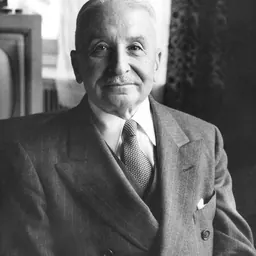
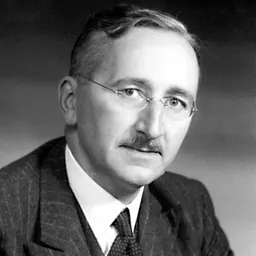
In his autobiography, Williams cited Frédéric Bastiat, Ludwig von Mises, Friedrich Hayek, and Milton Friedman as influences that led him to become a libertarian. Williams praised Ayn Rand's Capitalism: The Unknown Ideal as "one of the best defenses and explanations of capitalism one is likely to read."
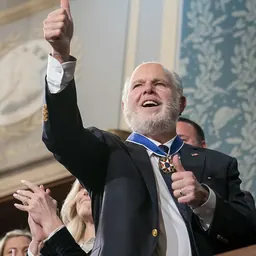
Aside from authoring his weekly columns, Williams was a frequent guest host for Rush Limbaugh's radio program when Limbaugh was away traveling. In 2009, Greg Ransom, a writer for the Ludwig von Mises Institute, ranked Williams as the third-most important "Hayekian" Public Intellectual in America, behind only Thomas Sowell and John Stossel. Reason called Williams "one of the country's leading libertarian voices." He was married to Connie (née Taylor) from 1960 until her death in 2007. They had one daughter. When he began teaching at George Mason University, he rented a cheap hotel room in Fairfax, Virginia, where he lived from Tuesdays through Thursdays around his teaching schedule. Williams was a cousin of Julius Erving, a professional basketball player with the Philadelphia 76ers.
Williams served on the board of directors of Media General, parent company of the Richmond Times-Dispatch, from 2001 until his retirement from the board in 2011. He was also chairman of the company's audit committee.
Death On December 1, 2020, Williams died in his car in Fairfax, Virginia, shortly after teaching a class at George Mason University, at age 84. His daughter said that he suffered from chronic obstructive pulmonary disease and pulmonary hypertension. Shortly before his death, Williams was featured in the documentary, Uncle Tom, where he provided commentary on conservatism within the black community and discussed his own perspective as a black conservative.
Don’t just read it —
keep it.
Full-length biographies made to live with: read them, listen on the way to work, watch them tonight.
- E-book
- Audio
- Video
Instant download · yours to keep · every purchase keeps this site free
Important facts
People in Walter E. Williams's life
Named in this biography and alive at the same time


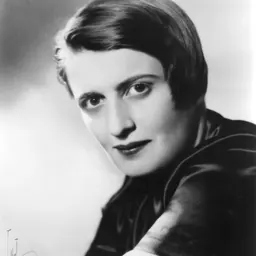

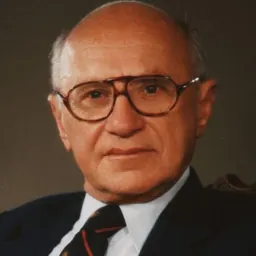
Related people
Same field, nearest in time
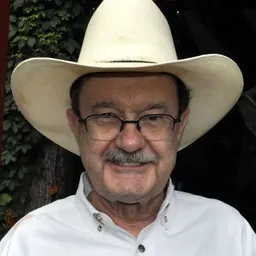
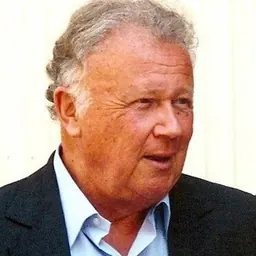


Contemporaries
People whose lives overlapped Walter E. Williams's





Frequently asked questions
Who was Walter E. Williams?
American economist, commentator, and academic (1936-2020)
When was Walter E. Williams born?
Walter E. Williams was born on 31 March 1936 in Philadelphia.
When did Walter E. Williams die?
Walter E. Williams died on 1 December 2020 in George Mason University, Arlington.
What was Walter E. Williams's occupation?
Walter E. Williams was a radio personality, economist, university teacher, columnist, journalist and writer.
What nationality was Walter E. Williams?
Walter E. Williams was American.
Sources & further reading
· Wikipedia: Walter E. Williams
Cite this page
APA: Biography.guide. (2026). Walter E. Williams. https://biography.guide/walter-e-williams/
MLA: "Walter E. Williams." Biography.guide, https://biography.guide/walter-e-williams/.
Chicago: "Walter E. Williams." Biography.guide. https://biography.guide/walter-e-williams/.
Data last updated: 2026-09-21 · Spot an error? Report a correction.
Portrait: Wikimedia Commons · author & licence
Page generated 2026-09-27 04:59 UTC