
About Walter De Maria
Lived 1935 – 2013 (aged 77). Walter De Maria was an American sculptor, composer, land artist, draftsperson, painter and conceptual artist.
Walter Joseph De Maria (October 1, 1935 – July 25, 2013) was an American artist, sculptor, illustrator and composer, who lived and worked in New York City. Walter de Maria's artistic practice is connected with minimal art, conceptual art, and land art of the 1960s.
LACMA director Michael Govan said, "I think he's one of the greatest artists of our time." Govan, who worked with De Maria for a number of years, found De Maria's work "singular, sublime and direct". Walter De Maria's first academic interest was music—first piano, then percussion. He also took to sports and cars, of which he made drawings. From his exposure to the work of La Monte Young and dancer Simone Forti, among others, De Maria developed an interest in task-oriented, game-like projects that resulted in viewer-interactive sculptures. For example, his Boxes for Meaningless Work (1961) is inscribed with the instructions, "Transfer things from one box to the next box back and forth, back and forth, etc. Be aware that what you are doing is meaningless."
In 1960, De Maria moved to New York City where he married his wife Susanne Wilson (later Susanna) one year later.
His early sculptures from the 1960s were influenced by Dada, suprematism and constructivism. This influence led De Maria into using simple geometric shapes and industrially manufactured materials such as stainless steel and aluminium – materials which are also characteristic of Minimal art. With the support of collector Ethel Scull, De Maria started making pieces in metal in 1965.
Also in the mid-1960s, he became involved in various artistic activities. His piece, Cage, for John Cage, was included in the seminal 1966 Primary Structures exhibit at the Jewish Museum in New York. He appeared in happenings, composed two musical works (Cricket Music, 1964; Ocean Music, 1968), and produced two films (Three Circles and Two Lines in the Desert; Hardcore, both 1969).
De Maria briefly ran a gallery on Great Jones Street in lower Manhattan with his wife Susanna, showing Joseph Cornell's collection of rare films, Robert Whitman's Happenings (he was then married to and created with dancer/artist Simone Forti), and exhibiting De Maria's Minimalist sculptures made of wood. In 1980, De Maria bought a four-story, 16,400-square-foot Con Edison substation at 421 East Sixth Street, and an adjacent lot at No. 419, between First Avenue and Avenue A. In February 2014, this property was selling for $25 million. Businessman and art collector Peter Brant purchased De Maria's studio for $27 million. Brant's plans for the space were unknown. The building was developed into the "Brant Art Center," part of the Peter Brant collection. https://www.brantfoundation.org/visit/
De Maria went to California in May 2013 to celebrate his mother's 100th birthday and had a stroke there a few days later. He remained there for treatment. The field is commissioned and maintained by Dia Art Foundation. It has been speculated that The Lightning Field influenced the imagery of author Cormac McCarthy's epilogue in his 1985 novel, Blood Meridian.
In the 1960s and 1970s, De Maria created enduring urban works. As complementary pieces, Vertical Earth Kilometer (1977), and The Broken Kilometer (1979), address the idea of unseen or abstracted distance. Vertical Earth Kilometer is a one-kilometer-long brass rod, two inches in diameter, drilled into Friedrichsplatz Park in central Kassel, Germany. The rod's circular top, flush to the earth's surface, is framed by a two-meter square plate of red sandstone. In 1979, De Maria meticulously arranged five hundred brass rods for The Broken Kilometer, a permanent installation at 393 West Broadway in New York.
In contrast to the hard metal of both Kilometer pieces, the third of these urban works, The New York Earth Room (1977), is a 3,600-square-foot room filled to a depth of 22 inches with 250 cubic yards of earth (the New York work is a permanent iteration of Munich Earth Room, 1968, a temporary installation in Munich). Also in 1977, the artist recreated the work at the Heiner Friedrich Gallery in New York, which was then permanently reinstalled in 1980 at 141 Wooster Street, New York.
The Broken Kilometer is also part of De Maria's series of monumental sculptures using a horizontal format, which feature groupings of elements ordered according to precise calculations. This series includes 360°/I-Ching (1981), A Computer Which Will Solve Every Problem in the World/3-12 Polygon (1984), 13, 14, 15 Meter Rows (1985), Apollo's Ecstasy (1990), and The 2000 Sculpture (1992).
In 1989 De Maria completed a sphere of polished granite for the Assemblée Nationale in Paris, followed in 2000 and 2004 by works for two museums on Naoshima Island in Japan, the Naoshima Contemporary Art Museum and the Chichu Art Museum. A comparable, 25-ton sculpture entitled Large Red Sphere (2002) was installed in the Türkentor, Munich, in 2010.
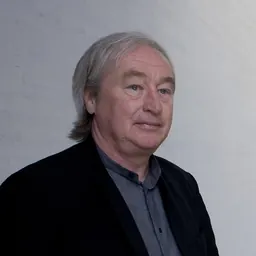
One Sun/34 Moons (2002), conceived by the artist in collaboration with architect Steven Holl, was opened 2007 at the Nelson-Atkins Museum of Art, Kansas City. In 2010, The 2000 Sculpture (1992) was the first work of art to inaugurate the Resnick Pavilion at the Los Angeles County Museum of Art.
Exhibitions De Maria and Robert Whitman opened the 9 Great Jones Street gallery in New York in 1963; the same year, De Maria's first solo show of sculpture was presented there. He had his first solo exhibition in a commercial gallery in 1965, at the Paula Johnson Gallery on New York's Upper East Side. (Its owner soon became better known with the Paula Cooper Gallery) His work was more widely shown outside the United States, and he had major exhibitions in Japan and Europe. Organized by the Menil Collection in 2011, "Walter De Maria: Trilogies" was the artist's first major museum exhibition in the United States. Set in the desolate desert spaces of the American southwest, this feature documentary film contains rare footage of De Maria and the artist's extant and non-extant works. Troublemakers was one of twelve documentary films selected by the 53rd New York Film Festival, September 25 – October 11, 2015. The film released theatrically at IFC Center, New York, January 8, 2016.
Literature
Walter De Maria: Trilogies, edited by Josef Helfenstein and Clare Elliott. Houston: Menil Collection, 2011. Jane McFadden, Walter De Maria: Meaningless Work. London: Reaktion Books, 2016. Artists on Walter De Maria, edited by Katherine Atkins and Kelly Kivland. New York: Dia Art Foundation, 2017. Walter De Maria: The Lightning Field, edited by Stephen Hoban, Alexis Lowry, and Jessica Morgan, photographs by John Cliett. New York: Dia Art Foundation, 2017. Interview with Paul Cummings, by Walter De Maria, edited by Cerise Fontaine. Paris: Éditions Lutanie, 2019.
Don’t just read it —
keep it.
Full-length biographies made to live with: read them, listen on the way to work, watch them tonight.
- E-book
- Audio
- Video
Instant download · yours to keep · every purchase keeps this site free
Important facts
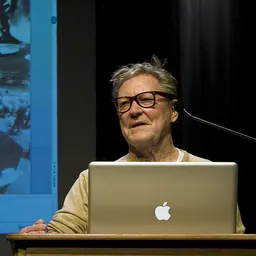
People in Walter De Maria's life
Named in this biography and alive at the same time






Related people
Same field, nearest in time



Contemporaries
People whose lives overlapped Walter De Maria's





Frequently asked questions
Who was Walter De Maria?
American painter and sculptor (1935–2013)
When was Walter De Maria born?
Walter De Maria was born on 1 October 1935 in Albany.
When did Walter De Maria die?
Walter De Maria died on 25 July 2013 in New York City, Los Angeles.
What was Walter De Maria's occupation?
Walter De Maria was a sculptor, composer, land artist, draftsperson, painter and conceptual artist.
What nationality was Walter De Maria?
Walter De Maria was American.
Sources & further reading
Cite this page
APA: Biography.guide. (2026). Walter De Maria. https://biography.guide/walter-de-maria/
MLA: "Walter De Maria." Biography.guide, https://biography.guide/walter-de-maria/.
Chicago: "Walter De Maria." Biography.guide. https://biography.guide/walter-de-maria/.
Data last updated: 2026-09-20 · Spot an error? Report a correction.
Page generated 2026-09-27 05:09 UTC