
Walter Ciszek
Polish-American Jesuit priest and missionary
About Walter Ciszek
Lived 1904 – 1984 (aged 80). Walter Ciszek was an American catholic priest and catholic theologian.
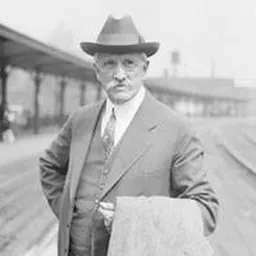
Walter Joseph Ciszek, S.J. (November 4, 1904 – December 8, 1984) was a Polish-American Jesuit priest of the Russian Greek Catholic Church who clandestinely conducted missionary work in the Soviet Union between 1939 and 1963.
Fifteen of these years were spent in confinement and hard labor in the Gulag, plus five preceding them in Moscow's infamous Lubyanka prison. He was released and returned to the United States in 1963, after which he wrote two books, He Leadeth Me and the memoir With God in Russia, and served as a spiritual director.
Ciszek's cause for canonization was opened in 1990 and was suspended in 2026.
Early life and studies Ciszek was born on November 4, 1904, in the mining town of Shenandoah, Pennsylvania, to Polish immigrants Mary (Mika) and Martin Ciszek, who had emigrated to the US in the 1890s from Galicia in Austria-Hungary.
In 1934, Ciszek was sent to Rome to study theology, Russian, the history of Russia and liturgy at the Pontifical Russian College (or 'Russicum'), a Jesuit-run seminary established to train priests of the Russian Greek Catholic Church for missionary work in the Soviet Union and the Russian diaspora.
His fellow Russicum seminarians included Alexander Kurtna, a convert from Estonian Orthodoxy whom Ciszek referred to in his memoirs only by the codename "Misha". Following his expulsion by the Russicum's rector in 1940, Kurtna worked, with only one interruption between 1940 and 1944, as a translator for the Vatican's Congregation for the Eastern Churches. At the same time, he spied for the Soviet NKVD, with devastating results for Ciszek and many other underground priests and faithful. Kurtna, who was loyal to the USSR, started spying for Nazi Germany in 1943 because his handler and Obersturmbannführer of the SS, Herbert Kappler, threatened to send him and his wife to a concentration camp. Kurtna however betrayed Kappler by stealing codebooks from his office and passing them to the Soviets. Kurtna and Ciszek met one another again in 1948 as fellow political prisoners in Norillag.
In 1937, Ciszek was ordained a priest in the Byzantine Rite in Rome and took the name Vladimir. In 1938, Ciszek was sent to the Jesuit mission in Albertyn in eastern Poland. most of them in solitary confinement. In 1942, he signed a confession of espionage under severe torture and was sentenced to 15 years of hard labor in the Gulag.
Ciszek was to remain in Lubyanka for four more years. In 1946, he was sent by train to Krasnoyarsk then 20 days by boat north on the Yenisei River until reaching 300km above the Arctic Circle at the city of Norilsk, the center of the labor camp complex known as Norillag. There, Ciszek was forced to load coal onto freighter vessels and later transferred to working in coal mines located in the permafrost. A year later, he was sent to work on the construction of a nickel, copper, cobalt, platinum, and palladium ore refinery. From 1953 to 1955, he worked in mines. His memoirs provide a vivid description of the Norilsk uprising, which started at Gorlag spread through Norillag in the aftermath of Joseph Stalin's death.
Throughout his lengthy imprisonment, Ciszek continued to pray, to offer both the Tridentine Mass and the Byzantine Rite Divine Liturgy, to hear confessions, conduct retreats and perform secret and illegal parish ministry. At least one media outlet, The Tablet (Brooklyn), a Brooklyn, NY - based Catholic publication, in 1952 reported him as having died on the way home from Siberia. Until he was allowed to write to the US in 1955, he was presumed dead by both his family and the Society of Jesus.
By April 22, 1955, Ciszek's sentence was complete, and he was released with the restriction to live only in the city of Norilsk. At this time, he was able to write to his sisters in the US. After setting up a Catholic parish in Norilsk, Ciszek was ordered by the KGB in 1958 to move to Krasnoyarsk, where he secretly established several nearby mission parishes. After the KGB learned of this, he was forcibly transferred to Abakan, to the south, where he worked as an automobile mechanic for four years. In 1963, he received a letter from his sisters in the US. Several months later, the Soviet Union decided to return him (and American student Marvin Makinen) to the US. The cause for canonization was investigated by the Diocese of Allentown and suspended in 2026.
According to Constantin Simon, S.J., With God in Russia, Ciszek's memoir of his decades in the USSR, went through multiple editions in various languages, including French, German, Spanish, Italian, Dutch, Portuguese, Polish, and Slovak. Although it remains popular among Catholics in North America, the memoir has not gained the same popularity in Europe, where Ciszek has been eclipsed by fellow Russicum graduate and Gulag survivor Pietro Leoni.
Ciszek Hall at Fordham University in New York City is named after him. It currently houses Jesuit scholastics in the first stage of formal study for the priesthood. Additionally, the university has sponsored an annual Ciszek Lecture since 2002.
Books With God in Russia, (with Daniel L. Flaherty, S.J.), a memoir (New York: McGraw-Hill, 1964). He Leadeth Me, (with Daniel L. Flaherty, S.J.), a memoir (New York: Doubleday, 1973). With God in America (published posthumously), a memoir with primary sources (Chicago: Loyola Press, 2016).
Don’t just read it —
keep it.
Full-length biographies made to live with: read them, listen on the way to work, watch them tonight.
- E-book
- Audio
- Video
Instant download · yours to keep · every purchase keeps this site free
Important facts
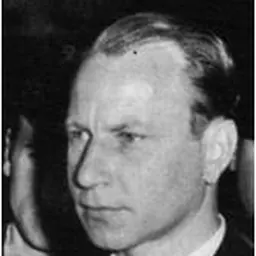
People in Walter Ciszek's life
Named in this biography and alive at the same time





Related people
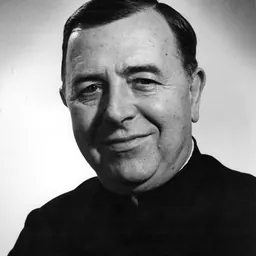
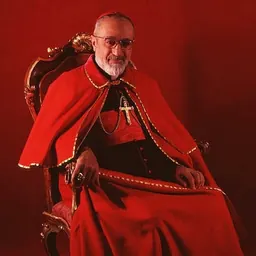
Same field, nearest in time


Contemporaries
People whose lives overlapped Walter Ciszek's

Frequently asked questions
Who was Walter Ciszek?
Polish-American Jesuit priest and missionary
When was Walter Ciszek born?
Walter Ciszek was born on 4 November 1904 in Shenandoah.
When did Walter Ciszek die?
Walter Ciszek died on 8 December 1984 in The Bronx.
What was Walter Ciszek's occupation?
Walter Ciszek was a catholic priest and catholic theologian.
What nationality was Walter Ciszek?
Walter Ciszek was American.
Sources & further reading
Cite this page
APA: Biography.guide. (2026). Walter Ciszek. https://biography.guide/walter-ciszek/
MLA: "Walter Ciszek." Biography.guide, https://biography.guide/walter-ciszek/.
Chicago: "Walter Ciszek." Biography.guide. https://biography.guide/walter-ciszek/.
Data last updated: 2026-09-20 · Spot an error? Report a correction.
Page generated 2026-09-27 05:11 UTC