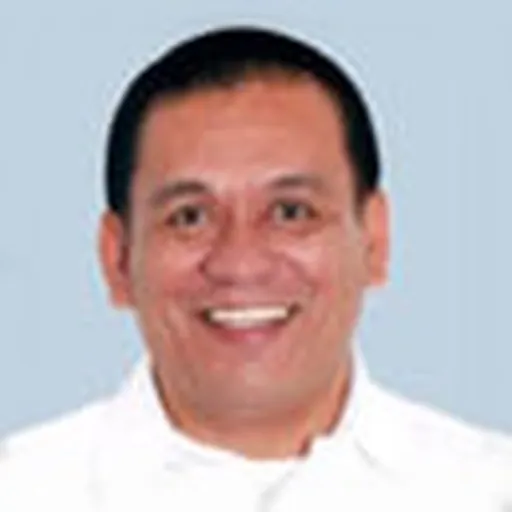
About Wahab Akbar
Lived 1960 – 2007 (aged 47). Wahab Akbar was a Filipino politician.
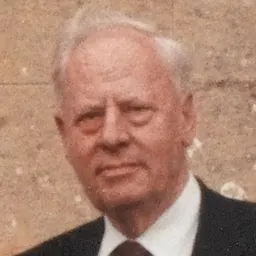
Ustadz Wahab M. Akbar (April 16, 1960 – November 13, 2007) was a Filipino politician who served three terms as governor of Basilan, during which time he was known for his "eye for an eye, tooth for a tooth" policy for dealing with kidnappers and terrorists in the province. He was later elected as congressman for the lone district of Basilan in the House of Representatives, but was one of 4 people killed in a bomb attack at the Batasang Pambansa. Police publicly suspected the attack was directed at him by political opponents.
Life Wahab Akbar was born in Lantawan, Basilan where his father, Hadji Mohtamad Salajin, served as the town's first mayor. At age 11 Akbar joined his father to fight in the mountains, but after three years Salajin was persuaded to join the government and was appointed mayor of Lantawan by President Ferdinand Marcos.
He studied agriculture at Gregorio Araneta University (now De La Salle Araneta University), A member of the Liberal Party, Akbar was first elected governor of Basilan in the 1998 elections. He was reelected in 2001 and 2004.
Akbar was constitutionally barred from seeking a fourth consecutive term as governor. Instead, he successfully sought election to the Congress, representing the lone district of his home province. One of his wives won the election to succeed him as governor. Another of his wives is mayor of the provincial capital, Isabela City; A third wife ran, and lost, the race to be mayor of another city in Basilan. from injuries sustained following an explosion at the House of Representatives in the Batasang Pambansa complex. The blast also immediately killed the driver of another legislator.
The next day, his body was brought to Basilan via Zamboanga City. His body was brought to the respective houses of his first two wives before being buried in front of his mansion in Barangay Sumagdang, Isabela which was then under construction.
Writ of Habeas Corpus On December 14, 2007, in two-page resolution, the Supreme Court of the Philippines issued a writ of habeas corpus on petition of suspects Caidar Aunal, Adham Kusain, and Ikram Indama. It required the Philippine National Police's (PNP) Criminal Investigation and Detection Group (CIDG), National Capital Region-Criminal Investigation and Detection Unit (NCR-CIDU) and the PNP Custodial Center to file returns before Quezon City Regional Trial Court Executive Judge Romeo Zamora on December 18. However, the family suspected that the head of the killing was close ally of Senator and future President Benigno Aquino III and Anak Mindanao Representative Mujiv Hataman.
Don’t just read it —
keep it.
Full-length biographies made to live with: read them, listen on the way to work, watch them tonight.
- E-book
- Audio
- Video
Instant download · yours to keep · every purchase keeps this site free
Important facts
Family & relationships
People in Wahab Akbar's life
Named in this biography and alive at the same time

Related people
Same field, nearest in time




Contemporaries
People whose lives overlapped Wahab Akbar's



Frequently asked questions
Who was Wahab Akbar?
politician (1960-2007)
When was Wahab Akbar born?
Wahab Akbar was born on 16 April 1960 in Lantawan.
When did Wahab Akbar die?
Wahab Akbar died on 13 November 2007 in Batasang Pambansa, Quezon City.
What was Wahab Akbar's occupation?
Wahab Akbar was a politician.
What nationality was Wahab Akbar?
Wahab Akbar was Filipino.
Sources & further reading
Cite this page
APA: Biography.guide. (2026). Wahab Akbar. https://biography.guide/wahab-akbar/
MLA: "Wahab Akbar." Biography.guide, https://biography.guide/wahab-akbar/.
Chicago: "Wahab Akbar." Biography.guide. https://biography.guide/wahab-akbar/.
Data last updated: 2026-09-20 · Spot an error? Report a correction.
Portrait: Wikimedia Commons · author & licence
Page generated 2026-09-27 04:57 UTC