
About Wadsworth Jarrell
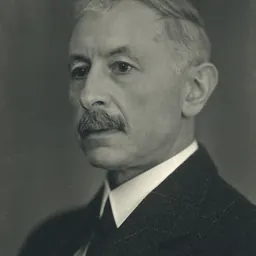
Born 1929. Wadsworth Jarrell is an American sculptor, painter, printmaker, graphic artist and photographer.
Wadsworth Aikens Jarrell (born November 20, 1929) is an American painter, sculptor and printmaker. He was born in Albany, Georgia, and moved to Chicago, Illinois, where he attended the Art Institute of Chicago. After graduation, he became heavily involved in the local art scene and through his early work he explored the working life of African Americans in Chicago and found influence in the sights and sounds of jazz music. In the late 1960s, he opened WJ Studio and Gallery, where he, along with his wife, Jae, hosted regional artists and musicians.
Mid-1960s Chicago saw a rise in racial violence leading to the examination of race relations and black empowerment by local artists. Jarrell became involved in the Organization of Black American Culture (OBAC), a group that would serve as a launching pad for the era's Black Arts movement. In 1967, OBAC artists created the Wall of Respect, a mural in Chicago that depicted African-American heroes and is credited with triggering the political mural movement in Chicago and beyond. In 1969, Jarrell co-founded AfriCOBRA (the African Commune of Bad Relevant Artists). AfriCOBRA would become internationally acclaimed for their politically themed art and use of "coolade colors" in their paintings.
Jarrell's career took him in 1977 to Africa, where he found inspiration in the Senufo people of Ivory Coast, Mali and Burkina Faso. Upon return to the United States, he moved to Georgia and taught at the University of Georgia. In Georgia, he began to use a bricklayer's trowel on his canvases, creating a textured appearance within his already visually active paintings. The figures often seen in his paintings are abstract and inspired by the masks and sculptures of Nigeria. These Nigerian arts have also inspired Jarrell's totem sculptures. Living and working in Cleveland, Jarrell continues to explore the contemporary African-American experience through his paintings, sculptures, and prints. His work is found in the collections of the National Museum of African American History and Culture, High Museum of Art, The Studio Museum in Harlem, Detroit Institute of Arts and the University of Delaware.
Personal life
Early life Jarrell was born in Albany, Georgia, on November 20, 1929, to Solomon Marcus and Tabitha Jarrell. Named after the poet Henry Wadsworth Longfellow, A year after Jarrell's birth, the family moved to a 28-acre farm near Athens, Georgia, where they grew vegetables and cotton. Jarrell's father was a carpenter and furniture maker who had his own business, the S.M. Jarrell Furniture Store. All three Jarrell boys worked there, one of them learning to cane chairs. As a child, Jarrell first attended a one-room schoolhouse, where he was encouraged by his teacher, Jessie Lois Hall, to explore his artistic side.
Jarrell's relationship with his mother became closer once his father and one of his brothers left to work at a shipyard during World War II. While in high school, Jarrell helped his mother tend the farm, but did not like the work.
Higher education and current life
After military service, Jarrell moved to Chicago, where his sister Nellie attended Northwestern University. It was in Chicago that Jarrell had his first museum experiences. Growing in up Georgia, African Americans were not allowed to visit museums until the Civil Rights Act of 1964, therefore these early museum visits made a major impression on Jarrell.
In 1963, Jarrell met Elaine Annette Johnson, known as Jae, who ran a clothing boutique, the woman who became his second wife on June 2, 1967. They spent their honeymoon in Nassau As the social and economic world of Chicago declined, gang violence threatened the family's neighborhood. After their second child, Jennifer, was born the family decided to move to the New York City area. In May 1971, they made the move, first heading to Waterbury, Connecticut, then to New Haven, before spending three months in Boston. The family then moved to Washington, D.C., where Jarrell began teaching at Howard University in 1971, recruited by Jeff Donaldson. At Howard, he pursued his MFA, focusing on African culture, specifically the Senufo people. The couple had another daughter, Roslyn Angela, in 1972.
Struggling to fit in at Howard, unable to make tenure, and with concerns about the increasing crime rates in Washington, the family decided to move once again in 1977, this time to Athens, Georgia. They opened a small shop called Tadpole Toys and Hobby Center in Athens, to great reception. However, as a result of poor sales, in May 1982 they were forced to close it. Soon afterwards, Jarrell received tenure at the university.
In 1988, he retired from his position and from teaching as a whole in order to focus on his creative work. Currently, Jarrell and Jae live and work in Cleveland, Ohio.
Artistic career
Chicago After graduation from the Art Institute, Jarrell lived off his wages from mixing paint and furthered his skills in his studio for a year. He started to submit his work to competitions, being accepted at the Chicago Show at the Navy Pier and the Union League Show. Jarrell produced artworks inspired by theories learned in school and scenes of everyday life in black Chicago. With an interest in horse racing, jazz clubs and bars, he often took a sketchpad on his explorations, eventually creating paintings like Neon Row (1958), a street scene, Shamrock Inn (1962), a bar scene, and The Jockeys #1 (1962), from a visit to a horse-racing track.
A notable turning point for his career came in 1964 when his watercolor entitled "The Art Pub" – similar to Jazz Giants #1 (1962) – was accepted for the Art Institute's exhibition Second Biennial of Prints, Drawings, Watercolors By Illinois Artists (cat. 48). The exhibit earned him prizes, media attention, and the opportunity to exhibit his work at other galleries throughout the Midwest. He moved to a large studio in the Hyde Park neighborhood and continued expanding on his work and focusing on musical and sport related themes.
Influenced by his honeymoon in the Caribbean, Jarrell became interested in the effects of man-made and natural sunlight on the environment. Experimentation with pigments, media, imagery and design allowed him to create artworks that fully expressed his intended messages. Referring to works such as Nassau (1968) and Sign of the Times (1966), Jarrell commented: "The colors of the Bahamas influenced my use of color and my approach to my work." With Sign of the Times he shows a street scene, his first attempt at a painting involving social interaction.
Wall of Respect In 1964, Chicago experienced two major race riots. Triggered by Civil Rights struggles and angst, more riots followed in subsequent years and the Black Power movement came into fruition. Artists began to explore ways to express black pride, self-determination and self-reliance leading in 1966 to the Organization of Black American Culture (OBAC). Jarrell focused on a favorite theme, rhythm and blues, and featured portrayals of James Brown, B.B. King, Billie Holiday, Muddy Waters, Aretha Franklin and Dinah Washington. The Artists' Workshop would sour towards the end of the project: there were controversies stemming from the painting in Norman Parish's section, conflicts regarding copyrights being sold without permission, disagreements on law enforcement involvement, as well as deceit. Nevertheless, the Wall was considered a success, triggering the creation of liberation themed murals in Chicago and beyond. The gallery also served as a gathering place for the likes of Jeff Donaldson, Barbara Jones-Hogu, Gerald Williams and others, who would come to discuss concepts of a relevant black art aesthetic. The group struggled: Jarrell described the search as an attempt to find "a collective concept that would say 'black art' at a glance". Eventually, the group made a breakthrough while listing principles and ideas regarding the concept of black art; the term "coolade colors" was contributed by a fabric designer. The term covered the bright fashion of stylish African-American men of the time, which Jarrell described as "loud lime, pimp yellows, hot pinks, high-key color clothing". The final concept for their aesthetic search would be message oriented art, revolving around socially aware content. African design would be included and meaningfulness for black people would be a necessity. This group's formation would be considered one of the best aligned and organized collectives in the Black Arts Movement. This group went on to form COBRA.
COBRA and the black aesthetic
Like many African-American grass roots organizations, Jarrell's gallery group struggled to carry the torch after the deaths of Martin Luther King, Jr. and Malcolm X. Jarrell and his fellow Chicago artists took the path of non-violence by way of their artistic talents and a sense of ownership through their contributions at WJ Studio and Gallery. Around this time, there had been a stereotype created by the Moynihan Report that viewed the black family as dysfunctional, which gave COBRA the motivation to prove that the black family is stronger and more unified than portrayed. With these ideals backing them and their new aesthetic philosophy, the group took on the name COBRA – Coalition of Black Revolutionary Artists.
AfriCOBRA's beginnings
In 1969, COBRA revised their philosophy and artistic concept to expand their concern for black liberation and civil rights on an international level. Inspired by the words of Malcolm X, "All black people, regardless of their land base, have the same problems, the control of their land and economics by Europeans or Euro-Americans", they changed their name to AfriCOBRA: African Commune of Bad Relevant Artists. Four images of Malcolm X are painted alongside those of Huey Newton, Jesse Jackson and Stokley Carmichael. "B" makes its usual appearance representing "blackness" and "badness" as well as a quote from Ossie Davis's eulogy at Malcolm's funeral. This piece, along with Coolade Lester, appeared in AFRI-COBRA's first exhibition in 1970 at the Studio Museum in Harlem: AFRI-COBRA I: Ten in Search of a Nation. The response to the show was one of misunderstanding by many viewers, with the result that the concepts presented were interpreted as "protest art".
AFRICOBRA II was held in 1971 at the Studio Museum in Harlem before it traveled to five other museums and galleries. Jarrell exhibited Revolutionary and Black Prince (both 1971) at the show. These two portraits are described by art historian Robert Douglas as displaying "Jarrell's masterful understanding of portraiture, rendered through a chiaroscuro technique employing a multitude of meticulously painted B's in different sizes and coolade hues." Revolutionary is a homage to Angela Davis. She wears a Revolutionary Suit that was designed by Jae Jarrell for the AFRICOBRA II exhibition. Prints were made of the work. However, in the original, the cartridge belt is attached to the canvas, an idea of Jae's. The words "love", "black", "nation", "time", "rest", "full of shit", "revolution", and "beautiful" burst out of her head on the canvas. The message "I have given my life in the struggle. If I have to lose my life, that is the way it will be," travels down her chest and left arm. "B", as usual, represents "blackness" "bad" and in this painting "beautiful". The work epitomizes the goal by AFRICOBRA artists to use all space possible in their creations, described as "jam-packed and jelly tight". Black Prince is Jarrell's second tribute to Malcolm X. "B" appears in the painting, as well as "P"; "PRINCE" and "BLACK" which travel throughout Malcolm's face and hand. The quote "I believe in anything necessary to correct unjust conditions, political, economic, social, physical. Anything necessary as long as it gets results," is painted across his chest and arm. Critics were more aware of the aesthetic and movement at this show; critic Paul Richard commented that the works of Nelson Stevens, Jeff Donaldson and Jarrell "together contradict something I have long believed: that art that is so blatantly political is not art at all." with imagery, making it hard to decipher in a short time.
In winter of 1977, Jarrell and Jae visited Lagos, Nigeria, as part of the American delegation to FESTAC '77, the Second World Black and African Festival of Arts and Culture, making this the couple's first international exhibition. Other AFRICOBRA members journeyed there as well. Jarrell was influenced heavily by the bronze lost-wax castings of Benin and the woodcarving and textile arts of Oshogbo, which he believed solidified the mission of AFRI-COBRA's symbolic work through "intuitive space." Jarrell also revisited his passion for horse racing, attending the Grand Durbar in Kaduna. On Jarrell's return, AFRI-COBRA formed their next show "AFRI-COBRA/Farafindugu"; farafindugu inferring "black world" in Mandinka.
The exhibit, at the African American Museum in Philadelphia, featured two works by Jarrell created as a response to his journey to Africa: Mojo Workin and Soweto (both 1977). Mojo Workin featured a contribution from his then six-year-old eldest daughter, Jennifer. She created the drawing The Magic Lady and with Jarrell's painting it was believed that mojo was expressed when others encountered the work. This is one of the first times Jarrell uses a stained canvas. Soweto reflects the struggles of African people, specifically those suffering from the apartheid in South Africa. The painting is named after the city of Soweto, where a massacre of students occurred in 1976.
Georgia
In 1977, the Jarrells moved from Washington, D.C. to Athens, Georgia. With his children getting older and the couple's toy company struggling to stay afloat, Jarrell became assistant professor at the University of Georgia. Upon his return he was promoted to full professor at the university in February 1987, but he resigned in 1988.
During the 1990s, Jarrell continued to explore aspects of black life in his paintings. Dudes on the Street (1991) is a depiction of black life in the city; two cartoon-like men and two women stand on the street with an expired parking meter next to them. The background features a ribs restaurant and a record shop, with coolade colors drenching the entire landscape. Robert Douglas compared the piece to Chicken Shack by Archibald Motley, stating "both artists have fulfilled the mission of celebrating black life". Two paintings about boxing were created during this time as well: Stride of a Legend/Tribute to Papa Tall, a tribute to Muhammad Ali and textile designer Papa Tall of Senegal, and The Champion (1991), a portrayal of Evander Holyfield. In 1993, Jarrell would have a solo show titled Edge Cutters at the Kentucky Derby Museum in Lexington, Kentucky. Jarrell occasionally traveled with Harris, hanging his paintings behind Harris as he performed. The painting is a large mixed-media polyptych of shaped canvas, and a painted six-stringed guitar sits on the top of the work. The painting features glued on photographs of Harris and two painted portraits of the musician, surrounded by Jarrell's signature symbols, designs and patterns.
Sculpture
Inspired by his trip to Italy, Jarrell created the sculpture Tribute to Ovambo Bellows, a conical-shaped painted tribute to the Ovambo people, which would be the basis for a new shift in his work, towards sculpture. Many of the sculptures blend elements of African art and design; Sorcerer (1993) and Messenger of Information (1993) show his earlier influences from Senufo art and other inspirations related to the design, spirituality and people of Africa. Totem-like sculptures began to be created in 1995. The three sculptures making up the Ensemble series (1995) each stand more than five feet tall and are painted with brilliant colors, topped off with a small animal. For the first time, in Days of the Kings (1995), horse racing appears in Jarrell's sculptures. Sixteen totems serve as tributes to African Americans in horse racing, reminiscent of the designs of the Bijogo and Alberto Giacometti.
Reception
Dr. Stacy Morgan, association professor in the department of American Studies at the University of Alabama, describes Jarrell's work as "a remarkable body of vibrant, stylistically innovative and politically engaged art". Award, 1974, District of Columbia Commission on the Arts Artist-in-residence, 1974, District of Columbia Public Schools
Selected collections Cleveland Museum of Art High Museum of Art Museum of Contemporary Art of Georgia National Museum of African American History and Culture Nortel The Studio Museum in Harlem University of Delaware
Don’t just read it —
keep it.
Full-length biographies made to live with: read them, listen on the way to work, watch them tonight.
- E-book
- Audio
- Video
Instant download · yours to keep · every purchase keeps this site free
Important facts
Family & relationships
People in Wadsworth Jarrell's life
Named in this biography and alive at the same time






Related people
Same field, nearest in time



Contemporaries
People whose lives overlapped Wadsworth Jarrell's


Frequently asked questions
Who is Wadsworth Jarrell?
African American artist (born 1929)
When was Wadsworth Jarrell born?
Wadsworth Jarrell was born on 20 November 1929 in Albany.
What is Wadsworth Jarrell's occupation?
Wadsworth Jarrell is a sculptor, painter, printmaker, graphic artist and photographer.
What nationality is Wadsworth Jarrell?
Wadsworth Jarrell is American.
Sources & further reading
· Wikipedia: Wadsworth Jarrell
Cite this page
APA: Biography.guide. (2026). Wadsworth Jarrell. https://biography.guide/wadsworth-jarrell/
MLA: "Wadsworth Jarrell." Biography.guide, https://biography.guide/wadsworth-jarrell/.
Chicago: "Wadsworth Jarrell." Biography.guide. https://biography.guide/wadsworth-jarrell/.
Data last updated: 2026-09-20 · Spot an error? Report a correction.
Page generated 2026-09-27 05:16 UTC