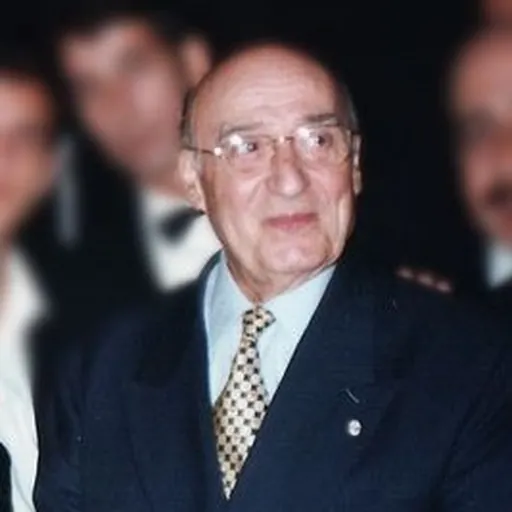
About Wadie Elsafi
Lived 1921 – 2013 (aged 91). Wadie Elsafi was a Lebanese singer, composer, songwriter, oud player and actor.
Wadih El Safi (, born Wadih Francis; November 1, 1921 – October 11, 2013) was a Lebanese singer and composer. Born in Niha, Lebanon, Wadih El Safi started his artistic journey at the age of sixteen when he took part in a singing contest held by Lebanese Radio and was chosen the winner of all categories among 40 other competitors.
Early life Wadih El Safi was born into a Maronite family in Niha, Chouf on November 1, 1921. He was the second of eight children. His father Bishara Youssef Gabriel Francis, was a sergeant in the Lebanese gendarmerie and his sister Hanaa Al-Safi was a singer. Wadih El Safi's family moved to Beirut in 1930, and he entered the Deir El Mukhlis Catholic School, where he was the only Maronite in the choir and the lead singer. Three years later, he left school to earn money to support his family by singing.
Style and career Wadih El Safi being a classically trained tenor is not a verified fact since none of his known works provide proof of classical singing techniques. He has been known for singing in the belting school class, and his phonation is a testimonial of this practice. This is further confirmed in what arguably is his most famous song "Lebnan Ya Ote'et Sama" ("لبنان يا قطعة سما" in Arabic, specifically Lebanese dialect) in which his voice shifts to the so-called Falsetto or more widely recognized today as the "Voce Piena Testa" or the full head register on the second transition "Secondo passagio" around "EB4" note above middle "C4" not overlapping "F4", meaning that his voice falls in the Baritone categorization rather than a tenor precisely a lyric baritone which is often linked to these transition areas. El Safi has no record for singing the "B4" and "C5" tenors' famous "High C" which are the characteristic signature of a tenor's laryngeal mechanism (constriction of the pharynx) even though many of his age did. He was a classically trained tenor.
He gained national recognition when, at seventeen, he won a vocal competition sponsored by Radio Lebanon. His winning song was "Ya Mursil al-Nagham al-Hanoun", written by the then-unknown poet, Nimatallah Habika.
El Safi began composing and performing songs that drew upon his rural upbringing and love of traditional melodies, blended with an urban sound, and creating a new style of modernized Lebanese folk music.
In 1947, El Safi traveled to Brazil where he remained until 1950. El Safi toured the world, singing in many languages, including Arabic, Syriac, French, Portuguese and Italian, accompanied by his son George.
In the late fifties, he worked with other musicians such as Philimon Wehbe and the Rahbani brothers to revive Lebanese folk music through the Baalbeck International Festival.
Songs and recordings
Wadih El Safi has sung over 5000 songs. He is well-known for his mawawil (an improvised singing style) of 'Ataba, Mijana, and Abu el Zuluf. He has performed and recorded with many well-known Lebanese musicians such as Fairouz and Sabah.
Personal life In 1952, he married his cousin Melvina Tanios Francis. They had six children: Dunia, Marlene, Fadi, Antoine, George, and Milad. After the Lebanese Civil War began, he moved to Egypt and then Paris. He held citizenship in four different countries: Lebanon, Egypt, France and Brazil.
Health problems and death In 1990, Wadih El Safi underwent open-heart surgery. In 2012, he broke his leg and had to have surgery to mend the fracture. After the surgery, his health deteriorated rapidly. In 2013, he was admitted to hospital, suffering from pulmonary consolidation. On October 11, 2013, he fell ill at his son's home and was rushed to the Bellevue Medical Center where he died. His funeral was held at Saint George Maronite Cathedral, Beirut on October 14, 2013.
Tribute On November 1, 2016, Google celebrated his 95th birthday with a Google Doodle.
Discography
As performer Best of Wadi – Vol. 1 (EMI, 1999) Best of Wadi – Vol. 2 Best of Wadi – Vol. 3 Inta Omri (2000) The Two Tenors: Wadi Al Safi & Sabah Fakhri (Ark 21, 2000) Wadih El-Safi and José Fernandez (Elef Records) Wetdallou Bkheir Rouh ya zaman al madi atfal qana "W Kberna" Duet with Najwa Karam (2002) Chante Le Liban Wadi El Safi / Legends Of The 20th Century Mersal El Hawa Mahrajan Al Anwar Youghani Loubnan Ajmal El Aghani
As composer Cantiques de l'Orient (Harmonia Mundi Fr., 1996) Psaumes Pour Le 3ème Millénaire (Angel Records, 2002)
As sideman Music of Arabia, Hanaan and her ensemble. Request Records (New Rochelle, New York) SRLP 8083 (as Wadih El-Saffi on oud)
Don’t just read it —
keep it.
Full-length biographies made to live with: read them, listen on the way to work, watch them tonight.
- E-book
- Audio
- Video
Instant download · yours to keep · every purchase keeps this site free
Important facts
People in Wadie Elsafi's life
Named in this biography and alive at the same time




Related people
Same field, nearest in time


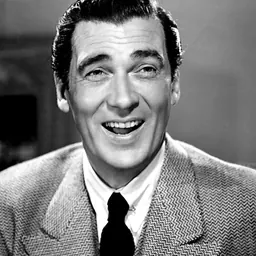

Contemporaries
People whose lives overlapped Wadie Elsafi's

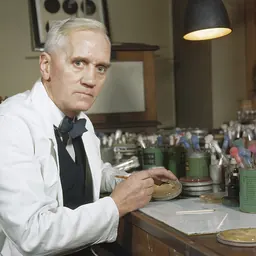
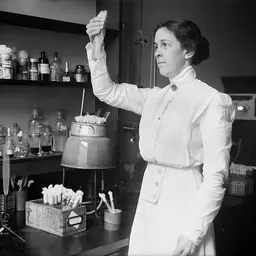

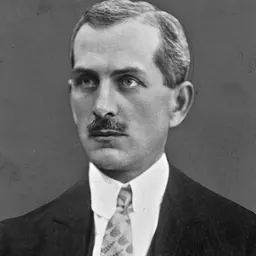
Frequently asked questions
Who was Wadie Elsafi?
Lebanese singer and oud player (1921-2013)
When was Wadie Elsafi born?
Wadie Elsafi was born on 1 November 1921 in Niha Chouf.
When did Wadie Elsafi die?
Wadie Elsafi died on 11 October 2013 in Mansourieh.
What was Wadie Elsafi's occupation?
Wadie Elsafi was a singer, composer, songwriter, oud player and actor.
What nationality was Wadie Elsafi?
Wadie Elsafi was Lebanese.
Sources & further reading
Cite this page
APA: Biography.guide. (2026). Wadie Elsafi. https://biography.guide/wadie-elsafi/
MLA: "Wadie Elsafi." Biography.guide, https://biography.guide/wadie-elsafi/.
Chicago: "Wadie Elsafi." Biography.guide. https://biography.guide/wadie-elsafi/.
Data last updated: 2026-09-20 · Spot an error? Report a correction.
Portrait: Wikimedia Commons · author & licence
Page generated 2026-09-27 04:58 UTC