
About W. G. Brown
W. G. Brown was a Canadian mathematician.
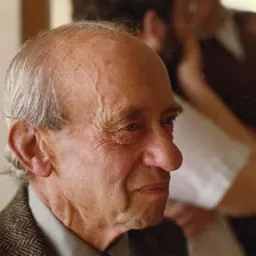
William G. Brown is a Canadian mathematician specializing in graph theory. He is a professor emeritus of mathematics at McGill University.
Education and career Brown earned his Ph.D. from the University of Toronto in 1963, under the joint supervision of Harold Scott MacDonald Coxeter and W. T. Tutte. His dissertation was Enumeration Problems Of Linear Graph Theory (Problems in the Enumeration of Maps).
In 1968, he moved to McGill from the University of British Columbia as an associate professor.
Contributions Brown's dissertation research concerned graph enumeration, and his early publications continued in that direction. However, much of his later work was in extremal graph theory. He is known for formulating the Ruzsa–Szemerédi problem on the density of systems of triples in which no six points contain more than two triples in joint work with Paul Erdős and Vera T. Sós, and for his constructions of dense -free graphs in connection with the Zarankiewicz problem.
Selected publications
Don’t just read it —
keep it.
Full-length biographies made to live with: read them, listen on the way to work, watch them tonight.
- E-book
- Audio
- Video
Instant download · yours to keep · every purchase keeps this site free
Important facts
Related people
Same field, nearest in time



Frequently asked questions
Who was W. G. Brown?
Canadian mathematician
What was W. G. Brown's occupation?
W. G. Brown was a mathematician.
What nationality was W. G. Brown?
W. G. Brown was Canadian.
Sources & further reading
Cite this page
APA: Biography.guide. (2026). W. G. Brown. https://biography.guide/w-g-brown/
MLA: "W. G. Brown." Biography.guide, https://biography.guide/w-g-brown/.
Chicago: "W. G. Brown." Biography.guide. https://biography.guide/w-g-brown/.
Data last updated: 2026-09-20 · Spot an error? Report a correction.
Page generated 2026-09-27 05:10 UTC