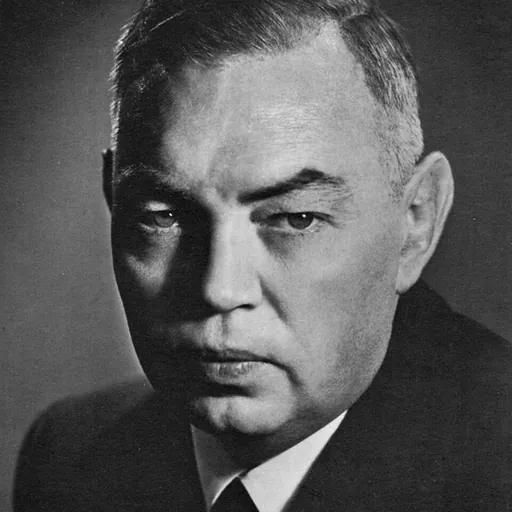
About W. E. G. Louw
Lived 1913 – 1980 (aged 66). W. E. G. Louw was a South African poet, writer, university teacher and literary scholar.
William Ewart Gladstone Louw (31 May 1913 in Sutherland, formerly Cape Province, now Northern Cape Province in South Africa – 24 April 1980 in Stellenbosch, Western Cape Province, South Africa), was an Afrikaner poet and is in the main known to the literary world merely as W.E.G. Louw. He was the younger brother of the poet N. P. van Wyk Louw.
William Louw matriculated at the S. A. College School in Cape Town. He studied at the University of Cape Town from 1931 -1935 and was admitted to the degree of Master of Arts with a dissertation on the poetry of J. H. Leopold. He continued his studies in the Netherlands at the University of Amsterdam, where he was admitted to the degree of D.Lit.
Louw returned to Cape Town in November 1938. Here he completed another doctorate with a dissertation on the influence of Gorter on Leopold (Die Invloed van Gorter op Leopold). In 1944 he married the composer Rosa Nepgen.
In 1945, together with his brother N. P. van Wyk Louw and H. A. Mulder, "W.E.G." founded the independent magazine "Standpunte" ("Points of View"). W.E.G.'s first academic position was as professor of Afrikaans and Nederlands at Rhodes University in Grahamstown. In 1957 he accepted the post of Arts Editor at Die Burger (a newspaper in the Cape) and remained there until the end of 1966. From 1967 he served as professor of Dutch Literature at the University of Stellenbosch, until his retirement in 1978.
Louw's 1934's collection of poems entitled Die ryke dwaas ("The rich fool") might perhaps be seen as the start of the Dertigers movement within Afrikaans literature.1
His poems
Pale Falcon
White is the world of historical mourning and tragic the waltz of the sea at day's dawning dew on the dunes, no zephyr that wakes just a falcon that sings in the circles he makes...
(Translated by J. W. Marchant).
His influences The South African composer Cromwell Everson constructed a song cycle, "Vier Liefdesliedjies" ("Four little love songs"), that found inspiration in a poem that W.E.G. had entitled "Nooit Nog" ("Never again").
Don’t just read it —
keep it.
Full-length biographies made to live with: read them, listen on the way to work, watch them tonight.
- E-book
- Audio
- Video
Instant download · yours to keep · every purchase keeps this site free
Important facts
People in W. E. G. Louw's life
Named in this biography and alive at the same time
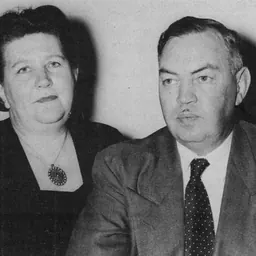


Related people
Same field, nearest in time

Contemporaries
People whose lives overlapped W. E. G. Louw's



Frequently asked questions
Who was W. E. G. Louw?
South African poet (1913–1980)
When was W. E. G. Louw born?
W. E. G. Louw was born on 31 May 1913.
When did W. E. G. Louw die?
W. E. G. Louw died on 24 April 1980.
What was W. E. G. Louw's occupation?
W. E. G. Louw was a poet, writer, university teacher and literary scholar.
What nationality was W. E. G. Louw?
W. E. G. Louw was South African.
Sources & further reading
Cite this page
APA: Biography.guide. (2026). W. E. G. Louw. https://biography.guide/w-e-g-louw/
MLA: "W. E. G. Louw." Biography.guide, https://biography.guide/w-e-g-louw/.
Chicago: "W. E. G. Louw." Biography.guide. https://biography.guide/w-e-g-louw/.
Data last updated: 2026-09-23 · Spot an error? Report a correction.
Portrait: Wikimedia Commons · author & licence
Page generated 2026-09-27 05:06 UTC