
About Vytautas Mačernis
Lived 1921 – 1944 (aged 23). Vytautas Mačernis was a Lithuanian poet and writer.
Vytautas Mačernis (5 June 1921 – 7 October 1944) was a Lithuanian existentialist poet.
Biography Vytautas Mačernis was born in the village of (present-day Plungė district municipality) to Vladislovas Mačernis and Elžbieta Mačernienė née Vičiulytė. He was the second eldest among his thirteen siblings (of whom six died in early childhood). His father, a nobleman, was killed by a bull. Mačernis grew up in his home village, where he wrote most of his poems. His grandmother, who died in 1944, appears in most of his poems as a warm and pleasant memory, as the poet's relationship with his grandmother was much closer than that with his mother.
While studying at the , Mačernis belonged to the Ateitininkai movement. During these years, Mačernis began writing poems.
After Lithuania was annexed by the Soviet Union in 1940, Mačernis began studying at the University of Vilnius. He later studied philosophy. Mačernis attended lectures related to Lithuanistics, as well as those delivered by Vincas Krėvė and Vincas Mykolaitis-Putinas. Mačernis took part in seminars headed by Balys Sruoga. Mačernis also worked as a guide of the Vilnius Old Town. While in his home village, Mačerrnis was preparing to write his thesis on the relationship between Friedrich Nietzsche and Jesus Christ. Mačernis was keen on languages and could, apart from his native Samogitian and Standard Lithuanian, speak German, English, French, Italian, Russian, Latin, and Greek languages.
Mačernis was preparing to leave Šarnelė due to the increasing approach of the Soviet front. However, he died on 7 October 1944 after a splinter of artillery projectile explosion hit his head. He was buried on a hill near the village.
Works The only completed work of Mačernis, a cycle of poems entitled Vizijos, was written in 1939–1942. Despite that, Mačernis is regarded as a classic writer in Lithuanian literature. In Vizijos, Mačernis accents the homeland as a person's most important spiritual pillar, the value of which is understood only after leaving it. Mačernis's sonnets and triolets are marked by strict logical connections and abstract concepts. Most of Mačernis's poems deal with the stoicism and skepticism of a person in front of the metaphysical absurd.
Mačernis's works were not published until 1970 due to prohibition. Despite that, Mačernis's legacy was taken care of by contemporary émigré poets by Alfonsas Nyka-Niliūnas, Kazys Bradūnas, and others.
Don’t just read it —
keep it.
Full-length biographies made to live with: read them, listen on the way to work, watch them tonight.
- E-book
- Audio
- Video
Instant download · yours to keep · every purchase keeps this site free
Important facts
People in Vytautas Mačernis's life
Named in this biography and alive at the same time
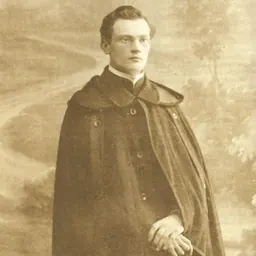
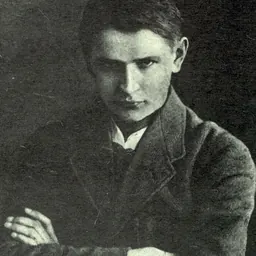
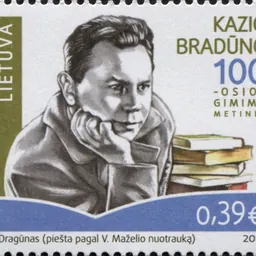
Related people
Same field, nearest in time


Contemporaries
People whose lives overlapped Vytautas Mačernis's


Frequently asked questions
Who was Vytautas Mačernis?
Lithuanian writer (1921–1944)
When was Vytautas Mačernis born?
Vytautas Mačernis was born on 5 June 1921 in Lithuania.
When did Vytautas Mačernis die?
Vytautas Mačernis died on 7 October 1944 in Žemaičių Kalvarija.
What was Vytautas Mačernis's occupation?
Vytautas Mačernis was a poet and writer.
What nationality was Vytautas Mačernis?
Vytautas Mačernis was Lithuanian.
Sources & further reading
· Wikipedia: Vytautas Mačernis
Cite this page
APA: Biography.guide. (2026). Vytautas Mačernis. https://biography.guide/vytautas-macernis/
MLA: "Vytautas Mačernis." Biography.guide, https://biography.guide/vytautas-macernis/.
Chicago: "Vytautas Mačernis." Biography.guide. https://biography.guide/vytautas-macernis/.
Data last updated: 2026-09-22 · Spot an error? Report a correction.
Page generated 2026-09-27 05:21 UTC