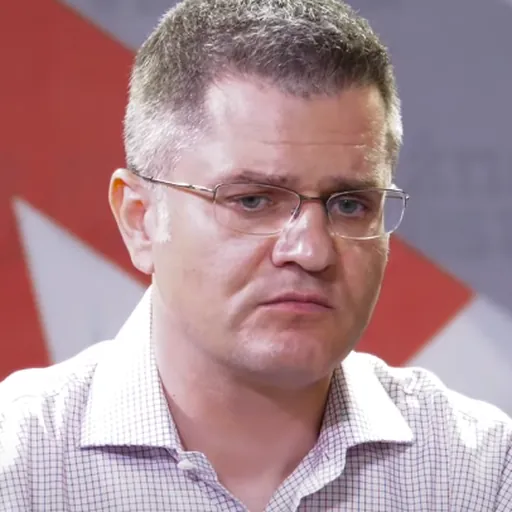
About Vuk Jeremić
Born 1975. Vuk Jeremić is a Serbian and Yugoslav politician and diplomat.
Vuk Jeremić (, ; born 3 July 1975) is a Serbian politician and diplomat who served as the president of the United Nations General Assembly from 2012 to 2013 and as the Minister of Foreign Affairs of Serbia from 2007 to 2012.
In the early 1990s, Jeremić and his parents were forced to leave Yugoslavia after falling out with the country's communist government. Jeremić graduated from the University of Cambridge and Harvard University in 1998 and 2003, respectively, and was active in several pro-democracy student movements during the 1990s. In the early 2000s, he joined what The New York Times deemed Serbia's "most westward-leaning government" as an advisor to President Boris Tadić. In May 2007, Jeremić was appointed Minister of Foreign Affairs. During his tenure, he spearheaded Serbia's fervent opposition to Kosovo's unilateral secession, the Serbian authorities arrested several war crimes suspects and extradited them to the International Criminal Tribunal for the former Yugoslavia in The Hague, and there was a significant improvement in relations between Serbia and the West. In 2009, the European Union lifted all visa restrictions on citizens of Serbia, and in 2012, declared the country a candidate for membership.
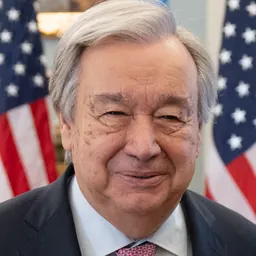
Jeremić is the youngest person ever to have served as President of the United Nations General Assembly. His tenure saw Palestine granted non-member observer status in the General Assembly, the General Assembly's adoption of the Arms Trade Treaty (ATT), which aimed to regulate international conventional weapons commerce, and the proclamation of 6 April as the International Day of Sport for Development and Peace. Jeremić describes himself as a "fervent, pro-European politician". He is the current president of the Center for International Relations and Sustainable Development (CIRSD) and editor-in-chief of Horizons, an English-language global public policy magazine. Jeremić was a candidate in the race to succeed Ban Ki-moon as United Nations Secretary-General in 2016, finishing second overall, behind eventual winner António Guterres. He unsuccessfully ran in the 2017 Serbian presidential election as an independent candidate. In October 2017, he founded the People's Party. In September 2023 he joined Sciences Po as an Adjunct Professor at the Paris School of International Affairs.
Early life Family Vuk Jeremić was born in Belgrade on 3 July 1975. Jeremić's parents are Sena and Mihajlo Jeremić. His father is an Orthodox Serb from Belgrade and his mother is a Muslim Bosniak whose ancestors hailed from the northwestern Bosnian town of Cazin. During the 1980s, Jeremić's father was the CEO of Jugopetrol, a large state-owned oil company.
Jeremić's paternal grandfather, Bogoljub, was an officer in the Royal Yugoslav Army. He returned to Yugoslavia by foot, Through his mother, Jeremić stems from the prominent Pozderac family, widely considered the most influential Bosnian Muslim political dynasty in post-war Yugoslavia. Pozderac's nephews Hamdija and Hakija featured prominently in Yugoslav political circles during the 1980s. Beginning in 2001, he studied under Jeffrey Sachs at Harvard Kennedy School at Harvard University as a fellow in the Kokkalis Foundation's Program on Southeastern and East-Central Europe, graduating in 2003 with a master's degree in public administration and international development.
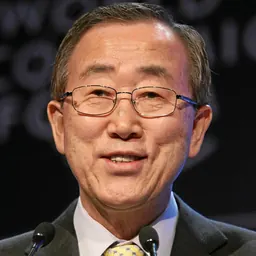
Career Formative years Tadić and Jeremić meeting with U.S. Secretary of Defense Donald Rumsfeld at The Pentagon, 20 July 2004 In July 1997, Jeremić co-founded and became the financial manager of the Organization of Serbian Students Abroad (OSSA), the first international Serbian student association, which at the time had several thousand members. He was an active supporter of Otpor! ("Resistance!"), the Serbian civic youth movement that employed non-violent civil disobedience tactics against Milošević's government in the hope of spurning democratic reforms. He became even more determined to see Milošević toppled during and after NATO's bombing of Yugoslavia in the spring and summer of 1999. "This guy ... Milošević," Jeremić recalled thinking, "he has to be removed, because he’s going to get us all buried. If he stays, he’s going to get us all buried." In early 2003, Yugoslavia was abolished and replaced by the state union of Serbia and Montenegro. That June, Jeremić joined the Ministry of Defense and was appointed Special Envoy for Euro-Atlantic Affairs. In February 2004, he was appointed chairman of the Foreign Affairs Committee of the Democratic Party, and in February 2006 to the Main Board of the Democratic Party. From July 2004 to May 2007, during which Serbia and Montenegro ceased to exist and the two countries became separate states, Jeremić served as a senior foreign policy advisor to Tadić, who by that time had become President of Serbia, At first, many in Serbia and abroad were sceptical that the 32-year-old Jeremić would make for an effective Foreign Minister. "When you’re young and when ... they see you for the first time," Jeremić remarked, "a lot of them are just kind of surprised. [...] That’s actually a good thing because it opens up their minds. [...] They want to hear what you have to say to them because you’re different." In 2009 alone, he spent over 700 hours—roughly 29 days—in flight. "His indefatigable travelling," one reporter from the newspaper remarked, "has made most foreign ministers, especially from smaller countries like Serbia, look like sleepy laggards." The court ruled that the declaration of independence was legal in July 2010. Jeremić responded by pushing for a draft resolution at the United Nations which discouraged unilateral secession as a way of resolving territorial disputes. In late July 2010, he met with Secretary-General of the United Nations Ban Ki-moon to discuss the draft resolution. In September 2010, the UN General Assembly adopted the resolution, calling for the dispute to be resolved bilaterally. Jeremić welcomed the General Assembly's decision, as did the European Union's High Commissioner, Catherine Ashton. Jeremić said that he hoped the resolution "would help create an atmosphere conducive to the creation of a comprehensive compact of peace between Serbs and Albanians achieved through good faith dialogue."
During Jeremić's time in office, relations between Serbia and most of its neighbours improved dramatically. In December 2009, the EU lifted visa restrictions on Serbia. Jeremić became the first Serbian citizen to enter the EU without a visa when he crossed the Hungarian border on 19 December and had his passport stamped by Hungarian Foreign Minister Péter Balázs. Jeremić's tenure saw Serbia fulfill its obligations towards the International Criminal Tribunal for the former Yugoslavia (ICTY), which was established by the international community to try individuals suspected of committing war crimes during the Yugoslav Wars. In July 2008, Serbian authorities arrested former Bosnian Serb leader Radovan Karadžić, who was indicted for war crimes, crimes against humanity and genocide by the ICTY and had been in hiding for eleven years. Karadžić was promptly extradited to the ICTY to face trial. Jeremić said the arrest demonstrated that Serbia was fully committed to becoming a member of the European Union. The arrests of Karadžić's military chief, Ratko Mladić, and Croatan Serb rebel leader Goran Hadžić, both of whom had been in hiding, followed three years later.
On 1 March 2012, Serbia was granted candidate status by the European Union, having applied for membership in 2009. The Democratic Party was voted out of office in the Serbian presidential election of May 2012, and Jeremić lost his ministerial role. His last day in office was 27 July 2012, and his final state visit in his capacity as Foreign Minister was to Moscow, where he spoke with Russia's Minister of Foreign Affairs, Sergey Lavrov.
United Nations General Assembly presidency
For the United Nations General Assembly's 67th session (commencing in September 2012), the office of President of the General Assembly was slated to be occupied by an individual from Eastern Europe, one of the five regional groups of UN member states. Jeremić ran against Lithuania's Dalius Čekuolis, and was elected president by a simple majority of votes (99–85) among members of the General Assembly. In his acceptance speech, he stressed the need for international unity in tackling the problems that accompany conflict and instability:
During Jeremić's tenure, on 29 November 2012, Palestine was granted non-member observer status in the General Assembly by a vote of 138–9. On 2 April 2013, Jeremić facilitated the General Assembly's adoption of the Arms Trade Treaty (ATT), which was aimed at regulating international conventional weapons commerce. The ATT was passed by a vote of 154–3, with North Korea, Syria and Iran as the only country's voting against it.
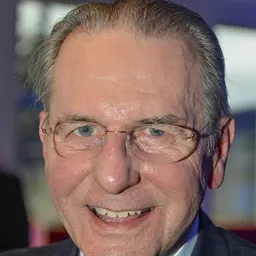
To mark Pakistani activist Malala Yousafzai's 16th birthday, Jeremić convened a United Nations Youth Assembly on 12 July 2013. At the Youth Assembly, Yousafzai delivered her first public remarks after being attacked by the Taliban. Jeremić's tenure also saw the General Assembly unanimously adopt Resolution 67/296, proclaiming 6 April as the annual International Day of Sport for Development and Peace. Proclaiming the International Day of Sport was a joint initiative by Jeremić and Jacques Rogge, the president of the International Olympic Committee (IOC). Rogge and UNICEF Goodwill Ambassador Novak Djokovic attended the session as special guests and addressed the General Assembly, Djokovic speaking on behalf of world athletes and Rogge on behalf of the International Olympic Committee. Jeremić's last day as president was 17 September 2013, at which point he was succeeded by John William Ashe of Antigua and Barbuda.
CIRSD founder and member of Serbian Parliament After his mandate as the President of the General Assembly expired, Jeremić founded the Center for International Relations and Sustainable Development (CIRSD) in November 2013. In May 2014, he joined the Leadership Council of the United Nations' Sustainable Development Solutions Network (SDSN), which was launched by UN Secretary-General Ban Ki-moon in August 2012.
Jeremić was elected to his country's National Assembly during the 2012 parliamentary election, and his time as Democratic Party legislator overlapped with his tenure as President of the General Assembly. Following the elections, Tadić left the Democratic Party, which came under the leadership Dragan Đilas. As a member of the pro-Tadić camp, Jeremić stepped down from all his positions within the party, though he retained nominal membership. He was expelled from the party on 14 February 2013. He subsequently filed a suit before the Constitutional Court of Serbia, claiming the party's decision was unconstitutional. His appeal was rejected by the Constitutional Court; Jeremić complied with the court's decision and left the party, but kept his parliamentary seat as an independent.
United Nations Secretary-General selection
As early as October 2012, a number of UN diplomats were mentioning Jeremić as a potential candidate to succeed Ban Ki-moon as secretary-general. On 19 November 2013, former Spanish Foreign Minister Miguel Ángel Moratinos described Jeremić as the best candidate for the post, saying "his election would be great news for the 21st century." He added that Jeremić would "succeed in changing the current structure of the UN and enable it to play a new role in the world." On 12 April 2016, the Government of Serbia officially backed Jeremić's candidacy for UN Secretary-General. Following a General Assembly town hall meeting on 13 April 2016, Jeremić emerged as one of the favourites to win. He put forth a 53-point platform describing the measures he would push for if elected, making him the only candidate to do so. Between July and September, the Security Council held a number of informal, closed-door straw polls where members of the council were asked to indicate whether they "encouraged", "discouraged" or had "no opinion" regarding each of the candidates. He finished the race with the second highest cumulative number of positive votes in the six rounds of straw polls carried out by the UN Security Council, behind eventual winner António Guterres. By the same measure, he was first among Eastern European candidates.
Serbian presidential candidacy
In January 2017, Jeremić announced that he would run for president in the 2017 election. On 10 March 2017, he officially submitted his nomination as presidential candidate to electoral commission with 14,360 valid signatures as a proof of nomination. His candidacy was endorsed by organisations such as New Serbia, Together for Serbia and Social Democratic Party, People's Movement of Serbia, as well as current and former public officeholders such as Dušan Petrović, leader of the Together for Serbia, former Minister of Justice (2007–2008) and Minister of Agriculture (2011–2012), In late March 2021, Jeremić stated his opposition to the legalisation of civil unions. In May 2022, Jeremić expressed his opposition to sanctions against Russia following the Russian invasion of Ukraine. After 2023, the party shifted to far right positions, espoused ever more nationalist and anti-EU agenda, with issues of Kosovo's status and Serbian sovereignty-ism at the core of its message. On general elections in December 2023, People's Party won only 0.88 percent of votes.
Since leaving the People's Party presidency, Jeremić has established connections with Aleksandar Vučić and the Serbian Progressive Party.
Controversies In 2012, Jeremić made a Tweet likening Albanians to the "Orcs" from the movie The Hobbit.
Several weeks before the Europride 2022 that was held in Belgrade on 17 September, far right and conservative groups, including Serbian Orthodox Church started a campaign for banning the event. Jeremić joined the campaign, stating he is against Belgrade being the gay capital of Europe, and calling the state authorities to ban the event due to the risk of the monkeypox epidemic.
Personal life Jeremić is married to Nataša Jeremić (née Lekić), a former journalist and news anchor for Serbia's state broadcaster, Radio Television of Serbia. Between 2011 and 2015, Jeremić served as the president of the Tennis Federation of Serbia. Jeremić is a Serbian Orthodox Christian.
Don’t just read it —
keep it.
Full-length biographies made to live with: read them, listen on the way to work, watch them tonight.
- E-book
- Audio
- Video
Instant download · yours to keep · every purchase keeps this site free
Important facts
People in Vuk Jeremić's life
Named in this biography and alive at the same time


Related people
Same field, nearest in time



Contemporaries
People whose lives overlapped Vuk Jeremić's


Frequently asked questions
Who is Vuk Jeremić?
Serbian politician
When was Vuk Jeremić born?
Vuk Jeremić was born on 3 July 1975 in Belgrade.
What is Vuk Jeremić's occupation?
Vuk Jeremić is a politician and diplomat.
What nationality is Vuk Jeremić?
Vuk Jeremić is Serbian and Yugoslav.
Sources & further reading
Cite this page
APA: Biography.guide. (2026). Vuk Jeremić. https://biography.guide/vuk-jeremic/
MLA: "Vuk Jeremić." Biography.guide, https://biography.guide/vuk-jeremic/.
Chicago: "Vuk Jeremić." Biography.guide. https://biography.guide/vuk-jeremic/.
Data last updated: 2026-09-23 · Spot an error? Report a correction.
Portrait: Wikimedia Commons · author & licence
Page generated 2026-09-27 05:08 UTC