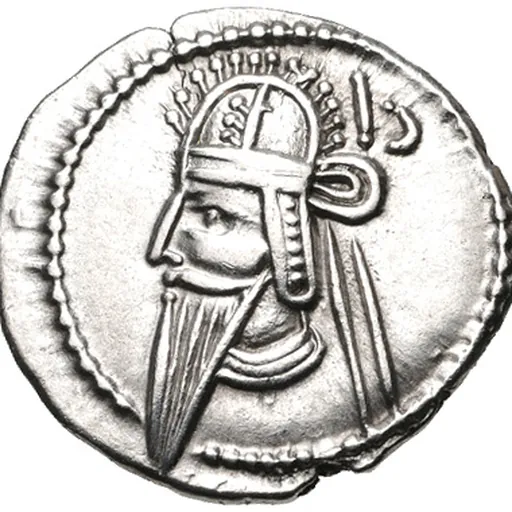
About Vologases VI of Parthia
Lived 200 – 228. Vologases VI of Parthia was a monarch.
Vologases VI (Parthian: Walagash, , Balāsh) was the uncontested king of the Parthian Empire from 208 to 213, but afterwards fell into a dynastic struggle with his brother Artabanus IV, who by 216 was in control of most of the empire, even being acknowledged as the supreme ruler by the Roman Empire. Vologases VI continued to rule Seleucia until 221/2, and coin mints of him even appear in Mesopotamia until 228, when he was presumably defeated by the Sasanian Empire, who had previously defeated Artabanus IV and now succeeded the Parthians as the kings of Iran.
Name Vologases is the Greek and Latin form of the Parthian Walagash. The name is also attested in New Persian as Balāsh and Middle Persian Wardākhsh (also spelled Walākhsh). The etymology of the name is unclear. A suggestion has been made that the name could mean "strength".
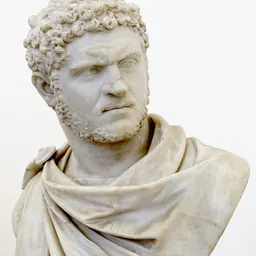
Biography Vologases VI succeeded his father Vologases V as king in . His rule was unquestioned for a few years, till his brother Artabanus IV rebelled. The dynastic struggle between the two brothers most likely started in . Artabanus successfully conquered much of the empire, including Media and Susa. Vologases VI seems to have only managed to keep Seleucia, where he minted coins. The Roman emperor Caracalla sought to take advantage of the conflict between the two brothers. He tried to find a pretext to invade the Parthian Empire by requesting Vologases to send two refugees—a philosopher named Antiochus and a certain Tiridates, who was possibly either an Armenian prince or an uncle of Vologases. To the surprise of the Romans, Vologases had the two men sent to Caracalla in 215, thus denying him his pretext. Caracalla's choice of contacting Vologases instead of Artabanus shows that the Romans still saw him as the dominant king.
Caracalla thus chose to preoccupy himself with an invasion of Armenia. He appointed a freedman named Theocritus as the leader of the invasion, which eventually ended in a disaster. Caracalla then once again sought to start a war with the Parthians. In another attempt to gain a pretext, he requested Artabanus to marry his daughter, which he declined. It is disputed whether Caracalla's proposal was sincere or not. Caracalla's choice to contact Artabanus shows that the latter was now considered the dominant king over Vologases, who would rule a small principality centered around Seleucia until 221/2. A few years later (224), Ardashir I , the founder of the Sasanian dynasty, defeated and killed Artabanus, thus putting an end to the Parthian Empire. Over the next few years, Ardashir I further expanded his new empire, and must have driven out or defeated Vologases in Mesopotamia soon after 228.
Don’t just read it —
keep it.
Full-length biographies made to live with: read them, listen on the way to work, watch them tonight.
- E-book
- Audio
- Video
Instant download · yours to keep · every purchase keeps this site free
Important facts
Family & relationships
People in Vologases VI of Parthia's life
Named in this biography and alive at the same time
Related people
Same field, nearest in time

Contemporaries
People whose lives overlapped Vologases VI of Parthia's
Frequently asked questions
Who was Vologases VI of Parthia?
King of Kings of Parthia from 208 to 228
When was Vologases VI of Parthia born?
Vologases VI of Parthia was born in 200 in Parthia Satrapy.
When did Vologases VI of Parthia die?
Vologases VI of Parthia died in 228 in Parthia Satrapy.
What was Vologases VI of Parthia's occupation?
Vologases VI of Parthia was a monarch.
Sources & further reading
· Wikipedia: Vologases VI of Parthia
Cite this page
APA: Biography.guide. (2026). Vologases VI of Parthia. https://biography.guide/vologases-vi-of-parthia/
MLA: "Vologases VI of Parthia." Biography.guide, https://biography.guide/vologases-vi-of-parthia/.
Chicago: "Vologases VI of Parthia." Biography.guide. https://biography.guide/vologases-vi-of-parthia/.
Data last updated: 2026-09-29 · Spot an error? Report a correction.
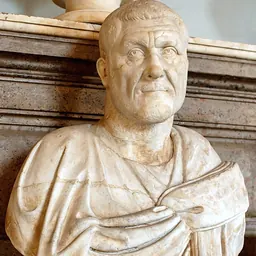
Portrait: Wikimedia Commons · author & licence
Page generated 2026-10-04 13:59 UTC