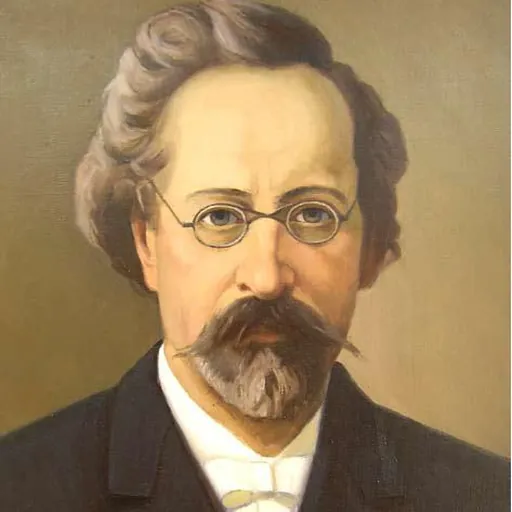
About Volodymyr Betz
Lived 1834 – 1894 (aged 60). Volodymyr Betz was a Russian anatomist, neuroscientist, histologist and psychiatrist, known for Betz cells.
Vladimir Alekseyevich Betz ( – ) was a prominent anatomist, histologist, and psychiatrist of the Russian Empire. Born in modern-day Ukraine, he served as a professor at Saint Vladimir University of Kiev and is most famous for the discovery of giant pyramidal neurons in the primary motor cortex, now known as Betz cells.
Biography Vladimir Betz was born into a noble family of Ukrainian Cossack descent in the small village of Tatarovshchina, near the town of Oster. He began his primary education in Nizhyn (Nezhin), and later attended the 2nd Kiev Gymnasium, where he graduated in 1853. In 1860, he completed the Kiev University course in the Faculty of Medicine, earning his doctor's degree with honors. Subsequently, he served as an assistant prosector in the anatomy department under Professor Alexander Walter, and later worked as a dissector.
From May 1861 to September 1862, Betz was sent abroad to study in Germany and Austria, where he attended lectures by prominent European scientists, including Ernst Brücke, Carl Ludwig, Robert Bunsen, Albert von Kölliker, Gustav Kirchhoff and Hermann von Helmholtz.
Betz was deeply interested in Ukrainian history. In 1883, together with prominent historian Volodymyr Antonovych, he published the historical work Historical Figures of Southwestern Russia. The book featured biographies of Ukrainian Hetmans based on the private collection of Vasyl Tarnovsky. This publication caused severe backlash from the imperial administration; Betz was labeled politically "unreliable," and the book was perceived by government circles in the Russian Empire as a manifestation of Ukrainian separatism and a protest against the policy of autocracy. Under mounting pressure from the leadership, Professor Betz was forced to leave his post as head of the anatomy department at Saint Vladimir University and resigned in 1890. Until the end of his days, he worked as the chief physician of the South-Western Railway.
Scientific activity Throughout his career, Betz authored approximately 50 scientific papers. His main direction of scientific research was the anatomy and histology of the central nervous system. In 1874, Betz described giant pyramidal neurons of the primary motor cortex of the brain, which later received the eponymous name Betz cells.
His work was revolutionary in linking cortical cytoarchitectonics with physiological function. Betz was the first to recognize that the cortex was functionally organized into distinct motor and sensory areas based on microscopic evidence, predating the mapping work of Korbinian Brodmann.
The brain collection and legacy Vladimir Betz headstone at the Vydubychi Monastery, Kyiv, Ukraine. The inscription reads: "To the initiator of studies of the Central Nervous System, the professor of anatomy of the Kyiv University, Vladimir Alekseyevich Betz. 1834-1894. Grateful Ukrainian morphologists." Betz was considered an unsurpassed master of making anatomical preparations under the microscope. For his unique collection of brain preparations—which was exhibited in St. Petersburg in 1870—he was awarded a silver medal.
Betz died on October 12, 1894, and was buried near the Vydubychi Monastery in Kiev. Decades later, his burial site was almost destroyed by local officials who claimed the professor was "not distinguished by any merits" to the state. However, his grave was located and saved by a group of Ukrainian doctors and medical historians. They collected funds and erected a bust on a granite pedestal with the inscription: "To the initiator of studies of the Central Nervous System, the professor of anatomy of the Kyiv University, Vladimir Alekseyevich Betz. 1834–1894. Grateful Ukrainian morphologists."
Essays On Blood Circulation in the Liver (dissertation for the degree of Doctor of Medicine, Kiev, 1863) A New Method for Studying the Human Central Nervous System (Notes of the Kiev Society of Naturalists, 1870; and Archiv von Max Schultze, 1870) On the Grouping of Convolutions of the Human Brain (Notes of the Kiev Society of Naturalists, 1871) Das Gesetz der Vertheilung der Gyri und Sulci der menschlichen Gehirnoberfläche (Sitzber. der Wiener Psychiatren) Two Centers in the Human Cerebral Cortex (Moscow Medical Bulletin, 1875) Historical Figures of South-Western Russia (Kiev, 1883, together with Professor V. B. Antonovich) Anatomy of the Surface of the Human Brain, with an Atlas and 86 Tables (University News, 1883) Morphology of Osteogenesis (1887)
Don’t just read it —
keep it.
Full-length biographies made to live with: read them, listen on the way to work, watch them tonight.
- E-book
- Audio
- Video
Instant download · yours to keep · every purchase keeps this site free
Important facts
People in Volodymyr Betz's life
Named in this biography and alive at the same time


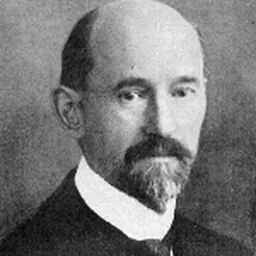

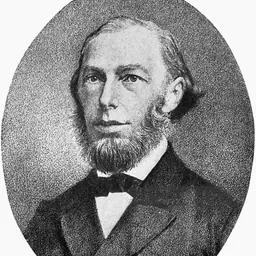
Related people
Same field, nearest in time

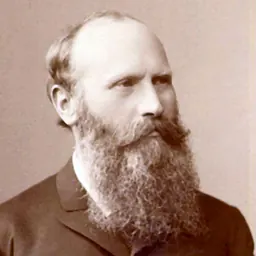
Contemporaries
People whose lives overlapped Volodymyr Betz's




Frequently asked questions
Who was Volodymyr Betz?
Ukrainian anatomist and histologist
When was Volodymyr Betz born?
Volodymyr Betz was born on 14 April 1834 in Ostyorsky Uyezd.
When did Volodymyr Betz die?
Volodymyr Betz died on 30 September 1894 in Kyiv.
What was Volodymyr Betz's occupation?
Volodymyr Betz was an anatomist, neuroscientist, histologist and psychiatrist.
What was Volodymyr Betz known for?
Volodymyr Betz was known for Betz cells.
What nationality was Volodymyr Betz?
Volodymyr Betz was Russian.
Sources & further reading
Cite this page
APA: Biography.guide. (2026). Volodymyr Betz. https://biography.guide/volodymyr-betz/
MLA: "Volodymyr Betz." Biography.guide, https://biography.guide/volodymyr-betz/.
Chicago: "Volodymyr Betz." Biography.guide. https://biography.guide/volodymyr-betz/.
Data last updated: 2026-09-23 · Spot an error? Report a correction.
Portrait: Wikimedia Commons · author & licence
Page generated 2026-09-27 05:07 UTC