
About Vladimir Tatlin
Lived 1885 – 1953 (aged 67). Vladimir Tatlin was a Russian painter, architect, sculptor, university teacher, illustrator and scenographer.
Vladimir Yevgrafovich Tatlin ( – 31 May 1953) was a Russian and Soviet painter, architect, and stage-designer. Tatlin achieved fame as the architect who designed The Monument to the Third International, more commonly known as Tatlin's Tower, which he began in 1919. With Kazimir Malevich he was one of the two most important figures in the Soviet avant-garde art movement of the 1920s, and he later became an important artist in the constructivist movement.
Biography
According to various accounts Vladimir Yevgrafovich Tatlin was born either in Moscow Russian Empire. His father, Yevgraf Nikoforovich Tatlin was a hereditary nobleman from Oryol, a mechanical engineer who graduated from the Technological Institute in St.Petersburg and was employed by the Moscow-Brest Railway in Moscow. His mother, Nadezhda Nikolaevna Tatlina (Bart) was a poet and was a sympathizer of the Narodnaya Volya revolutionary movement. After her death in 1887, his father remarried and moved to Kharkov. Tatlin lived with his father after failing entrance examinations for the Moscow School of Painting, Sculpture and Architecture. His father died in 1904, and young Vladimir had to interrupt his studies at the Kharkov Arts School and left for Odessa where he became a merchant marine cadet. According to his memoirs, the sea and distant lands gave him both means of subsistence and a source of inspiration; he sailed all across the Black Sea and also to Egypt. In 1911 he resettled to Moscow, where he lived with his uncle and began his art career as an icon painter. He also played the bandura, a Ukrainian folk instrument he picked up when living in Kharkov, and performed abroad as a professional bandurist, accompanying his own singing in Ukrainian.
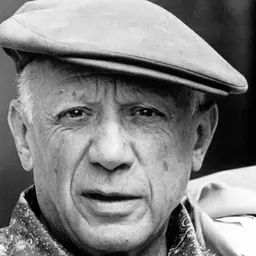
Tatlin became familiar with the work of Pablo Picasso during a trip to Paris in 1913.
Tatlin achieved fame as the architect who designed the huge monument to the Third International, also known as Tatlin's Tower. Tatlin began to design it in 1919. For financial and practical reasons, however, the tower was never built.
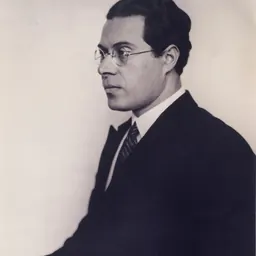
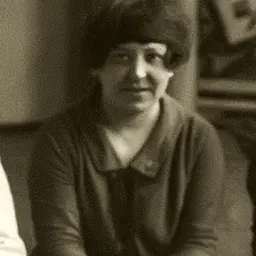
Tatlin was also regarded as a progenitor of Soviet post-revolutionary constructivist art with his pre-revolutionary counter-reliefs, three-dimensional constructions made of wood and metal, some placed in corners (corner counter-reliefs) and others more conventionally. Tatlin conceived these sculptures in order to question the traditional ideas of art, though he did not regard himself as a constructivist and objected to many of the movement's ideas. Later prominent constructivists included Varvara Stepanova, Alexander Rodchenko, Manuel Rendón Seminario, Joaquín Torres García, László Moholy-Nagy, Antoine Pevsner and Naum Gabo.
Although colleagues at the beginning of their careers, Tatlin and Malevich quarrelled fiercely and publicly at the time of the 0.10 Exhibition in 1915 (long before the birth of constructivism), also called "the last futurist exhibition", apparently over the 'suprematist' works Malevich exhibited there. This led Malevich to develop his ideas further in the city of Vitebsk, where he found a school called UNOVIS (Champions of the New Art).
Tatlin also dedicated himself to the study of clothes, and various objects, and flight, culminating in the construction of Letatlin personal flying apparatus.
Tatlin taught and directed the theatre, film and photography department at the Kyiv Art Institute from 1925 to 1927.
In 1948 he was heavily criticized for his allegedly anti-communist stance and lost his job, but was not repressed.
Tatlin died in 1953 in Moscow and was buried at the Novodevichy Cemetery.
Gallery of works
Don’t just read it —
keep it.
Full-length biographies made to live with: read them, listen on the way to work, watch them tonight.
- E-book
- Audio
- Video
Instant download · yours to keep · every purchase keeps this site free
Important facts
more
Vladimir Evgrafovič Tatlin, Vladimir Evgrafovich Tatlin, Lot, Vladimir Evgarfovitch Tatline, Vladimir Tatljin, Volodymyr Yevhrafovych Tatlin, Volodymyr TatlinPeople in Vladimir Tatlin's life
Named in this biography and alive at the same time



Related people
Same field, nearest in time

Contemporaries
People whose lives overlapped Vladimir Tatlin's



Frequently asked questions
Who was Vladimir Tatlin?
Russian artist (1885–1953)
When was Vladimir Tatlin born?
Vladimir Tatlin was born on 16 December 1885 in Kharkiv, Moscow.
When did Vladimir Tatlin die?
Vladimir Tatlin died on 31 May 1953 in Moscow.
What was Vladimir Tatlin's occupation?
Vladimir Tatlin was a painter, architect, sculptor, university teacher, illustrator and scenographer.
What nationality was Vladimir Tatlin?
Vladimir Tatlin was Russian.
Sources & further reading
Cite this page
APA: Biography.guide. (2026). Vladimir Tatlin. https://biography.guide/vladimir-tatlin/
MLA: "Vladimir Tatlin." Biography.guide, https://biography.guide/vladimir-tatlin/.
Chicago: "Vladimir Tatlin." Biography.guide. https://biography.guide/vladimir-tatlin/.
Data last updated: 2026-09-20 · Spot an error? Report a correction.
Page generated 2026-09-27 05:27 UTC