
Vladimir Shukhov
Russian engineer-polymath, scientist and architect
About Vladimir Shukhov
Lived 1853 – 1939 (aged 85). Vladimir Shukhov was a Russian inventor, architect, photographer, engineer, military engineer and physicist.
Vladimir Grigoryevich Shukhov (; – 2 February 1939) was a Russian and Soviet engineer-polymath, scientist and architect renowned for his pioneering works on new methods of analysis for structural engineering that led to breakthroughs in industrial design of the world's first hyperboloid structures, diagrid shell structures, tensile structures, The photographic works of Shukhov opened new trends ahead of their flourishing of fine art photography. He made photos in various genres: reporting, city landscape, portrait, constructivism. About two thousand photos and negatives made by Shukhov have survived until this day.
After the October Revolution Shukhov decided to stay in the Soviet Union despite having received alluring job offers from all around the world. Many signal Soviet engineering projects of the 1920s were associated with his name. In 1919 he framed his slogan: We should work independently from politics. The buildings, boilers, beams would be needed and so would we. In the later 1930s during the Great Purge he retired from engineering work but was not arrested or persecuted.
Shukhov died on 2 February 1939 in Moscow and was buried at the Novodevichy Cemetery. His many honours included the Lenin Prize (1929) and the title of Hero of Labour (1932).
Works
Vladimir Shukhov is often referred as the Russian Edison for the sheer quantity and quality of his pioneering works . He was one of the first to develop practical calculations of stresses and deformations of beams, shells and membranes on elastic foundation. These theoretical results allowed him to design the first Russian oil tanker, new types of oil tanker barges, and a new type of oil reservoirs. The same principle of the shell on an elastic foundation allowed him to theoretically calculate the optimal diameter, wall thickness and fluid speed for fluid pipelines. Shukhov's projects were instrumental in constructing:
An oil pipeline, the first in the Russian Empire, between Balkhany and Cherny Gorod near Baku (12 km, 1878 complete, used by the Branobel). By 1883 the total length of Shukhov-designed, Bari-built oil pipelines in Baku exceeded 94 km, transporting 30,000 barrels of oil per day. In 1894, a similar pipeline network was built in Grozny. Shukhov designed the first Trans-Caucasian kerosene pipeline between Baku and Batumi (835 km long) and Grozny-Tuapse pipeline (618 km long). A superior design for water-mains. Shukhov designed (and Bari built) complete water-supply systems for the cities of Cherkassy, Tambov, Kharkov, Voronezh and many others. In that age of infectious diseases his water-supply systems likely saved thousands of lives. A superior design for oil-tanker barges (less than half of the metal previously required), 84 150-meters long barges were built (mostly for the Volga river) as well as the first Russian seaworthy oil tanker ship. His approach to the ship strength analysis (using the model of a shell on an elastic foundation) was absolutely novel for that time. Shukhov-designed inexpensive oil tanks with the bottom calculated as a membrane on elastic foundation. They became very popular among oil-producers of the Imperial Russia. By 1881, 130 such tanks were built in Baku alone.
Shukhov made important contributions to the chemical industry:
He designed and built an oil cracking plant. His patents (Shukhov cracking process – patent of Russian empire No. 12926 from 27 November 1891) on cracking were used to invalidate Standard Oil's patents (Burton process – Patent of USA No. 1,049,667 on 7 January 1913) on oil refineries. He designed an original oil pump. Shukhov's pumps revolutionized Baku's oil industry allowing to increase its oil output. He designed one of the first furnaces that used residual oil: before his work residual oil was considered a waste and was discarded, due to his work it became recognized as an important technical product known as a fuel oil.
Shukhov also left a lasting legacy to the Constructivist architecture of early Soviet Russia. As a leading specialist of metallic structures (hyperboloid structures, thin-shell structures, tensile structures), he may be compared with Gustave Eiffel. Shukhov's innovative and exquisite constructions still grace many towns across the former Russian Empire:
Eight thin-shell structures exhibition pavilions for the All-Russia Exhibition in Nizhny Novgorod of 1896, covering the area of 27,000 m², and featuring an unorthodox water-tower that served as a model for more than 30 similar structures built in Imperial Russia, and thousands around the world now. About 200 original towers (hyperboloid steel gridshells) all over the world, the most famous being the 160-meter-high Shukhov Tower in Moscow (1922) and 70-meter-high Adziogol Lighthouse near Kherson (1910). On Shukhov's 110th birthday in 1963 Soviet Union issued a postal stamp showing Shukhov and his tower (pictured). Spacious elongated shop galleries, bridged with innovative metal-and-glass vaults, notably the Upper Trade Rows on Red Square (1889–94), Pushkin Museum of Fine Arts (1898–1912) and Petrovka Passage (1903–06). Enormous metal arch vaulting for the Municipal Railway Park (1908) and the Kievskiy Railway Station in Moscow (1912–17). The colossal hall of the Central Post Office, Moscow (1911–13). Truss-supported metal framework for the Central Universal Store in Moscow (1906–08). A rotating scene for the Moscow Art Theatre. Several Constructivist projects, designed in collaboration with Konstantin Melnikov, notably the Bakhmetevsky Bus Garage (1926–28) and Novo-Ryazanskaya Street Garage (1926–29). More than 180 bridges across the Volga, Yenisey, Dnieper, and other rivers. Stabilization Minaret of the Madrasah Ulugh Beg in Samarkand (Shukhov's last engineering work).
Major works
Grozny-Tuapse pipeline Shukhov Tower Shukhov Rotunda Adziogol Lighthouse Shukhov tower on the Oka River Pushkin Museum Moscow GUM Novo-Ryazanskaya Street Garage Bakhmetevsky Bus Garage Kievskiy Railway Station Hotel Metropol (Moscow) Petrovsky Passage Lattice mast
Gallery
Don’t just read it —
keep it.
Full-length biographies made to live with: read them, listen on the way to work, watch them tonight.
- E-book
- Audio
- Video
Instant download · yours to keep · every purchase keeps this site free
Important facts
People in Vladimir Shukhov's life
Named in this biography and alive at the same time
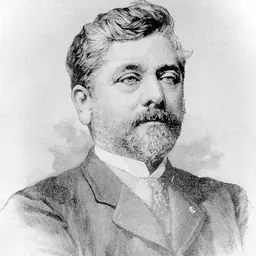
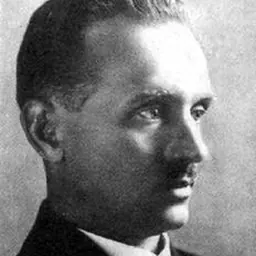
Related people
Same field, nearest in time

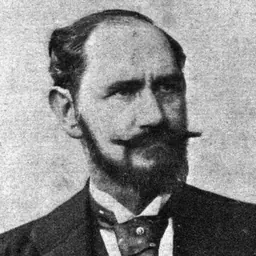


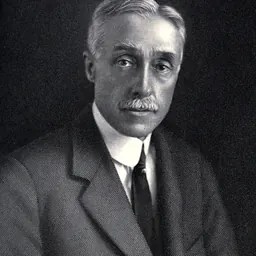
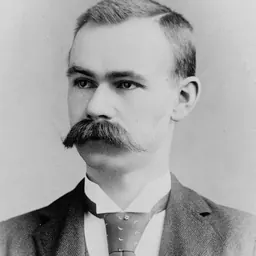
Contemporaries
People whose lives overlapped Vladimir Shukhov's
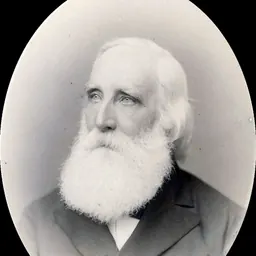
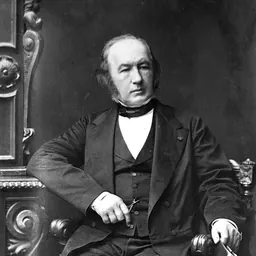
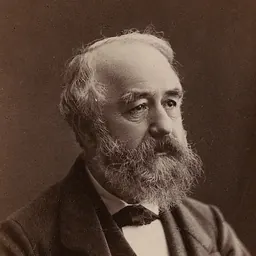
Frequently asked questions
Who was Vladimir Shukhov?
Russian engineer-polymath, scientist and architect (1853-1939)
When was Vladimir Shukhov born?
Vladimir Shukhov was born on 28 August 1853 in Grayvoron.
When did Vladimir Shukhov die?
Vladimir Shukhov died on 2 February 1939 in Moscow.
What was Vladimir Shukhov's occupation?
Vladimir Shukhov was an inventor, architect, photographer, engineer, military engineer and physicist.
What nationality was Vladimir Shukhov?
Vladimir Shukhov was Russian.
Sources & further reading
Cite this page
APA: Biography.guide. (2026). Vladimir Shukhov. https://biography.guide/vladimir-shukhov/
MLA: "Vladimir Shukhov." Biography.guide, https://biography.guide/vladimir-shukhov/.
Chicago: "Vladimir Shukhov." Biography.guide. https://biography.guide/vladimir-shukhov/.
Data last updated: 2026-09-20 · Spot an error? Report a correction.
Page generated 2026-09-27 05:21 UTC