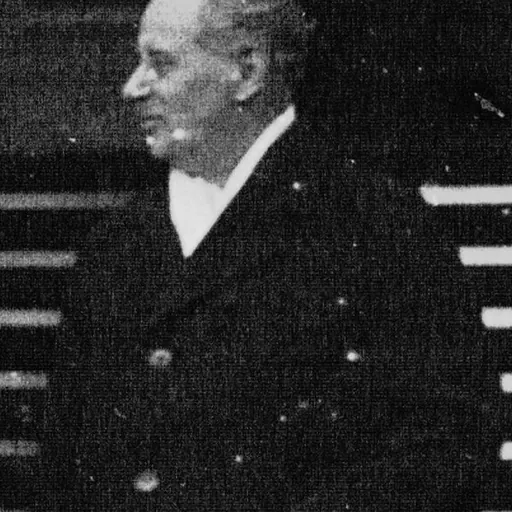
Vladimir Potemkin
Soviet statesman, diplomat and historian
About Vladimir Potemkin
Lived 1874 – 1946 (aged 71). Vladimir Potemkin was a Russian diplomat, historian, non-fiction writer, politician, statesperson and pedagogue.
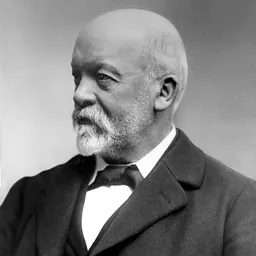
Vladimir Petrovich Potemkin (; 19 October [ O.S. 7 October] 1874 – 23 February 1946) was a Soviet statesman, historian, educator, diplomat, academic and scholar who served as the People's Commissar of Education of the Russian Soviet Federative Socialist Republic from 1940 to 1946.
Early life and education Potemkin was born into a family of doctors. In 1893, he graduated from the Tver gymnasium in 1893 and entered the History and Philology faculty of Imperial Moscow University.
While studying in the university he was active in the student movement and distributed illegal literature among other students. He was arrested for his revolutionary activities and imprisoned in the Butyrka prison. Potemkin eventually graduated from the university in 1898 and obtained his professorship later on and became a teacher at the Moscow School of the Order of St Catherine.
Early career From 1903, he reentered the revolutionary movement and actively participated in the First Russian Revolution. Potemkin who was a teacher of a women's gymnasium in Yekaterinoslav was expelled and sent to Moscow.
He continued his underground activities by promoting Marxist literature on behalf of the Moscow Committee of Russian Social Democratic Labour Party (b). From February 1917 he worked in the department of out-of-school education of the Moscow Provincial Zemstvo Council. In this position, he was the organizer of the first workers' university in the city of Bogorodsk, Moscow province.
After the October Revolution, he worked in the field of public education in the Moscow Provincial Council, participated in the establishment of the first workers' university. From 1918 to 1919, he worked in the school policy department of the People's Commissariat for Education. At Potemkin's initiative, the All-Russian Teachers' Courses were organized, and the First Congress on Public Education and the First All-Russian Congress on Extracurricular Education were convened.
In 1919, he joined the Russian Communist Party (b) and until 1920 served on the fronts of the Civil War, holding the posts of a member of the Revolutionary Military Council of the Sixth Army, head of the political department of the Western and then of the Southern Fronts. After the war he headed the Odessa provincial department of public education, at the same time being the head of the provincial military-political courses.
Commissar of Education and later career He was Member of the Central Executive Committee of the Soviet Union from 1935. In 1937 he returned to work in Moscow, taking the post of First Deputy People's Commissar for Foreign Affairs of the USSR. In the same year he was elected a deputy of the Supreme Council of the Soviet Union. In 1939 he was elected a member of the Central Committee of the All-Union Communist Party (b). As First Deputy People's Commissar for Foreign Affairs, he took part in a number of important military negotiations, including the Moscow negotiations of 1939 and the Soviet–Turkish negotiations aimed at keeping Turkey from participating in the coming World War II.
From February 28, 1940, until his death on February 23, 1946, he was the People's Commissar of Education of the RSFSR. On Potemkin's initiative, the Academy of Pedagogical Sciences of the RSFSR was established in 1943, and he was its first president. In the same year he was elected a full member of the Academy of Sciences of the Soviet Union.
Vladimir Potemkin died on 23 February 1946. His ashes were buried in the Red Square near the Kremlin Wall Necropolis.
Works Potemkin's most important academic work has been a three volume study of international diplomacy, published after 1940 by Stalin's order and covering the period until 1939.
Don’t just read it —
keep it.
Full-length biographies made to live with: read them, listen on the way to work, watch them tonight.
- E-book
- Audio
- Video
Instant download · yours to keep · every purchase keeps this site free
Important facts
Related people
Same field, nearest in time

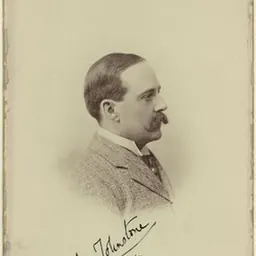
Contemporaries
People whose lives overlapped Vladimir Potemkin's
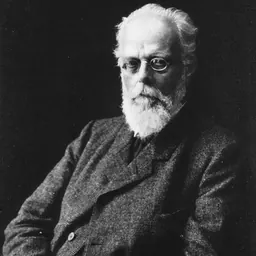
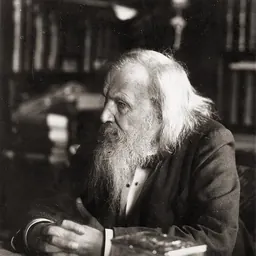
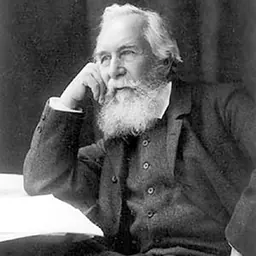

Frequently asked questions
Who was Vladimir Potemkin?
Soviet statesman, diplomat and historian (1874-1946)
When was Vladimir Potemkin born?
Vladimir Potemkin was born on 7 October 1874 in Tver.
When did Vladimir Potemkin die?
Vladimir Potemkin died on 23 February 1946 in Moscow.
What was Vladimir Potemkin's occupation?
Vladimir Potemkin was a diplomat, historian, non-fiction writer, politician, statesperson and pedagogue.
What nationality was Vladimir Potemkin?
Vladimir Potemkin was Russian.
Sources & further reading
· Wikipedia: Vladimir Potemkin
Cite this page
APA: Biography.guide. (2026). Vladimir Potemkin. https://biography.guide/vladimir-potemkin/
MLA: "Vladimir Potemkin." Biography.guide, https://biography.guide/vladimir-potemkin/.
Chicago: "Vladimir Potemkin." Biography.guide. https://biography.guide/vladimir-potemkin/.
Data last updated: 2026-09-22 · Spot an error? Report a correction.
Portrait: Wikimedia Commons · author & licence
Page generated 2026-09-27 05:02 UTC