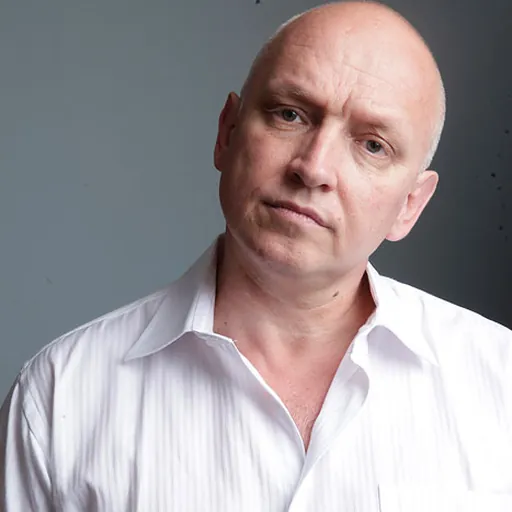
About Vladimir Kozlov
Born 1960. Vladimir Kozlov is a Kazakh politician and journalist.
Vladimir Ivanovich Kozlov (Russian and Kazakh: Владимир Иванович Козлов) is a Kazakh journalist and politician who has been a leader of the democratic opposition in Kazakhstan and a candidate for his country's presidency. In 2012, he was the defendant in what Deutsche Welle described as "the first political trial in Kazakhstan." The US charged Kazakhstan with using its criminal-justice system "to silence a leading opposition voice." Kozlov, who was found guilty and served a prison sentence, has been designated by Amnesty International as a "prisoner of conscience." He was released in 2016.
Early life and education Kozlov was born on August 10, 1960, in Aktobe.
Media career
From 1990 to 1996, Kozlov worked as an editor at the TV channel AKTiVi.
From 1996 to 1998, he worked in advertising and public relations. He then served as the communications specialist for the Mangyshlak Nuclear Power Plant.
He is a co-founder of Aktau-Lada, the first private television channel in Kazakhstan. which focuses on the rights of civic activists and the imprisoned.
Political career
He entered politics in 2001, joining the opposition party Democratic Choice of Kazakhstan. In 2003, he was elected to the party's Political Council, and later he became a member of the Presidium of the Political Council.
During a visit to Ukraine in 2004, Kozlov was struck by the effects of the Orange Revolution, which had enhanced democratic values in that country. As a result of that experience, he decided to become more politically active.
After Democratic Choice of Kazakhstan was declared illegal, Kozlov co-founded the Alga! (Forward!) Party in 2005, and has been its leader since 2007. Under his leadership, the party expanded significantly, and is now the largest opposition party in Kazakhstan, although Kazakh authorities have refused to allow it to register as an official party. Alga! has joined with the Civil Society Movement Khalyk Maidany (People's Front) in criticizing the government of Nursultan Nazarbayev. During the years 2006 to 2012, he traveled extensively in Europe, visiting various European parliaments in an effort to formulate policies to develop Kazakh civil society. In 2009, he led a campaign in Europe to deny Kazakhstan the presidency of the OSCE, arguing that the Kazakh government's human rights abuses rendered it unworthy to hold that post.
Presidential candidacy
In the spring of 2011, Kozlov was a democratic opposition candidate for president of Kazakhstan, but was excluded from the April 3 election, in which Nazarbayev received 95.5% of the vote. The Office for Democratic Institutions and Human Rights rejected the election's results. Kozlov was part of an independent public monitoring group that went to Zhanaozen in January 2012 to investigate allegations of torture and other acts of abuse of strikers in police custody. Kozlov then met with members of the European Parliament and the European Commission to discuss the crisis and report on his findings. He called for dialogue and for an international investigation into the government's handling of the strike.
Trial and conviction
On January 23, 2012, after returning to Kazakhstan from his meetings with EP and EC officials, Kozlov was arrested by members of Kazakhstan's National Security Committee. His home, the Alga! party offices in Almaty, and the homes of other party members were searched. He was detained for almost nine months while awaiting trial.
Polish activist and former prisoner of conscience Adam Michnik wrote a letter to Nazarbayev, dated July 30, 2012, pleading with him to release Kozlov and other activists and oil workers who had been imprisoned in the wake of events in Zhanaozen. The US State Department's 2012 Human Rights Report on Kazakhstan cited Kozlov's arrest and detention, and the confiscation of his personal property, at length as representative of that country's poor human-rights record.
The National Democratic Institute compared Kozlov's trial to a "Stalin-era political trial."
On October 8, 2012, Kozlov was found guilty, the judge ruling that Kozlov, in collusion with exiled politician Mukhtar Ablyazov, had incited oil workers in Zhanaozen to violence. Koslov was sentenced to seven years and 6 months in prison, with the other two defendants given suspended sentences of three and four years. The court also ordered that Kozlov's property be confiscated
According to Amnesty International, which led off its 2013 annual report on Kazakhstan with an account of Kozlov's arrest and trial, independent monitors at the trial "reported that there was no presumption of innocence and that the evidence used against Vladimir Kozlov did not conclusively prove his guilt."
Ian Kelly, US Ambassador to the OSCE, issued a statement on October 11, 2012, stating that America was "disappointed to hear of the conviction of Vladimir Kozlov" and "concerned about the apparent use of the judicial system to silence a leading opposition voice in Kazakhstan." Kelly stated that "Kazakhstan’s failure to afford Mr. Kozlov the minimum procedural guarantees required for a fair trial, in disregard of Kazakhstan’s international obligations and OSCE commitments, casts serious doubt on its respect for human rights, fundamental freedoms and the rule of law. Most importantly, the prosecution failed to produce concrete evidentiary links between Mr. Kozlov’s support for the striking oil workers and the subsequent violence that occurred in Zhanaozen. Supporting the workers’ strike should not be considered a criminal act."
Rep. Chris Smith of New Jersey, Chairman of the Commission on Security and Cooperation in Europe (U.S. Helsinki Commission), criticized the conduct of Kozlov's trial and renewed an earlier call he had made for a thorough international investigation into the events in Zhanaozen. "The trial against Mr. Kozlov and his codefendants...was unfairly conducted and appears to have had political motives," said Smith. "Both local and international observers reported that evidence was fabricated and defense witnesses were not allowed to testify. It is especially outrageous that Kozlov’s participation in the OSCE Human Dimension Implementation Meeting last year was presented as evidence against him."
In February 2013, Tomasz Makowski and Malgorzata Marcinkiewicz, members of the Polish Parliament, were denied permission to visit Kozlov at a labor camp in the northern city of Petropavlovsk.
A month later, a court suspended the activities of Alga! This action came in response to a request by the prosecutor's office in the city of Almaty to designate the party, along with several opposition news organizations, as "extremist." Downing Street said that Cameron would raise human-rights issues during the trip, but it was unclear if he mentioned Kozlov. Kozlov's wife, Aliya Turusbekova, said it was naïve to think Cameron would pressure Nazarbayev over such matters, given the U.K.'s view of Kazakhstan as a potential new market or source of "cheap raw materials." But she welcomed Cameron's visit in any case, saying that such international connections encouraged the Kazakh leadership "to restrain itself within certain limits so as not to look totally authoritarian and misanthropic."
Moryak Sheganov, a judge on Kazakhstan's Supreme Court, refused on August 5, 2013, to review Kozlov's case, saying that "there are no grounds" for such an action. Turysbekova said that Kozlov would be appealing the decision to the UN Human Rights Commission.
Kozolov was released on parole Three years later, he emigrated with his family to Ukraine, where he started the Kuresker.org project.
Don’t just read it —
keep it.
Full-length biographies made to live with: read them, listen on the way to work, watch them tonight.
- E-book
- Audio
- Video
Instant download · yours to keep · every purchase keeps this site free
Important facts
People in Vladimir Kozlov's life
Named in this biography and alive at the same time

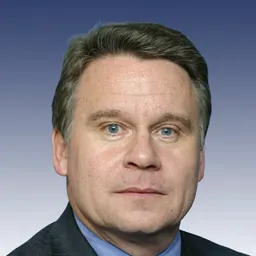

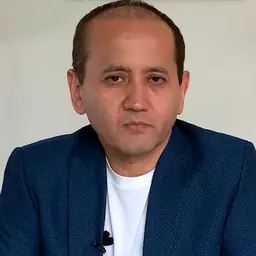

Related people
Same field, nearest in time


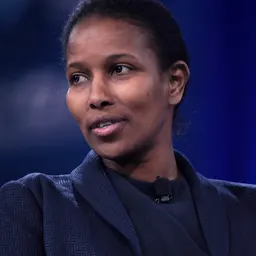

Contemporaries
People whose lives overlapped Vladimir Kozlov's


Frequently asked questions
Who is Vladimir Kozlov?
Kazakhstani politician
When was Vladimir Kozlov born?
Vladimir Kozlov was born on 10 August 1960 in Aktobe.
What is Vladimir Kozlov's occupation?
Vladimir Kozlov is a politician and journalist.
What nationality is Vladimir Kozlov?
Vladimir Kozlov is Kazakh.
Sources & further reading
· DBpedia: Vladimir Kozlov (politician)
Cite this page
APA: Biography.guide. (2026). Vladimir Kozlov. https://biography.guide/vladimir-kozlov/
MLA: "Vladimir Kozlov." Biography.guide, https://biography.guide/vladimir-kozlov/.
Chicago: "Vladimir Kozlov." Biography.guide. https://biography.guide/vladimir-kozlov/.
Data last updated: 2026-09-23 · Spot an error? Report a correction.
Portrait: Wikimedia Commons · author & licence
Page generated 2026-09-27 05:07 UTC