
About Vittorio Valletta
Lived 1883 – 1967 (aged 84). Vittorio Valletta was an Italian accountant, politician, tax advisor, businessperson, manager and entrepreneur.
Vittorio Valletta (28 July 1883 – 10 August 1967) was an Italian industrialist and president of Fiat S.p.A. from 1946 to 1966.
Early life Born at Sampierdarena near Genoa, he was the son of Federico Valletta, of Brindisini origin (Palermo, 1856 – Turin, 1915), an officer of the Italian Royal Army and later an official in Turin of the Ferrovie dello Stato Italiane. His mother was Teresa Quadrio from Valtellina who belonged to a family of minor nobility; a prominent exponent of this family was the patriot Maurizio Quadrio. Valletta was a lecturer in economics before he joined Fiat in April 1921. As a result of his academic qualifications and background he was often known to colleagues and in the trade as "The Professor" (Il Professore).
Giovanni Agnelli, the company's founder, sought him as accountant. Valletta was known to the Italian fascist regime for his social democratic ideas, membership in Freemasonry, and clandestine connections with exiled anti-fascists in France, including the future president of the Italian Republic, Giuseppe Saragat, of whom he shared his reformist socialist views and was politically close to his post-war Italian Democratic Socialist Party.
Career Valletta became Fiat director in 1928 and the company's CEO in 1939. In the upheavals that followed the collapse of Benito Mussolini's fascist regime, Valletta found himself expelled from the company by the powerful trade unions that considered that he had been sympathetic to the National Fascist Party regime; he was later acquitted. While they shared mutual benefits in the field of war orders, Fiat always maintained a line of independence from the Fascist regime's totalitarian aspirations. In his work about the Italian resistance, Sergio Favretto's book argues that Fiat was actively involved alongside the resistance; the company supplied vehicles and petrol, made large sums available to support the movement, and collaborated in the sabotage of war production in its own plants.
In 1946, amid difficulties in the company's decision-making, Valletta was recalled and nominated as the company's president. His corporate model was based on policy salary and particular attention to the needs of workers according to a model of corporate liberality, which was defined by critics as Vallettian paternalism and contrasted to the participatory and enlightened model of Adriano Olivetti in Ivrea.
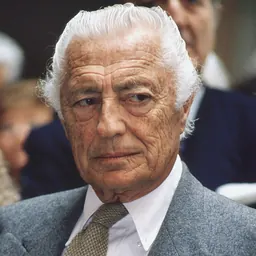
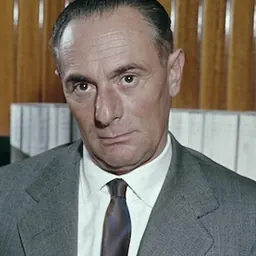
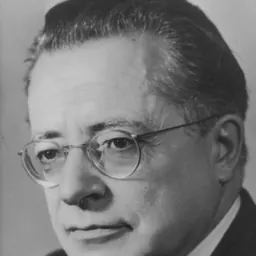
Later life and death Even though he was on the side of the Western Bloc during the Cold War and confinement departments, in which the most combative left-wing workers were marginalized, were established, Valletta was suspected by American government representatives, such as the anti-communist ambassador Clare Boothe Luce and the embassy's first secretary Clarence Durbrow, of siding with the Italian Communist Party leader Palmiro Togliatti. The anti-communist Luce repeatedly pressured Valletta, if he wanted to get work orders for his aircraft and vehicle departments, to expel all communists from Fiat, to which Valletta dismissed both the influence of the CGIL in Fiat and the danger of communism in Italy as overblown. In an interview to Il Messaggero, he gave his support for what became known as the Organic centre-left. He continued as chairman of Fiat until, at the age of 83, he retired in April 1966 to be succeeded in that post by the founder's grandson, Gianni Agnelli. Along with Enrico Mattei, he is regarded among the best Italian managers of the 20th century.
In July 2017, to commemorate the 60th year since his death, the Italian Ministry of Economic Development issued a postage stamp in honour of Valletta.
Don’t just read it —
keep it.
Full-length biographies made to live with: read them, listen on the way to work, watch them tonight.
- E-book
- Audio
- Video
Instant download · yours to keep · every purchase keeps this site free
Important facts
People in Vittorio Valletta's life
Named in this biography and alive at the same time




Related people
Same field, nearest in time
Contemporaries
People whose lives overlapped Vittorio Valletta's

Frequently asked questions
Who was Vittorio Valletta?
Italian senator (1883-1967)
When was Vittorio Valletta born?
Vittorio Valletta was born on 28 July 1883 in Sampierdarena.
When did Vittorio Valletta die?
Vittorio Valletta died on 10 August 1967 in Pietrasanta.
What was Vittorio Valletta's occupation?
Vittorio Valletta was an accountant, politician, tax advisor, businessperson, manager and entrepreneur.
What nationality was Vittorio Valletta?
Vittorio Valletta was Italian.
Sources & further reading
· Wikipedia: Vittorio Valletta
Cite this page
APA: Biography.guide. (2026). Vittorio Valletta. https://biography.guide/vittorio-valletta/
MLA: "Vittorio Valletta." Biography.guide, https://biography.guide/vittorio-valletta/.
Chicago: "Vittorio Valletta." Biography.guide. https://biography.guide/vittorio-valletta/.
Data last updated: 2026-09-26 · Spot an error? Report a correction.
Page generated 2026-09-27 05:15 UTC