
About Vittorio Gorresio
Lived 1910 – 1982 (aged 72). Vittorio Gorresio was an Italian writer, journalist, screenwriter and essayist.
Vittorio Gorresio (18 July 1910 – 17 December 1982) was an Italian journalist, commentator, and essayist.
Biography Provenance and early years Vittorio Gorresio was born in Modena. His parents, General Marco Gorresio and Teresa Silvestro/Gorresio, were both products of long-established Piedmontese army families from, respectively, Cuneo and Mondovì. The Gorresios would not have been considered particularly wealthy, but the couple and their children were nevertheless able to live reasonably on Marco Gorresio's army salary. The family backgrounds of the two parents may have appeared very similar to outsiders, but there were differences of nuance that surfaced in differing attitudes to the great international question of Vittorio's early childhood, of whether or not Italy should engage militarily in the First World War. Marco Gorresio, a career soldier from a strongly Catholic pro-Giolitti family, opposed military intervention. The Silvestros were a little more traditionalist and conservative: Teresa Silvestro/Gorresio, like her father, favoured the interventionist position. The family then returned to Rome where in 1928 Vittorio Gorresio successfully concluded his school career. His brothers had by this time decided to follow their father into the army, but Vittorio had other ideas, so he enrolled at university as a law student. He graduated in 1932. At the same time he continued to write for other publications, and to build up a network of contacts and friends among the journalists based in Rome. During this period he also became director of another weekly (and evidently short-lived) publication, "L'Eco del mondo e Storia". The appointment was based on a recommendation by the newspaper's editor-in-chief, Mario Missiroli. It is possible that the recommendation was not wholly disinterested. Missiroli seems to have been trying to ingratiate himself with sources at the Ministry for War, in which Marco Gorresio (1878– ), Vittorio's father, having been promoted to a position as an office-bound army general, by now occupied a position of significant influence. The appointment gave Vittorio Gorresio his first experience as a member of the editorial board of a mass-circulation daily newspaper: it was an important and formative period for him on several different levels. The newspaper's overall director was Francesco Malgeri, who had been called in in 1932 to arrest an alarming decline in circulation. He had successfully re-invigorated Messaggero, recruiting a team of top journalists, starting with Missiroli. Malgeri was a committed Fascist but a genial senior colleague, who himself was an excellent journalist. Working at Il Messaggero meant working with some of the leading establishment journalists of the age, such as Giovanni Ansaldo and Leo Longanesi: Longanesi was a frequent presence at editorial meetings. A colleague who became a particular friend was Sandro De Feo.
Second World War Unsurprisingly, Gorresio's contributions to the Second Italo-Ethiopian War were not welcomed by the Fascist censors. The relationship that emerged between the journalist and the media regulators never became one of uncompromising confrontation, however. What emerged, rather, was a deep structural incompatibility, which came to the fore each time Gorresio found himself reporting on a matter of major political consequence. In many ways, this raised his profile, enhanced his reputation and seems to have resulted in his being selected to travel to a succession of emerging news hotspots. In September 1939, the French government declared war on Germany and Gorresio was sent to report from Paris. In June 1940, when Italy entered the war against France, he was sent to report on developments at the great naval base of Taranto, where he embarked aboard the battleship Duilio.
The armistice with the United States was proclaimed on 8 September 1943. With US and British forces invading from the south and German forces ensconced in the centre and north of the country, a period of intense danger for the civilian population of Rome appeared imminent, and Gorresio was one of many who went into a form of hiding. In his case, this meant quitting his editorship at Il Popolo and moving in with a distant cousin, the historian Paolo Brezzi, whose public profile was less exalted than his own. He tried to earn some money by undertaking academic research: for instance, he edited the so-called "Opuscoli politici" (literally, "political leaflets") of "M. Taparelli d'Azeglio" (1943). That assignment led him to become a regular visitor to the Rome central library, which was more discretely located at that time than it is today, and which had become the semi-clandestine meeting point for other intellectuals doing their best to stay out of sight. Here he was introduced by the partisan-journalist Felice Chilanti into a group of writers who called themselves "Armata garibaldina" (loosely, the "patriotic army"). Within the group Gorresio took for himself the informal pseudonym "fantomatico". Using it, he edited and distributed a little clandestine news-sheet called "Azione".
New beginnings After the armistice Gorresio had very briefly returned to work on Il Popolo di Roma, until it was suppressed, compromised, in the eyes of the new rulers, by the extent of its association with the Mussolini governments. By the end of the war in Europe, two of his brothers had disappeared, presumed killed, fighting for the Germans on the Russian front. Gorresio now launched himself on a "Cursus honorum" for which he was amply qualified. With a return to democratic government, his own political philosophy became more visible. He was never a communist, but nor could he ever be taken for an Italian "Christian Democrat". Joining a political party could have compromised his independence as a journalist, and it was not something that he ever did, but his attitudes tended to align with those of the liberal left, or with the social democracy that was now emerging or returning as a major political force elsewhere in western Europe. With the benefit of hindsight it is possible to see Gorresio as part of a centre-left "third force" which began to define itself in the aftermath of war, and during the 1950s acquired something of an "ethical" role with a growing appeal to the more intellectually inclined elements of public opinion. Within Italy's newly revived media establishment, other representatives of this tendency, broadly defined, included friends and colleagues such as Mario Pannunzio, Arrigo Benedetti, Ennio Flaiano and Eugenio Scalfari. A number of new mass-circulation loosely liberal-leaning magazines and newspapers were launched or re-launched for the post-democratic age, among them L'Europeo, Il Mondo and La Stampa. Vittorio Gorresio became a regular contributor to each of them.
Gorresio joined Pannunzio's recently launched daily newspaper Risorgimento Liberale in 1945, initially as a news reporter and later as parliamentary editor. However, when Pannunzio left the publication late in 1947, in the context of "political differences" inside the Italian Liberal Party, Gorresio left too. Risorgimento Liberale ceased publication a year later. Gorresio stayed rather longer with Benedetti's L'Europeo, writing for the magazine regularly between 1945 and 1954. Through the 1950s he was parliamentary diarist for La Stampa (published in Turin), taking over as editorial director of the paper's Rome office after a few years. He retained that post till 1976 when cancer of the upper jaw forced him into a partial retirement, which he used in part to write a series of memorable articles concerned with the terrifying illness. He continued to write for La Stampa almost till he died. He used La Stampa to take a stand in the wake of the Montesi case, deploring the excesses displayed by journalists keen to "secure a scoop". In a contribution published on 30 November 1954 he spelled out his concern that this type of behaviour could all too easily be used to justify government restrictions on press freedoms.
Output: books (selection)
Don’t just read it —
keep it.
Full-length biographies made to live with: read them, listen on the way to work, watch them tonight.
- E-book
- Audio
- Video
Instant download · yours to keep · every purchase keeps this site free
Important facts
People in Vittorio Gorresio's life
Named in this biography and alive at the same time





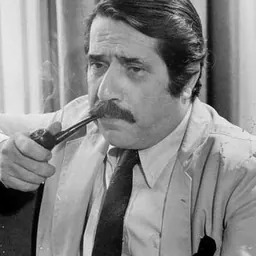
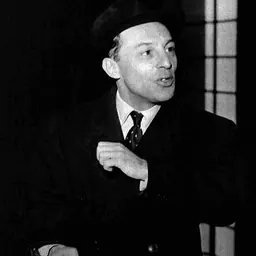
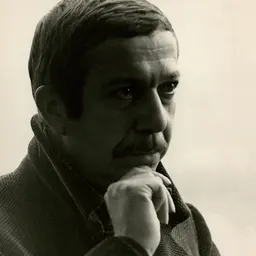
Related people
Same field, nearest in time


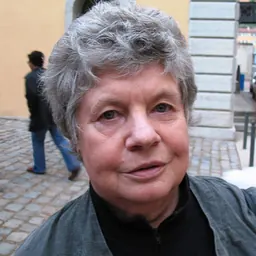
Contemporaries
People whose lives overlapped Vittorio Gorresio's






Frequently asked questions
Who was Vittorio Gorresio?
Italian writer and journalist (1910-1982)
When was Vittorio Gorresio born?
Vittorio Gorresio was born on 18 July 1910 in Modena.
When did Vittorio Gorresio die?
Vittorio Gorresio died on 17 December 1982 in Rome.
What was Vittorio Gorresio's occupation?
Vittorio Gorresio was a writer, journalist, screenwriter and essayist.
What nationality was Vittorio Gorresio?
Vittorio Gorresio was Italian.
Sources & further reading
· Wikipedia: Vittorio Gorresio
Cite this page
APA: Biography.guide. (2026). Vittorio Gorresio. https://biography.guide/vittorio-gorresio/
MLA: "Vittorio Gorresio." Biography.guide, https://biography.guide/vittorio-gorresio/.
Chicago: "Vittorio Gorresio." Biography.guide. https://biography.guide/vittorio-gorresio/.
Data last updated: 2026-09-22 · Spot an error? Report a correction.
Page generated 2026-09-27 05:12 UTC