
About Vittorio Gnecchi
Lived 1876 – 1954 (aged 77). Vittorio Gnecchi was an Italian composer.
Vittorio Gnecchi (17 July 1876 – 5 February 1954) was an Italian composer.
Life Vittorio Gnecchi Ruscone was the son of a wealthy industrialist. Thanks to his solid financial position, he was able to take private lessons, and had among his teachers Michele Saladino (who was also the teacher of Pietro Mascagni and Victor de Sabata), Tullio Serafin, Gaetano Coronaro and Carlo Gatti.
As soon as he was nineteen years old, he achieved success with the pastoral action Virtù d'amore, which allowed him to publish his work with the prestigious publisher Ricordi. The next work was the opera Cassandra, whose libretto, taken from Oresteia by Aeschylus, was first set by Gnecchi himself, then entrusted to the librettist Luigi Illica. Cassandra was completed in 1903 and premiered on 5 December 1905 at the Teatro Comunale di Bologna under the direction of Arturo Toscanini with Solomiya Krushelnytska and Giuseppe Borgatti.
Shortly after the first performance of Elektra by Richard Strauss (25 January 1909), an article appeared in Italy by musicologist Giovanni Tebaldini, entitled "Telepatia Musicale". In this article, Cassandra and Elektra were compared, and the author concluded that Strauss must have known Gnecchi's work, and may possibly have plagiarised it. Strauss denied plagiarism and, although there appear to be established correspondence about the work between him and Gnecchi, critics are inclined to believe that the similarities are coincidental. Gnecchi never commented on the case, but his name was linked to it throughout his life. The uproar caused by the article curbed the circulation of Cassandra in Italy, while abroad there were several performances until 1933 (including at the Vienna Volksoper, in Philadelphia and in numerous German theatres).
Gnecchi's next opera was La Rosiera in 1927, which was followed by the ballet Atlanta (1929). The composer, whose style is characterised by the use of post-wagnerian chromatic harmonies within classical forms, is set at the end of the 18th century and tells the story of the love of two sisters for the same man, Baron Perdicano. Camilla loves Perdicano but rejects him so as not to reveal her feelings; Perdicano then falls in love with Rosetta; Camilla manages to win Perdicano back but Rosetta commits suicide out of despair on the same day as the wedding. Giuditta, tragedy (oratorio) in three acts, libretto by Luigi Illica (Salzburg, 1953)
Instrumental, orchestral and vocal music Atalanta, Symphonic ballet of Greek dances (Teatro Lirico Milan, 1929) Adagio for cello and piano (Paris, 1929) Adagio cantabile, sacred piece for string instruments and organ (Salzburg, 1931) Poema eroico (Notte nel campo di Oloferne), for orchestra (Teatro alla Scala, Milan, 6 June 1932) Salve, Regina!, motet for soprano solo, choir and orchestra (Milan, 1932) O sacrum convivium, motet for soprano, choir and orchestra (Milan, 1932) Missa Salisburgensis, for soprano, baritone, choir and large orchestra (Salzburg, 4 August 1933) Cantata biblica, three preludes and three parts for voice and piano (Salzburg, 1934) Dances and Greek rites, for violin, cello and piano (1939) Pavane for piano Preghiera, sacred piece for string instruments and organ Ave Maria, for three voices and organ Tempo di sinfonia in D flat
Songs wih piano Invocazione italica: coro di popolo, text by Giovanni Borelli (Milan, 1915) Preghiera del soldato, text by F. Pastonchi (Milan, 1917) Dormi, tesoro, own text (Milan, 1932) Die kleine Mutter, text by Manfred Hausmann (Milan, 1933) Sorride ella, from a text by Rabindranath Tagore (Rome, 1934) Non partire, from a text by Rabindranath Tagore (Rome, 1934) The Secret, from a text by Rabindranath Tagore (Rome, 1934) La lampada, text by Raniero Nicolai (1934) Tristezza d'una notte di primavera, text by Gabriele D'Annunzio Nozze rosee, text by Maria Rossi Borzotti Birdy song, text by J. Madden
Recordings Cassandra – Denia Mazzola (Clitennestra), Alberto Cupido (Agamennone), Arnold Kocharyan (Egisto), Tea Demurishvili (Cassandra), Pierre Lebon (Oreste), Andzella Kirse (Una Coèfora), Jean Marc Ivaldi (Il Fazionario del Porto), Jean Marc Ivaldi (Il Navarca), Nikola Mijailovic (Il Prologo); conductor: Enrique Diemecke, Orchestre National de Montpellier Languedoc-Roussillon, Latvian Radio Chorus. Live recording 2000, Agorà Musica AG 260.2
Don’t just read it —
keep it.
Full-length biographies made to live with: read them, listen on the way to work, watch them tonight.
- E-book
- Audio
- Video
Instant download · yours to keep · every purchase keeps this site free
Important facts
People in Vittorio Gnecchi's life
Named in this biography and alive at the same time
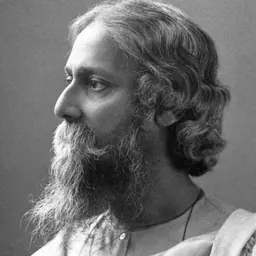
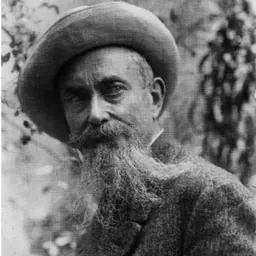
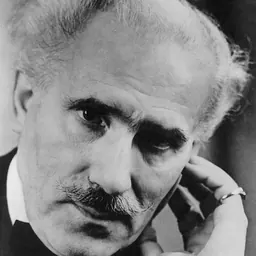

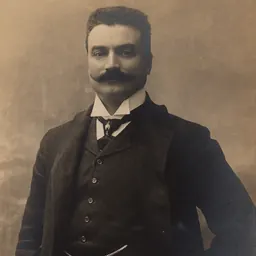


Related people
Same field, nearest in time



Contemporaries
People whose lives overlapped Vittorio Gnecchi's
Frequently asked questions
Who was Vittorio Gnecchi?
Italian composer (1876-1954)
When was Vittorio Gnecchi born?
Vittorio Gnecchi was born on 17 July 1876 in Milan.
When did Vittorio Gnecchi die?
Vittorio Gnecchi died on 5 February 1954 in Milan.
What was Vittorio Gnecchi's occupation?
Vittorio Gnecchi was a composer.
What nationality was Vittorio Gnecchi?
Vittorio Gnecchi was Italian.
Sources & further reading
Cite this page
APA: Biography.guide. (2026). Vittorio Gnecchi. https://biography.guide/vittorio-gnecchi/
MLA: "Vittorio Gnecchi." Biography.guide, https://biography.guide/vittorio-gnecchi/.
Chicago: "Vittorio Gnecchi." Biography.guide. https://biography.guide/vittorio-gnecchi/.
Data last updated: 2026-09-26 · Spot an error? Report a correction.
Page generated 2026-09-27 05:14 UTC