
Vito Cascio Ferro
Member of the Sicilian Mafia
About Vito Cascio Ferro
Lived 1862 – 1942 (aged 79–80). Vito Cascio Ferro was an Italian gangster.
Vito Cascio Ferro or Vito Cascioferro (; 22 January 1862 – 20 September 1943), also known as Don Vito, was an Italian criminal who was a prominent member of the Sicilian Mafia. He also operated for several years in the United States. He is often depicted as the "boss of bosses", although such a position does not exist in the loose structure of Cosa Nostra in Sicily.
Cascio Ferro's life is full of myth and mystery. He became a legend even when he was alive, and that legend is partially responsible for creating the image of the gallant gentleman capomafia (Mafia boss). He is widely considered to have been responsible for the 1909 murder of Joseph Petrosino, head of the New York City police department's Italian Squad. However, he was never convicted of the crime.
With the rise of Fascism in Italy, his untouchable position declined. He was arrested and sentenced to life imprisonment in 1930 and would remain in jail until his death. There is some confusion about the exact year of his death, but according to La Stampa, Cascio Ferro died on 20 September 1943, in the prison on the island of Procida.
Early life The U.S. Treasury department used the spelling "Cascioferro" on this 1902 arrest sheet, though most other sources spell the name as "Cascio Ferro".
Although many sources have identified Cascio Ferro as a native of the rural town of Bisacquino, where he was raised, he was actually born in the city of Palermo, on 22 January 1862. His parents, Accursio Cascio Ferro and Santa Ippolito, were poor and illiterate. The family moved to Bisacquino when his father became a campiere (an armed guard) with the local landlord, Baron Antonino Inglese, a notorious usurper of state-owned land. The position of campiere often involved Mafiosi.
Cascio Ferro received no formal education. When still young, he married a teacher from Bisacquino, Brigida Giaccone, who instructed him how to read and write. He worked as a revenue collector as a young adult, using the position as a cover to carry out his protection racket. His criminal record began with an assault in 1884 and progressed through extortion, arson, and menacing, and eventually to the kidnapping of the 19-year-old Baroness Clorinda Peritelli di Valpetrosa in June 1898, for which he received a three-year sentence.
Revolutionary mafioso While incarcerated for attempted extortion, Cascio Ferro was recruited into the Fasci Siciliani (Sicilian Leagues), a popular movement of democratic and socialist inspiration, by Bernardino Verro, the president of the League in Corleone. The Leagues needed muscle in their social struggle of 1893–94. In 1892, Cascio Ferro became the president of the Fascio of Bisacquino.
In January 1894, the Fasci were outlawed and brutally repressed on the orders of Prime Minister Francesco Crispi. Many leaders were put in jail; Cascio Ferro fled to Tunis for a year. In September 1904, he returned to Sicily shortly after police sergeant Joseph Petrosino of the New York City Police Department ordered his arrest for involvement with the Barrel Murder; his application for American citizenship was consequently blocked.
Back in Sicily, Cascio Ferro rose to the position of a local notable. He was the capo elettore (ward heeler) of Domenico De Michele Ferrantelli, the mayor of Burgio and member of Parliament for the district of Bivona, as well as on good terms with the Baron Inglese.
A semi-factual and romantic portrait by journalist Luigi Barzini contributed much to form the legend of Don Vito:
Police reports described Cascio Ferro as notoriously associated with the "high" Mafia, leading a life of luxury, going to the theatre, cafés, gambling high sums at the Circolo dei Civili a club for gentlemen, reserved for those with pretensions to education and elite status. The two men were very much aware of the danger to each other's survival; Petrosino carried a note describing Cascio Ferro as “a terrible criminal”, while Cascio Ferro had a photograph of the police officer. Historical reconstructions have dismissed this version and cannot locate Cascio Ferro at the scene of the crime.
News of the murder spread fast in U.S. newspapers and a swell of anti-Italian sentiment spread across New York.
A report by Baldassare Ceola, the police commissioner of Palermo, concluded that the crime had probably been carried out by Mafiosi Carlo Costantino and Antonino Passananti under Cascio Ferro's direction. Evidence was thin, however, and the case was effectively closed when in July 1911 the Palermo Court of Appeals discharged Cascio Ferro, as well as Costantino and Passananti, due to insufficient evidence to send them to trial.
In 2014, more than a century after the assassination, the Italian police overheard a tapped phone conversation in which a sibling claimed that Paolo Palazzotto had been the killer on the orders of Cascio Ferro. In a recorded conversation during an (unrelated) investigation by Italian police the suspected Mafia boss, Domenico Palazzotto, told other mafiosi that his great-uncle had killed Petrosino on behalf of Cascio Ferro. Palazzotto's name had come up during the investigations in 1909, but he was released after questioning and providing an alibi.
Downfall In 1923, the sub-prefect of Corleone warned the Ministry of Interior that Cascio Ferro was "one of the worst offenders, quite capable of committing any crime". In May 1925, he was arrested as the instigator of a murder. He was able to be released on bail, as usual. However, with the rise of Fascism, his reputation and immunity were declining. He was indicted for participation in 20 murders, eight attempted murders, five robberies with violence, 37 acts of extortion, and 53 other offences including physical violence and threats.
He was sentenced to life imprisonment on 27 June 1930, on the old murder charge. He remained silent during the trial. Cascio Ferro had been arrested some 69 times before and always had been acquitted, but this time it was different. After hearing the sentence the president of the court asked Cascio Ferro if he had something to say in his defense. Cascio Ferro stood up and said: "Gentlemen, as you have been unable to obtain proof of any of the numerous crimes I have committed, you have been reduced to condemning me for the only one I never committed." The "iron prefect", as Mori was known, wanted to give maximum publicity to the event. He had posters printed with pictures of Cascio Ferro and the text of the court sentence. However, according to historian Giuseppe Carlo Marino, Cascio Ferro was transferred to another prison in Pozzuoli in 1940, and the octogenarian was left to die during an Allied bombardment of that prison in 1943 (other sources mention 1942).
For years, a sentence believed to be carved by Cascio Ferro was legible on the wall of his Ucciardone cell: "Prison, sickness, and necessity, reveal the real heart of a man." Inmates considered occupying Don Vito's former cell a great honour. Historians consider this account a legend rather than fact.
Don’t just read it —
keep it.
Full-length biographies made to live with: read them, listen on the way to work, watch them tonight.
- E-book
- Audio
- Video
Instant download · yours to keep · every purchase keeps this site free
Important facts
People in Vito Cascio Ferro's life
Named in this biography and alive at the same time


Related people
Same field, nearest in time

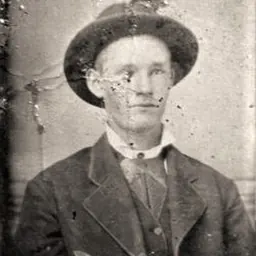
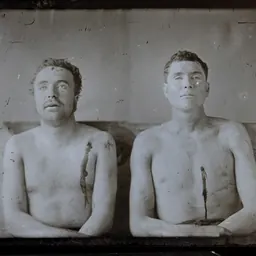
Contemporaries
People whose lives overlapped Vito Cascio Ferro's
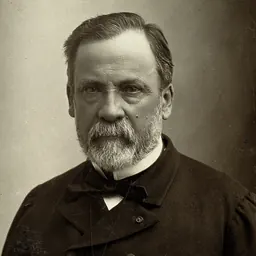




Frequently asked questions
Who was Vito Cascio Ferro?
member of the Sicilian Mafia (1862–1943)
When was Vito Cascio Ferro born?
Vito Cascio Ferro was born on 22 January 1862 in Palermo.
When did Vito Cascio Ferro die?
Vito Cascio Ferro died in 1942 in Palermo.
What was Vito Cascio Ferro's occupation?
Vito Cascio Ferro was a gangster.
What nationality was Vito Cascio Ferro?
Vito Cascio Ferro was Italian.
Sources & further reading
· Wikipedia: Vito Cascio Ferro
Cite this page
APA: Biography.guide. (2026). Vito Cascio Ferro. https://biography.guide/vito-cascio-ferro/
MLA: "Vito Cascio Ferro." Biography.guide, https://biography.guide/vito-cascio-ferro/.
Chicago: "Vito Cascio Ferro." Biography.guide. https://biography.guide/vito-cascio-ferro/.
Data last updated: 2026-09-20 · Spot an error? Report a correction.
Page generated 2026-09-27 05:22 UTC