
About Vitas
Born 1979. Vitas is a Russian singer-songwriter, songwriter, singer, composer and actor.
Vitaliy Vladasovich Grachev or Vitaliy Vladasovych Grachov, known professionally as Vitas ( ; stylised in all caps; born 19 February 1979), is a Latvia-born Ukrainian and Russian singer. Vitas is known for his falsetto and his eclectic musical style, which incorporates elements of operatic pop, techno, dance, classical, jazz, and folk.
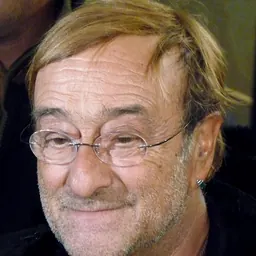
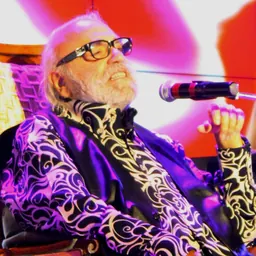
Vitas became popular in Russia and other Eastern European countries in the early 2000s and also achieved success in Asia, including China, in 2005. He won the ZD Awards and participated in many Russian and European music festivals, including the festival “Christmas Meetings of Alla Pugacheva” and others. He performed in a duet with Demis Roussos and Lucio Dalla.
Much of his recognition outside Russia and Asia came in the 2010s, when songs such as "Opera #2" and "The 7th Element" (both from his 2001 debut album Philosophy of Miracle) and "Smile!" (from his 2002 album of the same name) achieved viral success; the unusual music videos for "Opera #2" and "The 7th Element" have been cited as the most prominent examples of this. He designs his own stage costumes, and employs a backing band named DIVA during live performances.
Early life Vitaliy Vladasovich Grachev was born in Daugavpils, which was then in the Latvian Soviet Socialist Republic, on 19 February 1979. He moved with his parents to Ukraine, where he was raised in Odesa. In an interview to Ukrainian website Fakty in 2012, Grachev claimed that Vitas was his official first name on his birth certificate. At the age of 16, he officially changed his first name to the name's Ukrainian version Vitaliy.
Vitas has Russian, Lithuanian and Ashkenazi Jewish roots. He is the son of costume designer Lilia Mihailovna Gracheva who was Russian and musician Vladas Arkadevich Grachev-Marantzman who was of ethnic Lithuanian and Ashkenazi Jewish origin. His paternal grandfather, Arkadiy Davydovich Marantzman, who sang in an army choir, was Ashkenazi Jewish while his paternal grandmother was of ethnic Lithuanian descent.notetag|It is often reported that Vitas' paternal grandmother was Latvian. However, in an interview to Channel One Russia, Vitas referred to his paternal grandmother as a "true-blood ethnic Lithuanian". Arkadiy Marantzman served in the Soviet army during World War II. Vitas showed an interest in music from an early age; his grandfather taught him to play the accordion at the age of 5. He later said that he had composed at least 1,000 songs by the age of 12. He attended an art school in Odesa from the age of seven, and appeared in various theatrical productions as a teenager.
He took the name Vitas in his teen years as he found "Vitaliy Grachev" sounded too long. He regularly clashed with his father about his late night rehearsing habits. His father threatened to report him to the police. At the age of 21, Vitas and his 15-year-old girlfriend and future wife Svetlana crossed the border into Russia on a train without Svetlana having proper documentation. He initially started his career as a Michael Jackson tribute act, but also performed parodies and his own songs. He also sold leftover bread from stores on the street as well as offering his services as a photographer. At night clubs, he had acts involving dancing, singing, comedy and magic tricks, including spoon bending. In 1999, Odesan regional television station Elan shot a music video for his song "Opera #1", which they recorded in Odesa.
During one of his night club performances, where he performed "Opera #2", he was spotted by a Russian producer who recommended that he move to Moscow, which he had already considered in 1998–1999.
On February 27, 2001, Vitas premiered his solo concert show "Opera #...", in an abridged form, at the "Russia" Concert Hall in Moscow. Performed as a teaser for the first leg of his "Philosophy of Miracle" tour, the show was filmed by TV-6 and later broadcast as part of the music program "Наша музыка". Although not well documented, official sources recall that the tour began on April 7, 2001, presumably in Naro-Fominsk. Other sources confirm that the tour had already started by March 2001. During that first tour, Vitas performed not only in concert halls, but also on TV shows, festivals, stadiums, casino halls and nightclubs. In March 2002, Vitas made his first tour in the United States of America.
On March 29, 2002, Vitas premiered the second leg of his "Philosophy of Miracle" concert tour with a concert at the State Kremlin Palace in Moscow. The concert was filmed by Channel One Russia and later released on DVD.
In late 2002, Vitas received an invitation from Lucio Dalla, the composer of "Caruso", to perform this song together with him at the "Sanremo in Moscow" concert in the State Kremlin Palace on November 23, 2002. Mr. Dalla then invited Vitas to come to Rome to take part in the rehearsals of Toska, a modern version of Puccini's opera.
In dedication to his mother who died in 2001, Vitas released two albums: "Mama" and "The Songs of My Mother". The latter included classic Soviet songs which were the favourite of Vitas' late mother. During the process of recording the album, Vitas befriended Soviet and Russian composer Alexandra Pakhmutova,
On October 21, 2003, Vitas ended his first concert tour "Philosophy of Miracle" with its last gig in Kaliningrad.
On November 1, 2003, Vitas presented his second concert tour with the show "The Songs of My Mother" in the "Russia" Concert Hall in Moscow. Compared to the flamboyant nature of his previous Philosophy of Miracle tour, The Songs of My Mother was more conservative, drawing on classic Russian songs. From 2004 to 2006, Vitas' management, the "Pudovkin" Production Center continued "The Songs of My Mother" tour in Russia and the United States, Germany, Kazakhstan, Israel and the Baltic states. He also starred in a comedy called Crazy Day.
2006–2014: Asian success, Return Home and films In June 2006, Vitas was invited by China Central Television to take part in a grand event entitled The Year of Russia in China in Beijing. Vitas performed two songs, "The Star" and "Opera #2" during the event, marking the beginning of his popularity in China.
Vitas' Return Home tour, beginning in 2006, had a conservative atmosphere similar to the Songs of My Mother tour. The concert performed in Saint Petersburg on 4 March 2007 was later released on DVD on Vitas' website, as well as officially in some countries, albeit with many songs removed. The full concert in Moscow was later released on DVD.
In October 2007, Vitas was signed with now-defunct American label Gemini Sun Records. Gemini Sun released the Audio Visual Connect Series Vitas compilation CD + DVD set featuring eight music videos with the corresponding songs also on audio CD, in addition to a bonus audio track. In 2008, Vitas also released "Light of A New Day", a 40-minute track of non-lyrical vocalization and instrumentation. The song is available as a free download on his website.
The Sleepless Night tour included concerts in China and more elaborate presentations than the more conservative Return Home program. Vitas performed his Return Home concert in Bucharest, Romania on 25 February 2009. The concert was broadcast on the Romanian TVR2 and TVRi television networks, achieving their highest ratings in twelve months. A benefit concert, with Vitas performing "The Star", was held on 12 May 2009 in Sichuan province in memory of the victims of the previous year's earthquake there; a song known as "Mommy and Son" was released in late October 2009 in remembrance of the victims. It was the very first title track of the Mommy and Son album (released 1 September 2011), which included new songs, such as "C'est La Vie" (French for "Such is life"), "Once More", "Let the Father Teach!", "Young Rook" and others. He recorded music for the film's soundtrack. He collaborated with Australian musician and DJ Timmy Trumpet on the song "The King" and performed with him at the Belgian rave festival Tomorrowland. In August 2020, Vitas' 20th anniversary EP OPERA20 was released in China. The album contained songs in English, Russian, and Chinese, as well as a collaboration with Chinese singer Elvis Wang. 1,000 limited edition vinyl copies were issued.
Following the COVID-19 pandemic, Vitas' touring abroad stopped and for a while, he solely performed in Russia. Since March 2022, he has withdrawn from performing publicly and focused mostly on his family.
Incidents Vitas is also known in Russia for several high-profile incidents, following the investigations of which he had to face criminal and administrative liability. For example, in 2003, a criminal case was initiated against him under Part 4 of Article 222 of the Russian Criminal Code (illegal arms trafficking). However, according to the prosecutor, the case against Grachev was closed due to his active repentance.
Traffic accident On May 10, 2013, in Moscow, Grachev hit a cyclist, Olga Kholodova, with his car near the VVC (All-Russian Exhibition Center). After being taken to the police station, the singer handed over a Makarov pistol mockup to the officers. In 2008, as a Ukrainian citizen, Grachev obtained a new driver's license from Ukraine but again violated traffic rules by driving into the oncoming lane. On May 27, Grachev was stripped of his driving license for 1.5 years by a magistrate of the Ostaninsky district of Moscow for refusing to undergo a medical examination under Part 1 of Article 12.26 of the Administrative Code of the Russian Federation; On August 26, 2013, the Ostaninsky court in Moscow found the singer guilty of committing a crime under Article 318 of the Russian Criminal Code and fined him 100,000 rubles for the incident involving the police officer.
Shooting incident On March 21, 2018, Grachev fired a starting pistol in the courtyard of his house in the village of Barvikha on Rublyovka. The shooting continued for five hours and caused concerns among his neighbors. When police officers arrived, Vitas refused to open the door and continued shooting. As a result, the police broke down the door and took the singer to the police station, where an administrative protocol was drawn up against him. Grachev refused to undergo an alcohol intoxication test. During the inspection of his property, 45 shell casings, four cartridges, and a signal pistol were found. According to the singer's neighbors, this was not the first such shooting incident he had organized in his courtyard.
On March 27, 2018, the Odintsovo city court sentenced Grachev to seven days of arrest under Article 20.1 of the Administrative Code (petty hooliganism), which he served in the Istrinsky special reception center; he had previously been fined 500 rubles.
Conflict in a karaoke club On October 23, 2022, in Moscow, at a karaoke club on Sadovaya-Kudrinskaya Street, Grachev got into a fight with an official from one of the federal ministries, made a remark using obscene language, and sprayed pepper spray into the official's eyes. The conflict was broken up by security. Vitas quickly left, while the official went to a trauma center where he was diagnosed with chemical eye burns. The injured official filed a complaint with the police. A criminal case was initiated against Vitas for causing minor harm to health. During the investigation, the case was closed due to the reconciliation of the parties.
Personal life Vitas is a dual Ukrainian–Russian citizen, possessing two passports.
He married his longterm girlfriend Svetlana Grankovska in 2006 in Odesa in a private ceremony solely attended by family members.
During the early 2000s, Vitas was often guarded in interactions with the media and seldom gave interviews. His producer Sergey Pudovkin actively tried to block opportunities for interviewers and journalists to talk to Vitas. Vitas became more open towards the press in the early 2010s, holding his first in-depth interview in January 2012 on the Russian talk show Let Them Talk while showing his wife and daughter publicly for the first time.
Subsequently, he appeared on the Channel One Russia show Everybody Is at Home. Later that year, he appeared on the show again to address a man's allegations that he was Vitas's biological father. After much backlash from friends and family, and the man's admission of lying, the DNA results proved that he was not Vitas's father. To show that he had no hard feelings, Vitas sang and danced with the man's mother on the show.
Backing band Current members
Maxim Musatov – keyboards, backing vocals (2019–present) Valeriy Sukhov – bass guitar, backing vocals (2025–present) Egor Glukhov – drums (2025–present)
Former members
Aleksandr Gruzdev – guitar, saxophone, backing vocals (2001–2026) [unknown] – guitar, backing vocals (2014–2015) Vasiliy Musatov – keyboards (2004–2019) Ilya "G.IL.V" Grebenyuk – keyboards (2001–2003) Aleksey Rostov – keyboards (2003) Andrey Artemov – bass guitar, backing vocals (2007–2015) Rashit Kyamov – bass guitar, backing vocals (2001–2007, 2015–2016) Rushan Harryasov – drums (2001–2012) Aleksandr Illin – bass guitar, backing vocals (2016–2025) Yaroslav Andreev – drums (2012–2025)
Discography
Studio albums
Videos
Concert programs
Filmography
Film
Awards and achievements
Don’t just read it —
keep it.
Full-length biographies made to live with: read them, listen on the way to work, watch them tonight.
- E-book
- Audio
- Video
Instant download · yours to keep · every purchase keeps this site free
Important facts
People in Vitas's life
Named in this biography and alive at the same time


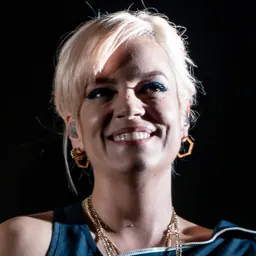
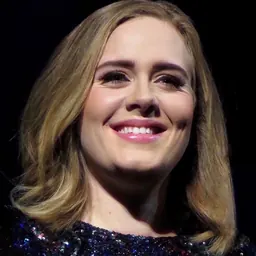
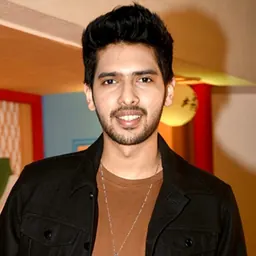
Related people
Same field, nearest in time



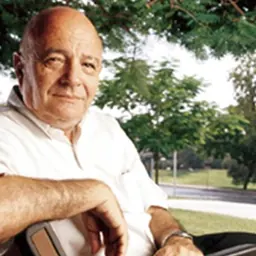
Contemporaries
People whose lives overlapped Vitas's




Frequently asked questions
Who is Vitas?
Russian singer
When was Vitas born?
Vitas was born on 19 February 1979 in Daugavpils.
What is Vitas's occupation?
Vitas is a singer-songwriter, songwriter, singer, composer and actor.
What nationality is Vitas?
Vitas is Russian.
Sources & further reading
Cite this page
APA: Biography.guide. (2026). Vitas. https://biography.guide/vitas/
MLA: "Vitas." Biography.guide, https://biography.guide/vitas/.
Chicago: "Vitas." Biography.guide. https://biography.guide/vitas/.
Data last updated: 2026-09-20 · Spot an error? Report a correction.
Page generated 2026-09-27 05:18 UTC