
About Vitaly Shentalinsky
Lived 1939 – 2018 (aged 78). Vitaly Shentalinsky was a Russian writer, poet, journalist and literary historian.
Vitaly Alexandrovich Shentalinsky (; 7 October 1939 – 27 July 2018) was a Russian writer and journalist. He became internationally known for his books on the fates of Russian writers during the Great Purge under the rule of Joseph Stalin.
Life Shentalinsky spent his school years in the Chistopol district of the Autonomous Soviet Republic Tatarstan. He graduated from the College of Arctic Maritime Studies (Арктическое морское училище) in Leningrad and subsequently studied at the Faculty of Journalism of Lomonosov State University in Moscow. He worked at a polar station on the Wrangel Island, and participated in five scientific expeditions in the Arctic. He worked for state television and several magazines, and was the author of travel reports from Siberia and the Arctic. He had a column dedicated to the conservation of nature and cultural monuments in the popular magazine Ogoniok. He also wrote several volumes of poetry.
During Perestroika under Mikhail Gorbachev he was elected to head a commission of the Union of Soviet Writers to investigate the fate of writers persecuted by Stalin's secret police NKVD. He then got permission to work in the KGB archives. On the basis of his research he published three volumes of documentation with extensive commentary. Chapters are devoted to Anna Akhmatova, Mikhail Bulgakov, Pavel Florensky, Maxim Gorky, Nikolai Klyuev, Ossip Mandelstam, Boris Pasternak, Boris Pilnyak and Marina Tsvetaeva. They contain longer extracts from snitch reports and interrogation protocols. He also published materials on the NKVD officer Yakov Agranov, who led many of the repressive measures against writers. Shentalinsky's books on the repression of writers were also published in English, French, German, Polish, Serbian and Spanish. Based on his work, several television documentaries were produced. His publications were praised by Alexander Solzhenitsyn and Yevgeny Yevtushenko.
In the Tatar community of Yuldus (district Chistopol), where he grew up, the "Shentalinsky Readings" have been taking place since 2013.
Main works Рабы свободы в литературных архивах КГБ, Parus, Moscow 1995 (English edition: Arrested Voices. Resurrecting the Disappeared Writers of the Soviet Regime. With an introduction by Robert Conquest. Free Press, New York 1996 ). Преступление без наказания: документальные повести, Progress-Pleyada, Moscow 2007 . (English edition: The KGB's Literary Archive, Introduction by Robert Conquest. The Harvill Press, London 1997 ). Донос на Сократа, Formika-S, Moscow 2001
Don’t just read it —
keep it.
Full-length biographies made to live with: read them, listen on the way to work, watch them tonight.
- E-book
- Audio
- Video
Instant download · yours to keep · every purchase keeps this site free
Important facts
People in Vitaly Shentalinsky's life
Named in this biography and alive at the same time
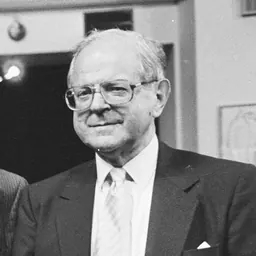

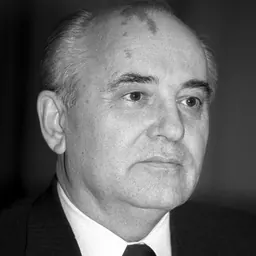
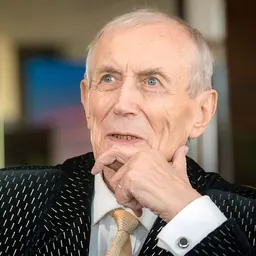


Related people
Same field, nearest in time

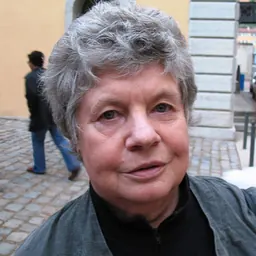
Contemporaries
People whose lives overlapped Vitaly Shentalinsky's



Frequently asked questions
Who was Vitaly Shentalinsky?
Russian writer and journalist (1939–2018)
When was Vitaly Shentalinsky born?
Vitaly Shentalinsky was born on 7 October 1939 in Kemerovo.
When did Vitaly Shentalinsky die?
Vitaly Shentalinsky died on 27 July 2018 in Serpukhov.
What was Vitaly Shentalinsky's occupation?
Vitaly Shentalinsky was a writer, poet, journalist and literary historian.
What nationality was Vitaly Shentalinsky?
Vitaly Shentalinsky was Russian.
Sources & further reading
· Wikipedia: Vitaly Shentalinsky
· DBpedia: Vitaly Shentalinsky
Cite this page
APA: Biography.guide. (2026). Vitaly Shentalinsky. https://biography.guide/vitaly-shentalinsky/
MLA: "Vitaly Shentalinsky." Biography.guide, https://biography.guide/vitaly-shentalinsky/.
Chicago: "Vitaly Shentalinsky." Biography.guide. https://biography.guide/vitaly-shentalinsky/.
Data last updated: 2026-09-20 · Spot an error? Report a correction.
Page generated 2026-09-27 05:20 UTC