
Virginia Hall
American spy with the British Special Operations Executive
About Virginia Hall
Lived 1906 – 1982 (aged 76). Virginia Hall was an American spy, intelligence analyst and sOE agent.
Virginia Hall Goillot DSC, Croix de Guerre, (April 6, 1906 – July 8, 1982), code name Bookworm, was an American who worked with the United Kingdom's clandestine Special Operations Executive (SOE) and the American Office of Strategic Services (OSS) in France during World War II.
The objective of SOE and OSS was to conduct espionage, sabotage and reconnaissance in occupied Europe against the Axis powers, especially Nazi Germany. SOE and OSS agents in France allied themselves with resistance groups and supplied them with weapons and equipment parachuted in from England. After World War II, Hall worked for the Special Activities Division of the Central Intelligence Agency (CIA).
Hall was the first female SOE agent to take up residence in France, arriving in Vichy France in August 1941. She created the Heckler network in Lyon. Over the next 15 months, she "became an expert at support operations – organizing resistance movements; supplying agents with money, weapons, and supplies; helping downed airmen to escape; offering safe houses and medical assistance to wounded agents and pilots." She fled France in November 1942 to avoid capture by the Germans.
Hall returned to France in March 1944 as a wireless operator for the OSS in the Saint network. Working in territory still occupied by the German army and mostly without help from other OSS agents, she supplied arms, training, and direction to French resistance groups, called Maquisards, especially in Haute-Loire, where the Maquis cleared the department of German soldiers before the American army arrived in September 1944.
The Germans gave her the nickname Artemis, and the Gestapo reportedly considered her "the most dangerous of all Allied spies." Having lost part of her left leg after a hunting accident, Hall used a prosthesis she named "Cuthbert." She was also known as "The Limping Lady" by the Germans and as "Marie of Lyon" by many of the SOE agents she helped.
Early life Virginia Hall was born in Baltimore, Maryland, on April 6, 1906, to Edwin "Ned" Lee Hall and his wife (also his secretary), Barbara Virginia Hammel. Ned Hall's father, John W. Hall, had stowed away on his father's clipper ship at the age of nine, and later became a wealthy businessman. She had a brother, John, four years her senior. Virginia was close to her family members, who affectionately nicknamed her "Dindy".
Another task Hall took on was helping British airmen who'd been shot down or crashed over Europe to escape and return to England. Downed airmen who found their way to Lyon were told to go to the American Consulate and say they were a "friend of Olivier." "Olivier" was Hall and she, with the help of brothel-owner Guérin and other friends, hid, fed, and helped dozens of airmen escape France to neutral Spain and hence back to England.
The French nicknamed her "la dame qui boite" and the Germans put "the limping lady" on their most wanted list.
Escape On November 7, 1942, the American Consulate in Lyon told Hall that an Allied invasion of North Africa was imminent. The following day the Germans moved to occupy Vichy France. Hall, who anticipated correctly that the Gestapo and Abwehr would increase their suppression, fled Lyon without telling anyone, including her closest contacts. She escaped by train from Lyon to Perpignan and then, with a guide, walked over a snowy 7,500-foot pass in the Pyrenees to Spain, covering up to 50 miles over two days in considerable discomfort.
Hall signaled to SOE before her escape that she hoped that "Cuthbert" would not trouble her on the way. The SOE did not understand the reference and replied, "If Cuthbert troublesome, eliminate him." After arriving in Spain, she was arrested by the Spanish authorities for illegally crossing the border, but the American Embassy eventually secured her release. She worked for SOE for a time in Madrid, then returned to London in July 1943 where she was quietly made an honorary Member of the Order of the British Empire (MBE).
Office of Strategic Services
On her return to London, SOE leaders declined to send Hall back to France as an agent, despite her requests that they do so. She was compromised, they said, and too much at risk. However, she took a wireless course and contacted the American Office of Strategic Services (OSS) about a job. She was hired by the Special Operations Branch at the low rank and pay of a second lieutenant, and she returned to France on March 21, 1944, arriving by motor gunboat at Beg-an-Fry east of Roscoff in Brittany. Her artificial leg prevented her from parachuting.
OSS provided her with a forged French identification card in the name of Marcelle Montagne. Her codename was Diane. The OSS teams' objective was to arm and train the resistance groups, called Maquis, so they could conduct sabotage and guerrilla activities to support the Allied invasion of Normandy, which would take place on June 6, 1944.
Hall was disguised as an older woman, with gray hair and her teeth filed down to resemble that of a peasant woman. She disguised her limp with the shuffle of an old woman. Landing with her was Henri Laussucq (alias Henri Lassot), 62 years old. Lassot was the organiser and leader of the new Saint network, it being too radical a thought that a woman could lead an SOE or OSS network of agents. She was Lassot's wireless operator. They were the fourth and fifth OSS agents to arrive in France. Lassot carried with him one million francs, equivalent to 5,000 British pounds; Hall had 500,000 francs with her. Hall quickly separated herself from Lassot, whom she characterized as too talkative and a security risk, instructing her contacts not to tell him where she was. Aware that her accent would reveal that she was not French, she engaged a French woman, Madame Rabut, to accompany and speak for her.
From March to July 1944, Hall roamed around France south of Paris, posing sometimes as an elderly milkmaid (and on one occasion selling cheese she had made to a group of German soldiers). She found and organized drop zones, established several safe houses, and made and renewed contacts in the Resistance, notably with Philippe de Vomecourt. She organized and armed several resistance groups of a hundred men each in the Cher and Cosne. She unsuccessfully attempted to organize a jailbreak to gain freedom for three men she called her nephews, captives of the Germans in Paris. Her resistance groups undertook many successful small-scale attacks on infrastructure and German soldiers.
From July to September 1944 Hall operated in Haute-Loire Department. Hall was next given the job of helping the Maquis in southern France harass the Germans in support of the Allied invasion of the south, Operation Dragoon, which would take place on August 15, 1944. In July, Hall was ordered to go to Haute-Loire department, arriving July 14, quitting her disguise, and establishing her headquarters in a barn near Le Chambon-sur-Lignon. As a woman with the rank of second lieutenant she had problems asserting her authority over the Maquis groups and the self-proclaimed colonels heading them. She complained to OSS headquarters, "you send people out ostensibly to work with me and for me, but you do not give me the necessary authority."
She told the Maquis leaders that she would finance them and give them arms on condition that they would be advised by her, but the prickly Maquis leaders continued to be a problem. The three planeloads of supplies she received in late July and the money she distributed for expenses gained their grudging acquiescence.
The three battalions of Maquisards (about 1,500 men) in her area undertook a number of successful sabotage operations. Now part of the French Forces of the Interior (FFI), they forced the German occupiers to withdraw from Le Puy-en-Velay and head north with the rest of the retreating German forces. Belatedly, a Jedburgh team of three men, called Jeremy, parachuted in on August 25 to undertake the training and supply of the battalions. Hall commented wryly, "This was after the Germans had been liquidated in the department of the Haute Loire and Le Puy liberated."
Hall and several of the British and American military officers working for her left the Haute Loire, arriving in Paris on September 22. Later, she and her OSS agent, Lieutenant Paul Goillot, journeyed to Austria to foment anti-Nazi resistance. With the collapse of the Nazis, Hall and Golliot returned to Paris in April 1945. She wrote reports, and identified people who had helped her and were deserving of commendations, then resigned from the OSS.
Postwar and death After the war, Hall visited Lyon to learn the fate of the people who had worked for her there. Her closest associates, brothel-owner Germaine Guérin and gynecologist Jean Rousset, had both been captured by the Germans and sent to concentration camps, but they survived. She arranged 80,000 francs (400 British pounds) compensation from the United Kingdom for Guérin, but most of her other helpers received nothing. Many of the people she knew had not survived, including the three men she had called "nephews," who had been executed at Buchenwald. Alesch, the German agent and priest who had betrayed her network in Lyon, was captured after the war and executed in Paris. President Truman wanted a public award of the medal, but Hall demurred, stating that she was "still operational and most anxious to get busy." She was made an honorary Member of the Order of the British Empire (MBE), and was awarded the Croix de Guerre with Palme by France.
Hall's refusal to talk and write about her World War II experiences resulted in her slipping into obscurity during her lifetime, but her death "triggered a new curiosity" which persisted into the 21st century.
In 1988, her name was added to the Military Intelligence Corps Hall of Fame. The French and British ambassadors in Washington honored her in 2006, on the 100th anniversary of her birth. In 2016, a CIA field agent training facility was named the Virginia Hall Expeditionary Center. The CIA Museum gives five operatives individual sections in its catalog. One is Virginia Hall; the other four are men who went on to head the CIA. She was inducted into the Maryland Women's Hall of Fame in 2019. That same year, Time created 89 new covers to celebrate women of the year starting from 1920; it chose Hall for 1943.
Legacy Books Her story has been told in several books, including: Friddell, Claudia. The Mysterious Virginia Hall: World War II's Most Dangerous Spy ''' Calkins Creek. 2025.
a non-fiction book for ages 12–18. a non-fiction book for ages 10 and older.
audience: ages 14 and up.
Roger Wolcott Hall (no relation) mentioned her in passing in his book (Reprinted: )
Films IFC Films released A Call to Spy in October 2020, the first feature film about Virginia Hall. It had its world premiere at the Edinburgh International Film Festival in June 2019, commemorating the 75th anniversary of D-Day. Hall is portrayed by Sarah Megan Thomas, and the film is directed by Lydia Dean Pilcher. The film won the Audience Choice Award in Canada. A Call to Spy had its U.S. festival premiere at the 2020 Santa Barbara International Film Festival, where it was honored with the Anti-Defamation League's "Stand Up" Award.
The film A Woman of No Importance'' was announced in 2017, based on the book by Sonia Purnell and starring Daisy Ridley as Hall.
Don’t just read it —
keep it.
Full-length biographies made to live with: read them, listen on the way to work, watch them tonight.
- E-book
- Audio
- Video
Instant download · yours to keep · every purchase keeps this site free
Important facts
People in Virginia Hall's life
Named in this biography and alive at the same time

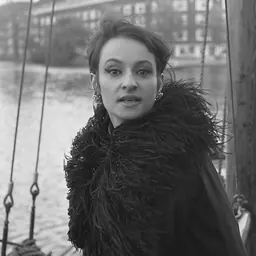




Related people
Same field, nearest in time


Contemporaries
People whose lives overlapped Virginia Hall's

Frequently asked questions
Who was Virginia Hall?
American spy with the British Special Operations Executive (1906-1982)
When was Virginia Hall born?
Virginia Hall was born on 6 April 1906 in Baltimore.
When did Virginia Hall die?
Virginia Hall died on 8 July 1982 in Adventist HealthCare Shady Grove Medical Center.
What was Virginia Hall's occupation?
Virginia Hall was a spy, intelligence analyst and sOE agent.
What nationality was Virginia Hall?
Virginia Hall was American.
Sources & further reading
Cite this page
APA: Biography.guide. (2026). Virginia Hall. https://biography.guide/virginia-hall/
MLA: "Virginia Hall." Biography.guide, https://biography.guide/virginia-hall/.
Chicago: "Virginia Hall." Biography.guide. https://biography.guide/virginia-hall/.
Data last updated: 2026-09-20 · Spot an error? Report a correction.
Page generated 2026-09-27 05:31 UTC