
About Virginia Guzmán Barcos
Virginia Guzmán Barcos was a Chilean psychologist and sociologist.
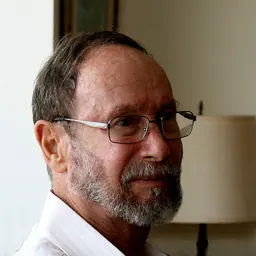
Virginia Guzmán Barcos (born 1943) is a Chilean psychologist and sociologist, who was a co-founder of the Flora Tristán Peruvian Women's Center. After completing studies at the Pontifical Catholic University of Chile and École pratique des hautes études (School of Higher Education Practices) at the Sorbonne, she went into exile in Peru because of the military dictatorship in Chile. Continuing her studies, she earned a master's degree in Peru and a PhD in Spain. From 1978, she became interested in women's studies and began researching in the area of women and public policy. After twenty years working at the Flora Tristán Peruvian Women's Center, she returned to Chile. Since 2002, she has been the deputy director of the (Center of Women's Studies) in Santiago.
Early life and education Virginia Beatriz Guzmán Barcos was born in 1943 in Chile. Raised in a household of women, except for her father, she was encouraged to engage in activities usually reserved for men. Exposed to the writing of Simone de Beauvoir at fifteen, she chose to ignore the stereotypical paths open to women in her era. She began to join student organizations and advocate for civil and political rights. She graduated in 1968 from the Pontifical Catholic University of Chile and went on to study psychology, earning a (State diploma of social service assistant) certificate from the École pratique des hautes études (School of Higher Education Practices) at the Sorbonne in Paris in 1970. During her studies, she took note of the lack of women as subject matter in any field except the social sciences, which made her want to research women's roles.
Career During the military dictatorship in Chile, Guzmán went into exile in Lima, Peru. In 1978, while a student at the Pontifical Catholic University of Peru, she attended the Workshop on women's studies organized by the International Institute of Social Studies of The Hague, through the Peruvian National Institute of Culture. The course, taught by Virginia Vargas, included students like Guzmán, Roxana Carrillo, Concepción Dumois, , Magdalena León de Leal, and others. The following year, along with Vargas and others, she founded the Flora Tristán Peruvian Women's Center. The center gave scholars the opportunity to conduct research on women and published their works.
In 1992, Guzmán became affiliated with the (CEM, Women's Studies Center) in Santiago, but continued her studies, earning a master's degree from the Pontifical Catholic University of Peru in 1996. She became a professor in the social sciences department at the University of Chile in 1997, but after one year began to teach gender studies at the Academy of Christian Humanism University. Since 2002, she has served as the Subdirector of the CEM. She completed her PhD in sociology from the Autonomous University of Barcelona in 2011, with a thesis, (Political-Institutional Processes and Gender Equality, Chile 1980–2010).
In addition to her teaching, Guzmán has been involved in policy development at both the national and international levels. She helped in the planning process for the 1995 Beijing Conference on Women and has worked with various divisions of the United Nations and feminist organizations in developing and analyzing gender policies in Brazil, Chile, the Dominican Republic, Guatemala, Mexico, Nicaragua, Panama, Paraguay, Uruguay, and Venezuela. She served on the constitutional committee as a gender policy advisor to the second administration of President Michelle Bachelet.
Research Most of Guzmán's works explore social movements and how women can create institutions to change social processes. This often included an analysis of development areas, such as lack of education, poverty, issues of rural women, societal norms of subordination, violence, and others which were targeted by global initiatives and how effective cooperation between women in the Global North and Global South was at making women more visible and in solving socio-economic challenges. Throughout the 1980s, there had been little focus on issues such as family violence in Latin America, and works like (Gender in Development: A New Reading, 1991) showed the depth of the problems.
Guzmán has researched how religion and politics are entwined and often take stances opposing sex education and reproductive rights, and how gender inequalities are often reinforced by public policies, in spite of state goals to democratize institutions and processes. In her study, "" ("Reproduction and Change in Inequalities of Gender in Contexts of Societal Transformations", 2018) with Lorena Godoy, Guzmán traced societal attitudes and changes in inequalities in socio-economic and political spheres in Chile over the forty-year period between 1970 and 2010.
Selected works
Don’t just read it —
keep it.
Full-length biographies made to live with: read them, listen on the way to work, watch them tonight.
- E-book
- Audio
- Video
Instant download · yours to keep · every purchase keeps this site free
Important facts
Related people
Same field, nearest in time




Frequently asked questions
Who was Virginia Guzmán Barcos?
Chilean academic
What was Virginia Guzmán Barcos's occupation?
Virginia Guzmán Barcos was a psychologist and sociologist.
What nationality was Virginia Guzmán Barcos?
Virginia Guzmán Barcos was Chilean.
Sources & further reading
· Wikipedia: Virginia Guzmán Barcos
· DBpedia: Virginia Guzmán Barcos
Cite this page
APA: Biography.guide. (2026). Virginia Guzmán Barcos. https://biography.guide/virginia-guzman-barcos/
MLA: "Virginia Guzmán Barcos." Biography.guide, https://biography.guide/virginia-guzman-barcos/.
Chicago: "Virginia Guzmán Barcos." Biography.guide. https://biography.guide/virginia-guzman-barcos/.
Data last updated: 2026-09-20 · Spot an error? Report a correction.
Page generated 2026-09-27 05:10 UTC