
About Virgínia Dias da Silva
Lived 1850 – 1922 (aged 72). Virgínia Dias da Silva was a Portuguese actor and stage actor.
Virgínia Dias da Silva ComSE (1850–1922), better known as Actriz Virginia (Actress Virginia), was a Portuguese stage actress.
Early life Virgínia Dias da Silva was born, on 19 March 1850 in the parish of Salvador in Torres Novas in the Santarém district of Portugal. She was the daughter of Simão Dias da Silva and Miquelina da Conceição, who both came from the same town. At a young age, she moved to the Portuguese capital, Lisbon, under the care of an aunt who wanted to employ her in a sewing workshop, something she was not happy about. She became interested in the theatre under the influence of her godfather, Rafael Rodrigues de Oliveira, a shareholder in the Teatro da Rua dos Condes in Lisbon. She began to audition at the age 13, with little success but after three years she joined the Teatro do Príncipe Real (later, the Teatro Apolo), owned by businessman César de Lima. On April 15, 1866, she debuted in a small role, in the 2-act comedy Mocidade e Honra (Youth and honour), in which she was well received.
Career Da Silva rapidly developed a successful career playing the ingénue. As she sang well she was given roles in comic operas, such as La Grande-Duchesse de Gérolstein by Henri Meilhac and Ludovic Halévy and Le pont des soupirs (The Bridge of Sighs) by Jacques Offenbach. In 1870 she joined the impresario, José Carlos dos Santos at the D. Maria II National Theatre in Lisbon where she changed from playing the ingénue to being the grande dame in numerous roles, including plays by Alexandre Dumas and Victor Hugo, taking the place vacated by Manuela Rey, an actress who died at a young age. At the age of 23, she was already considered the leading Portuguese actress. Da Silva remained first lady of the D. Maria II theatre for 27 consecutive years, only interrupted for one year at the Teatro da Trindade.
In 1880 she was one of the founders of the Society of Dramatic Artists theatre company, together with Augusto Rosa, Emília Cândida, Eduardo Brazão, Emília Cândida, Rosa Damasceno, and Joaquim de Almeida. After successive successes in Portugal, she went with part of the cast to Brazil in 1886 and 1887, to great acclaim.
Her name was later given to a street in Lisbon, in the Bairro dos Atores (Actors' quarter), and to one in her home town of Torres Novas. Teatro Virgínia in Torres Novas was named after her during her lifetime. As part of the commemorations of the first centenary of her birth, Torres Novas unveiled a plaque on the house where she was born, on Rua Alexandre Herculano.
Don’t just read it —
keep it.
Full-length biographies made to live with: read them, listen on the way to work, watch them tonight.
- E-book
- Audio
- Video
Instant download · yours to keep · every purchase keeps this site free
Important facts
People in Virgínia Dias da Silva's life
Named in this biography and alive at the same time

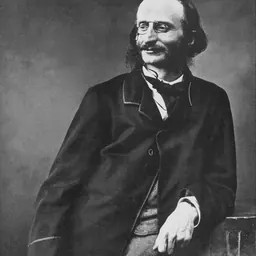
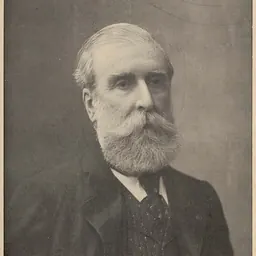


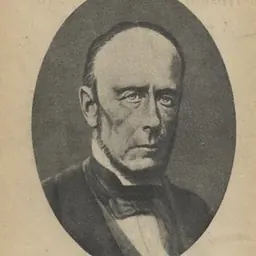
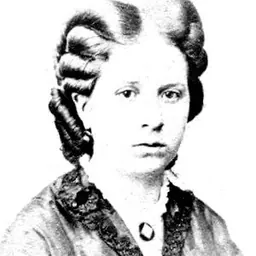

Related people
Same field, nearest in time

Contemporaries
People whose lives overlapped Virgínia Dias da Silva's




Frequently asked questions
Who was Virgínia Dias da Silva?
Portuguese actress (1850-1922)
When was Virgínia Dias da Silva born?
Virgínia Dias da Silva was born on 19 March 1850 in Torres Novas.
When did Virgínia Dias da Silva die?
Virgínia Dias da Silva died on 19 December 1922 in Lisbon.
What was Virgínia Dias da Silva's occupation?
Virgínia Dias da Silva was an actor and stage actor.
What nationality was Virgínia Dias da Silva?
Virgínia Dias da Silva was Portuguese.
Sources & further reading
· Wikipedia: Virgínia Dias da Silva
· DBpedia: Virgínia Dias da Silva
Cite this page
APA: Biography.guide. (2026). Virgínia Dias da Silva. https://biography.guide/virginia-dias-da-silva/
MLA: "Virgínia Dias da Silva." Biography.guide, https://biography.guide/virginia-dias-da-silva/.
Chicago: "Virgínia Dias da Silva." Biography.guide. https://biography.guide/virginia-dias-da-silva/.
Data last updated: 2026-09-25 · Spot an error? Report a correction.
Page generated 2026-09-27 05:10 UTC