
About Violet Douglas-Pennant
Lived 1869 – 1945 (aged 76). Violet Douglas-Pennant was a British military personnel.
Commandant Hon. Violet Blanche Douglas-Pennant (31 January 1869 – 12 October 1945) was a British philanthropist and supporter of local government who served as the second commandant of the Women's Royal Air Force (WRAF) until her dismissal in August 1918.
Born into the aristocracy, Douglas-Pennant became interested in youth clubs for girls which led her to charity work with the unemployed and with disabled children. Working with the Workers' Educational Association led her to become involved in the establishment and reform of local government, and she eventually became a member of the London County Council Education Committee.
After the establishment of the WRAF in 1918 she was suggested as a potential Commandant due to her experience in reform and management. She agreed to spend a month "looking round" the camp, and was so unhappy that she repeatedly tried to resign. Following her dismissal on 28 August 1918 by Lord Weir she wrote to several important political figures such as Winston Churchill asking for a judicial inquiry into her dismissal, claiming that it was part of an attempt by other senior WRAF officers to "cover up rife immorality" at WRAF bases. Lord Stanhope proposed establishing the Select Committee of the House of Lords on the Women's Royal Air Force to investigate any immorality. His proposal passed, and the committee began its work on 14 October 1918.
The Committee found that there was no evidence to back up Douglas-Pennant's accusations, and she was later sued for libel by two of the senior WRAF officers for comments she had made before and during the Select Committee's hearings. Douglas-Pennant was never again employed by the government, and spent the following decades attempting to clear her name before her death on 12 October 1945.
Early life and work Violet Douglas-Pennant was the sixth child of George Douglas-Pennant, 2nd Baron Penrhyn, and his first wife Penella Blanche, who died five days after Violet's birth. After a normal upbringing she became involved in philanthropic work with girls youth clubs, which led her into working with the poor, unemployed, uneducated and disabled in London. and the highest salary of any woman in Britain at the time.
WRAF Lady Margaret Rhondda, who wrote a report on the WRAF that led to Violet Douglas-Pennant's dismissal. Douglas-Pennant had previously done work for Queen Mary's Army Auxiliary Corps and the Women's Royal Naval Service; as such she was a natural choice for Commandant of the Women's Royal Air Force when it was formed in 1918. As a result of these difficulties, she officially declined the appointment in a letter to Godfrey Paine on 11 June 1918, saying that "I am very sorry to be obliged to decline the appointment of Commandant", Despite this she was convinced to stay on, and her appointment was confirmed on 18 June. She claimed that this immorality had been occurring particularly at a motor training camp called Hurst Park, where the camp commander Colonel Sam Janson had been discovered sleeping with one of the WRAF officers.
Stanhope's proposal passed, and the five-member Select Committee of the House of Lords on the Women's Royal Air Force was formed. The committee was led by Lord Wrenbury, with the other four members being the Earl of Kintore, the Earl of Denbigh, Lord Methuen and Lord Farrer.
Later life As a result of the Select Committee's findings Douglas-Pennant was never again employed by the government, and spent the rest of her life attempting to clear her name. The committee's decision led two of the parties (Colonels Janson and Bersey) to sue her for libel, and both cases were successful, forcing her to pay "substantial" damages. She died on 12 October 1945.
Don’t just read it —
keep it.
Full-length biographies made to live with: read them, listen on the way to work, watch them tonight.
- E-book
- Audio
- Video
Instant download · yours to keep · every purchase keeps this site free
Important facts
People in Violet Douglas-Pennant's life
Named in this biography and alive at the same time
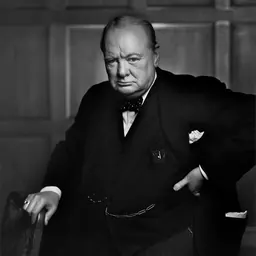
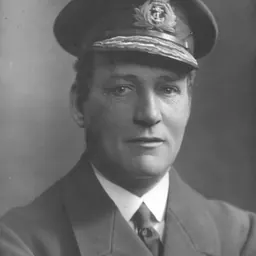
Related people
Same field, nearest in time





Contemporaries
People whose lives overlapped Violet Douglas-Pennant's


Frequently asked questions
Who was Violet Douglas-Pennant?
British philanthropist (1869–1945)
When was Violet Douglas-Pennant born?
Violet Douglas-Pennant was born on 31 January 1869 in Belgrave Square, Chesham Place.
When did Violet Douglas-Pennant die?
Violet Douglas-Pennant died on 12 October 1945.
What was Violet Douglas-Pennant's occupation?
Violet Douglas-Pennant was a military personnel.
What nationality was Violet Douglas-Pennant?
Violet Douglas-Pennant was British.
Sources & further reading
· Wikipedia: Violet Douglas-Pennant
· DBpedia: Violet Douglas-Pennant
Cite this page
APA: Biography.guide. (2026). Violet Douglas-Pennant. https://biography.guide/violet-douglas-pennant/
MLA: "Violet Douglas-Pennant." Biography.guide, https://biography.guide/violet-douglas-pennant/.
Chicago: "Violet Douglas-Pennant." Biography.guide. https://biography.guide/violet-douglas-pennant/.
Data last updated: 2026-09-20 · Spot an error? Report a correction.
Page generated 2026-09-27 05:20 UTC