
About Vinícius de Moraes
Lived 1913 – 1980 (aged 66). Vinícius de Moraes was a Brazilian poet, singer, composer, journalist, diplomat and reporter.
Marcus Vinícius da Cruz e Mello Moraes (19 October 1913 – 9 July 1980), better known as Vinícius de Moraes and nicknamed "O Poetinha" ("The Little Poet"), was a Brazilian poet, diplomat, lyricist, essayist, musician, singer, and playwright. With his frequent and diverse musical partners, including Antônio Carlos Jobim, his lyrics and compositions were instrumental in the birth and introduction to the world of bossa nova music. He recorded numerous albums, many in collaboration with noted artists, and also served as a successful Brazilian career diplomat.
Early life Sculpture of Vinicius, commemorating his work "Uma tarde em Itapuã". Moraes was born in Gávea, a neighbourhood of Rio de Janeiro, to Clodoaldo da Silva Pereira Moraes, a public servant, and Lidia Cruz, a housewife and amateur pianist. In 1916, his family moved to Botafogo, where he attended Afrânio Peixoto Primary School. Fleeing the Copacabana Fort revolt, his parents moved to Governador Island while Moraes remained at his grandfather's home in Botafogo to finish school. During visits with his parents on weekends and holidays, he became acquainted with the accomplished composer Ary Barroso.
Beginning in 1924, Moraes attended St. Ignatius, a Jesuit high school, where he sang in the choir and wrote theatrical sketches. Three years later, he became friends with the brothers Paulo and Haroldo Tapajós, with whom he wrote his first musical compositions, which were performed at friends' parties. In 1929, he completed high school and his family moved back to Gávea. That same year, he was admitted to the Faculty of Law at the Federal University of Rio de Janeiro (UFRJ). At the "School of Catete", he became friends with essayist and future novelist Otávio de Faria, a Catholic militant and leader of a group of right-wing Catholics organized around Centro Dom Vital, a think-tank created by Jackson de Figueiredo shortly before his death.
Faria encouraged Moraes' literary vocation, and tried to recruit him to the conservative cause. Moraes received his college degree in Legal and Social Sciences in 1933. Soon after, he published his first two collections of poetry: Caminho para a distancia ("Path into the Distance") (1933) and Forma e exegese ("Form and Exegesis"). Both collections were composed and published under Octavio de Faria's informal editorship. The collections were symbolist poetry concerned with Catholic mysticism and the search for redemption of sexual seduction.
In his essay "Two Poets" (1935), Faria compared Moraes' poetry to that of Augusto Frederico Schmidt. The tension between Faria's and Moraes' shared Catholic activism and Faria's unrequited attraction to Moraes strained their friendship. Faria attempted suicide because of this unrequited love. Despite their estrangement, Moraes wrote two sonnets, the first in 1939 ("Sonnet to Octavio de Faria"), the second during the 1960s ("Octavio") in carefully couched praise of his friend.
In 1936, Moraes became a film censor for the Ministry of Education and Health. Two years later, he won a British Council fellowship to study English language and literature at Magdalen College, Oxford University. He abandoned his use of blank verse and free verse in favor of the sonnet, both the Italian form used in Portuguese poetry (two quatrains, two tercets) and the English form (three quatrains and a couplet). He was considered one of the most prominent of the "Generation of '45", a group of Brazilian writers in the 1930s and 1940s who rejected early modernism in favor of traditional forms and vocabulary. If João Cabral de Melo Neto's works and technique served the depiction of objective reality, those of Moraes served the depiction of the subjective mood of sexual love. The basic meter in Moraes' love poetry is the decasyllable, taken mostly from Camões's lyric poetry.
During his stay in England, Moraes wrote the verse collection Novos poemas ("New Poems"). While there, he married (by proxy) Beatriz Azevedo de Mello, with whom he subsequently had two children: filmmaker Suzana de Moraes and Pedro. In 1941, he returned to Brazil and worked as a film critic for the newspaper A Manhã ("The Morning"), as a contributor to the literary journal Clima ("Climate"), and at the Banking Employees' Institute of Social Security, the public pension fund for workers in banking institutions.
During the following year, he failed the admission test for a diplomatic career at the Ministry of Foreign Affairs (MRE). Shortly after, he was hired to accompany American writer Waldo Frank, a literary acquaintance, on tour across northern Brazil. In Moraes' words, it was contact with both Frank and "appalling poverty" that turned him into "a man of the Left".
In 1943, Moraes passed the MRE admission test on his second attempt and as his first posting was assigned as vice-consul at the Brazilian Consulate in Los Angeles, California. There, he published a book of poems, Cinco elegias ("Five Elegies"), followed by Poemas, sonetos e baladas ("Poems, Sonnets, and Ballads"). After his father died in 1950, he went to Brazil, then returned to Los Angeles and published two more books: Livro de sonetos ("Book of Sonnets") and Novos poemas II ("New Poems II"). Continuing his diplomatic career, during the 1950s, Moraes worked for the Brazilian consular service in Paris and Rome. In Rome, he often visited historian Sergio Buarque de Holanda (father of the musician Chico Buarque de Holanda), who was teaching in Italy as a visiting scholar.
In 1951, Moraes married his second wife, Lila Maria Esquerdo e Boscoli. He wrote film reviews for Samuel Wainer's Vargoist paper Última Hora. He was named a delegate to the Punta del Este film festival and was given a commission to study the management of film festivals at Cannes, Berlin, Locarno, and Venice, in view of the forthcoming São Paulo Cinema Festival, which was to be a part of the commemoration of the city's 400th anniversary.
In 1953, his third child, Georgiana, was born, and his fourth child with Lila Maria was born in 1956. He went to Paris as the second secretary at the Brazilian embassy in France. He released his first samba, "Quando tu passas por mim" ("When You Pass By"), which was composed with Antônio Maria. During the next year, he wrote lyrics to chamber music pieces by Cláudio Santoro. He became a well-known playwright with the staging of his musical Orfeu da Conceição ("Orpheus of the Conception") in 1956 and for the film made of it called Black Orpheus. He met pianist Tom Jobim, who was commissioned to write music for the play. Jobim wrote "Se todos fossem iguais a você" ("If Others Were Like You"), "Um nome de mulher" ("A Woman's Name"), and other songs included in the production. The play was staged in 1956 in São Paulo and Rio de Janeiro, having its text published in a deluxe edition illustrated by Carlos Scliar. At the end of 1956, Moraes returned to France, having been transferred in 1957 from the Brazilian embassy to the Brazilian representation at UNESCO in Paris. In 1958, he was transferred to the Brazilian embassy in Montevideo, returning to Brazil in transit. While in Brazil, he married Maria Lucia Proença.
In the 1970s, Moraes collaborated with Antônio Pecci Filho, a guitarist and vocalist nicknamed Toquinho, on musical and literary works. He married three women in succession: Cristina Gurjão, with whom he had a daughter, Maria; the actress Gesse Gessy; and the Argentinian Marta Rodrigues Santamaria. After a long period of poor health, which included several visits to rehabilitation clinics, he died at his home in Rio de Janeiro on 9 July 1980, at the age of 66, in the company of his ninth wife, Gilda de Queirós Mattoso, and the faithful Toquinho. He is buried in Rio de Janeiro's Cemitério São João Batista.
In 2006, Moraes was posthumously reinstated to the Brazilian diplomatic corps. In February 2010, Brazil's lower house, the Camara dos Deputados, approved his posthumous promotion to ambassador.
In December 2014, following a three-week public vote, the mascot of the 2016 Summer Olympics was named after him.
In 2019, singer Mart'nália released an album paying tribute to Vinicius' work, which won the Latin Grammy for Best Samba/Pagode Album.
Discography
Year Album Partnership Label 1956 Orfeu da Conceição Tom Jobim Odeon 1963 Vinícius e Odete Lara Odete Lara, Baden Powell Elenco 1965 De Vinícius e Baden especialmente para Ciro Monteiro Baden Powell Elenco 1965 Vinícius e Caymmi no Zum Zum Dorival Caymmi Elenco 1966 Os Afro-sambas Baden Powell Elenco 1966 Vinícius: poesia e canção Forma 1967 Garota de Ipanema (film soundtrack) Philips 1967 Vinícius Elenco 1969 Vinícius em Portugal Festa 1970 En La Fusa con Maria Creuza y Toquinho, rereleased with the Spanish title Grabado en Buenos Aires con Maria Creuza y Toquinho ("Recorded in Buenos Aires with Maria Creuza and Toquinho") Maria Creuza, Toquinho Diorama 1970 Amália/Vinícius Amália Rodrigues 1971 Como dizia o poeta... Toquinho, Marília Medalha RGE 1971 Toquinho e Vinícius Toquinho RGE 1971 En La Fusa Maria Bethânia, Toquinho Trova 1972 Marilia/Vinícius Marilia Medalha RGE 1972 Nossa filha Gabriela Toquinho Polydor 1972 São demais os perigos desta vida Toquinho RGE 1973 O Bem-Amado Som Livre 1974 Vinícius & Toquinho Toquinho Philips 1974 Saravá Vinícius! Quarteto em Cy, Toquinho Mercury 1975 Vinícius/Toquinho Toquinho Philips 1975 O poeta e o violão Toquinho RGE 1976 La voglia, la pazzia, l'incoscienza, l'allegria Ornella Vanoni, Toquinho Vanilla 1976 Deus lhe pague Edu Lobo EMI 1977 Antologia poética Philips 1977 Tom, Vinícius, Toquinho e Miúcha Tom Jobim, Toquinho, Miúcha Som Livre 1979 10 anos de Toquinho e Vinícius Toquinho Philips 1980 Um pouco de ilusão Toquinho Ariola 1980 Testamento... RGE 1980 A arca de Noé Toquinho Universal 1981 A arca de Noé 2 Toquinho PolyGram 1991 Poeta, moça e violão Clara Nunes, Toquinho Collector's Editora LTDA 2006 Vinícius & Amigos Seleções/Reader's Digest 2015 Um encontro no Au bon gourmet Joao Gilberto, Antonio Carlos Jobim Doxy
Don’t just read it —
keep it.
Full-length biographies made to live with: read them, listen on the way to work, watch them tonight.
- E-book
- Audio
- Video
Instant download · yours to keep · every purchase keeps this site free
Important facts
People in Vinícius de Moraes's life
Named in this biography and alive at the same time
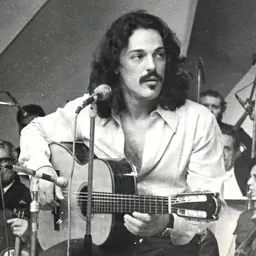

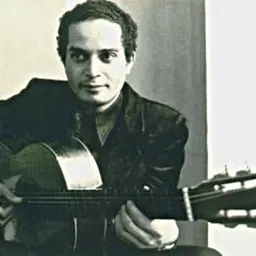
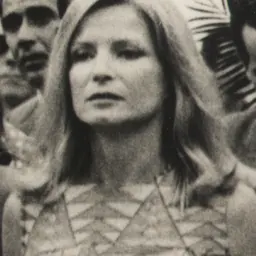
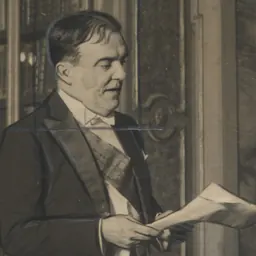


Related people
Same field, nearest in time
Contemporaries
People whose lives overlapped Vinícius de Moraes's



Frequently asked questions
Who was Vinícius de Moraes?
Brazilian composer, singer, writer (1913–1980)
When was Vinícius de Moraes born?
Vinícius de Moraes was born on 19 October 1913 in Rio de Janeiro.
When did Vinícius de Moraes die?
Vinícius de Moraes died on 9 July 1980 in Rio de Janeiro.
What was Vinícius de Moraes's occupation?
Vinícius de Moraes was a poet, singer, composer, journalist, diplomat and reporter.
What nationality was Vinícius de Moraes?
Vinícius de Moraes was Brazilian.
Sources & further reading
· Wikipedia: Vinícius de Moraes
Cite this page
APA: Biography.guide. (2026). Vinícius de Moraes. https://biography.guide/vinicius-de-moraes/
MLA: "Vinícius de Moraes." Biography.guide, https://biography.guide/vinicius-de-moraes/.
Chicago: "Vinícius de Moraes." Biography.guide. https://biography.guide/vinicius-de-moraes/.
Data last updated: 2026-09-20 · Spot an error? Report a correction.
Page generated 2026-09-27 05:21 UTC