
About Vincenzo Viviani
Lived 1622 – 1703 (aged 81). Vincenzo Viviani was an Italian mathematician, physicist and astronomer, known for Viviani's curve and Viviani's theorem.
Vincenzo Viviani (April 5, 1622 – September 22, 1703) was an Italian mathematician and scientist. He was a student of Torricelli and Galileo.
Biography Vincenzo Viviani was born in Florence to the nobles Jacopo di Michelangelo Viviani and Maria Alamanno del Nente. While attending a Jesuit school Viviani studied the humanities. Following the study of humanities, Viviani turned to mathematics. He studied geometry under the instruction of Galilean follower Clemente Settimi. It was through Clemente that Viviani would gain recognition and meet Clemente's instructor, Tuscan Court mathematician Famiano Michelini. Apart from being Galileo's disciple, Viviani became a pupil of Evangelista Torricelli and worked on physics and geometry.
One of the primary interests of Viviani was the study of the mathematics of the ancients. Viviani spent much of his life restoring the works of Aristaeus the Elder and Apollonius.
In 1660, Viviani and Giovanni Alfonso Borelli conducted an experiment to determine the speed of sound. Timing the difference between the seeing the flash and hearing the sound of a cannon shot at a distance, they calculated a value of 350 meters per second (m/s), considerably better than the previous value of 478 m/s obtained by Pierre Gassendi.
By 1666, Viviani started to receive many job offers as his reputation as a mathematician grew. That same year, Louis XIV of France offered him a position at the Académie Royale and John II Casimir Vasa of Poland offered Viviani a post as his astronomer. Fearful of losing Viviani, the Grand Duke appointed him First Mathematician of the Tuscan Court. English translation, "Historical Account of the Life of Galileo Galilei", in On the Life of Galileo: Vincenzo Viviani's Historical Account and Other Early Biographies, edited, translated and annotated by Stefano Gattei, Princeton: Princeton University Press, 2019, pp. 1–93. "Relazione intorno al riparare per quanto possibile sia la città e campagne di Pisa dall'inondazioni" (April 12, 1684)
Don’t just read it —
keep it.
Full-length biographies made to live with: read them, listen on the way to work, watch them tonight.
- E-book
- Audio
- Video
Instant download · yours to keep · every purchase keeps this site free
Important facts
People in Vincenzo Viviani's life
Named in this biography and alive at the same time




Related people
Same field, nearest in time
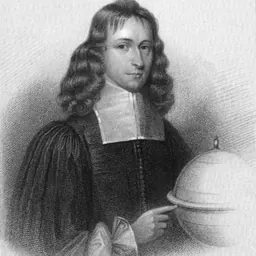

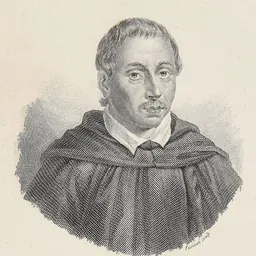
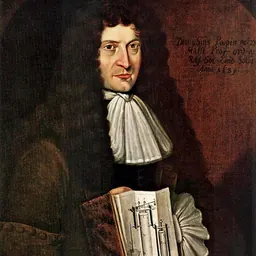
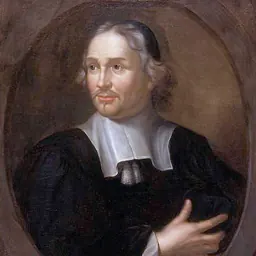
Contemporaries
People whose lives overlapped Vincenzo Viviani's




Frequently asked questions
Who was Vincenzo Viviani?
Italian scientist (1622-1703)
When was Vincenzo Viviani born?
Vincenzo Viviani was born on 5 April 1622 in Florence.
When did Vincenzo Viviani die?
Vincenzo Viviani died on 22 September 1703 in Florence.
What was Vincenzo Viviani's occupation?
Vincenzo Viviani was a mathematician, physicist and astronomer.
What was Vincenzo Viviani known for?
Vincenzo Viviani was known for Viviani's curve and Viviani's theorem.
What nationality was Vincenzo Viviani?
Vincenzo Viviani was Italian.
Sources & further reading
Cite this page
APA: Biography.guide. (2026). Vincenzo Viviani. https://biography.guide/vincenzo-viviani-mathematician/
MLA: "Vincenzo Viviani." Biography.guide, https://biography.guide/vincenzo-viviani-mathematician/.
Chicago: "Vincenzo Viviani." Biography.guide. https://biography.guide/vincenzo-viviani-mathematician/.
Data last updated: 2026-09-20 · Spot an error? Report a correction.
Page generated 2026-09-27 05:19 UTC