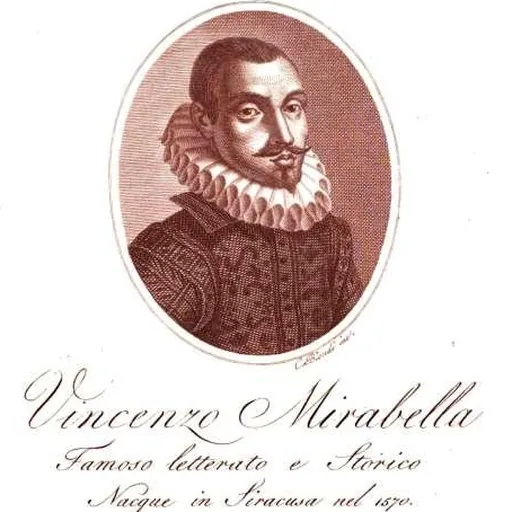
Vincenzo Mirabella
Italian historian, archaeologist and architect
About Vincenzo Mirabella
Lived 1570 – 1624 (aged 53–54). Vincenzo Mirabella was a historian, archaeologist and architect.
Vincenzo Mirabella Alagona (Syracuse, Sicily 1570 - Modica, 1624) was an Italian historian, archaeologist and architect, best known for his work Plans of Ancient Syracuse.
Family life Vincenzo Mirabella, son of Michele Mirabella and Giovanna Alagona, was born into a patrician family of French origin which had moved to Sicily in the early fourteenth century. As a young man he dedicated himself to the study of Greek, Latin and Italian literature as well as mathematics, music, history and poetry. He played an active part in civic life, holding office as magister nundinarum (Master of the Assizes) in 1593, Treasurer of the University in 1613-14 and Jurat, the highest office in the city, in 1616-17. He married Lucrezia Platamone, daughter of Antonio and Giovanna Zumbo, who brought him a substantial dowry and further connections to the leading families of Syracuse. He does not appear to have had any children with her. (his membership was proposed by Giambattista della Porta) where he met Galileo Galilei, with whom he corresponded. Passionate about the country's history and archaeology, he wrote a History of Syracuse, but did not manage to have it published, and the manuscript was eventually lost.
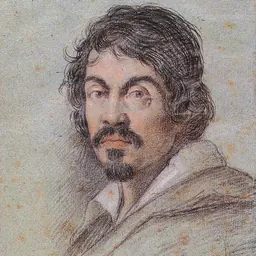
From October to December 1608 he accompanied the painter Caravaggio on visits to the archaeological remains of Syracuse. On a trip with him to a disused quarry, Caravaggio coined the name 'Ear of Dionysius' for it and later used it as a setting for his famous work the 'Burial of St.Lucy'.
Vincenzo Mirabella assembled the objects he excavated into a diverse archaeological collection, which he exhibited in the rooms of his palace in Ortygia, at the current Via Mirabella nº23, which he steadily transformed into his own museum. At his death, his heirs donated parts of this collection to the Museu Patrio of Syracuse, which later became the Museo archeologico regionale Paolo Orsi.
Description of the Plan of Ancient Syracuse His most important work, and the only one still extant today, was published in Naples in 1613 in Naples - 'La dichiarazione della pianta delle antiche Siracuse e di alcune scelte medaglie di esse e dei principi che quelle possedettero' ('Description of the plan of ancient Syracuse and of selected medals of that place and of the characteristics they possessed'). The work was dedicated to Philip III of Spain, who ruled Sicily at the time. The text was accompanied by a topographic plan of Syracuse, divided into nine panels, which bore a detailed hypothetical description of the city from Ortygia to the Euryalus fortress, and from the source of the river Ciane to the house of Archimedes, with a gazetteer of places of historical and archaeological interest. It was supplemented with biographies of Archimedes, Theocritus, Epicharmus of Kos and Tisias. This work was the fruit of his studies of classical authors - Thucydides, Plutarch, Diodorus Siculus, Cicero, Livy, Strabo and Pomponius Mela, as well as of the archaeological endeavours he undertook at his own expense. He was also the first to excavate the catacombs of Syracuse, which he illustrated in a panel of his book.
The first (1613) edition of Pianta delle antiche Siracuse was quickly sold out. It was reprinted in Palermo in 1717 with the title Descrizione delle quattro città dell'Antica Siracusa, edited by Giovan Battista Aiccardo. Another edition of the map, recently rediscovered, is in the Thesaurus Antiquitatum et Historiarum Siciliae of Giovanni Giorgio Graevio, edited by Vander Aa in 1725 in Lugduni Batavorum (Leiden). There is also a 1989 edition, Pianta delle Antiche Siracuse, edited by Cesare Samà and published by Arnoldo Lombardi.
Death and memorial Vincenzo Mirabella died of the plague in Modica in 1624. He was buried in the church of the Madonna delle Grazie, with this epitaph on his tomb:
Don’t just read it —
keep it.
Full-length biographies made to live with: read them, listen on the way to work, watch them tonight.
- E-book
- Audio
- Video
Instant download · yours to keep · every purchase keeps this site free
Important facts
People in Vincenzo Mirabella's life
Named in this biography and alive at the same time

Related people
Same field, nearest in time


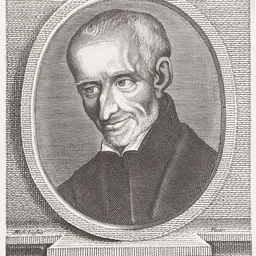
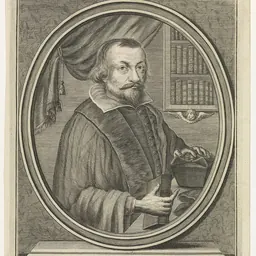
Contemporaries
People whose lives overlapped Vincenzo Mirabella's

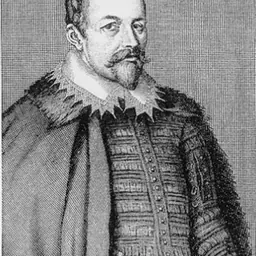


Frequently asked questions
Who was Vincenzo Mirabella?
Italian historian, archaeologist and architect (1570-1624)
When was Vincenzo Mirabella born?
Vincenzo Mirabella was born in 1570 in Syracuse.
When did Vincenzo Mirabella die?
Vincenzo Mirabella died in 1624 in Modica.
What was Vincenzo Mirabella's occupation?
Vincenzo Mirabella was a historian, archaeologist and architect.
Sources & further reading
· Wikipedia: Vincenzo Mirabella
Cite this page
APA: Biography.guide. (2026). Vincenzo Mirabella. https://biography.guide/vincenzo-mirabella/
MLA: "Vincenzo Mirabella." Biography.guide, https://biography.guide/vincenzo-mirabella/.
Chicago: "Vincenzo Mirabella." Biography.guide. https://biography.guide/vincenzo-mirabella/.
Data last updated: 2026-09-20 · Spot an error? Report a correction.
Portrait: Wikimedia Commons · author & licence
Page generated 2026-09-27 04:57 UTC