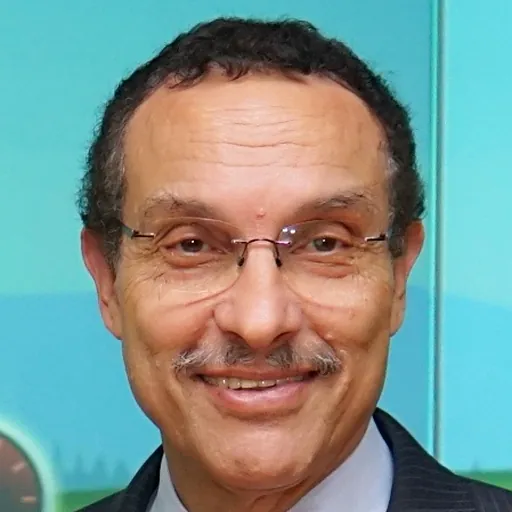
Vincent C. Gray
American politician and former mayor of the District of Columbia
About Vincent C. Gray
Born 1942. Vincent C. Gray is an American psychologist and politician.
Vincent Condol Gray (born November 8, 1942) is an American politician who served on the Council of the District of Columbia representing Ward 7 from 2017 to 2025. He was the mayor of the District of Columbia from 2011 to 2015.
He served as mayor for one term, losing his bid for reelection in the Democratic primary to D.C. Council member Muriel Bowser in the 2014 election. Prior to his inauguration as mayor in January 2011, Gray served as chairman of the Council of the District of Columbia, and as councilmember for Ward 7. In the 1990s he also served as director of the DC Department of Human Services. In June 2016, he defeated incumbent Yvette Alexander in the Democratic primary for the council seat he previously held in Ward 7.
Early life and career
Gray was born on November 8, 1942 at the Freedman's Hospital in Washington, DC, In 1964 he earned a B.S. where he also took graduate courses. Gray was one of the first African Americans to join the Jewish fraternity Tau Epsilon Phi. While in the fraternity, he was the first to serve two consecutive terms as president. Other school activities included the Newman Catholic Center, as well as football and basketball intramurals. Gray is also an avid participant in hand dancing, a D.C.-area derivative of Lindy hop.
Gray began his political career with the D.C. Arc, where he successfully advocated for innovative public policy initiatives on behalf of people with intellectual disabilities. In 1991, then-Mayor Sharon Pratt Kelly appointed Gray to the post of director of the DC Department of Human Services. He defeated his council colleague Kathleen Patterson in the Democratic primary, 57% to 43%, and then won the general election unopposed. Gray ran his campaign under the banner "One City" and focused on unity among the disparate racial and economic groups in Washington, D.C.
In 2008, Gray successfully led his Council colleagues in passing the "Pre-K Enhancement and Expansion Act of 2008", His campaign adopted the slogan, commonly used during his time as Council Chairman, "One City. Leadership We Need". A Washington Post poll conducted in January 2010 showed Gray leading the incumbent mayor, Adrian Fenty, 38 percent to 31 percent among voters who were "certain" to participate in the September 14 Democratic Primary. The Washington Post noted that the poll's results were an indication of voters' disapproval of Fenty, rather than approval of Gray, because 36 percent of registered Democrats had no opinion of Gray. In the event, Gray defeated Fenty by 13,124 votes.
Activities as Mayor
In order to save the District $19 million in 2011, Gray proposed to furlough most District employees, including teachers. Workers would not be paid on four holidays, namely President's Day, Emancipation Day, Memorial Day, and Independence Day. On Presidents' Day, February 21, 2011, over 200 emergency calls made to 911 went unanswered since dispatchers were furloughed.
In response to a proposal by Congress to restart a school voucher program in the District, Gray said he was against the idea.
During the April 11, 2011, debates on the 2011 United States federal budget, Mayor Gray and several other D.C. elected officials joined city residents outside the Hart Senate Office Building to protest budgetary line items that restricted the city's ability to spend its own locally raised funds. In particular, the budget limits the city's ability to spend money on abortion services and reauthorizes a school voucher program that the city government opposes. U.S. Capitol Police arrested several protesters, including Vincent Gray, for blocking automobile traffic. Speaking to the press before the arrest, Gray said, "This is an absolute travesty. All we want to do is spend our own money... Why should women in the District of Columbia be subjected to a set of rules that no other woman is subjected to?"
Sulaimon Brown controversy Amidst the reports of budget tightening and city employee furloughs in the early weeks of the Gray administration, an exposé in The Washington Post revealed that Gray had hired a larger senior staff than his predecessors, and for substantially more money. Among the newly hired top officials was Sulaimon Brown, who had been hired as a special senior assistant in the Department of Health Care Finance for $110,000. Brown was best known as a fringe candidate in the 2010 mayoral election (ultimately receiving just over 200 votes) who, despite being his opponent, encouraged voters to support Gray (if not himself) and denigrated then-incumbent mayor Fenty. The news of the hiring led to charges of cronyism from the local media. However, when the Washington City Paper four days later linked Brown to a 1991 gun charge, a 1995 conviction for unlawful entry, and a 2007 restraining order against a 13-year-old girl, Brown was fired and escorted by security from his office on the morning of February 24.
In response to his termination, Brown made allegations to The Washington Post that he had made a secret agreement with Gray during the 2010 mayoral campaign to remain in the race and continue attacking Fenty in his public appearances, in exchange for a job with Gray's administration if Gray won the election. Brown also claimed to have received cash payments from Gray campaign aides Lorraine Green and Howard Brooks; according to the Post, Brown's cellphone records indicated 29 telephone calls to Brooks between June and September 2010 from Gray and Green, and text messages from Gray's phone number seemed to lend credence to Brown's story. Brown began meeting with federal officials from the U.S. Attorney's office, the FBI, and staff of the House Oversight and Government Committee, who said that they were "assessing" his allegations. Meanwhile, allegations of nepotism, poor vetting, and other unethical hiring practices within the Gray administration continued to surface, with reports published that Gray had hired the children of four high-level officials, including Green and Brooks; and that the salaries of several of Gray's appointees, including his chief of staff and city administrator, were higher than permitted by District law.
On March 10, 2011, District Councilmember Jack Evans, chairman of the Council's Committee on Finance and Revenue, announced that he was postponing "indefinitely" Gray's nomination of Green to chair the Washington Convention and Sports Authority. The same day, Gray announced that he had retained the services of Robert S. Bennett, the attorney who represented President Bill Clinton during the Lewinsky scandal, as his legal counsel. Seven months later, on May 22, 2012, Gray's 2010 campaign treasurer Thomas Gore pleaded guilty in federal court to illegally diverting campaign funds to Brown and to obstructing justice by shredding documents related to the transactions. Two days later, Howard Brooks pleaded guilty to lying to federal investigators, admitting that he had given over $7,800 in money orders to Sulaimon Brown during the 2010 mayoral race.
On July 10, 2012, a third campaign official, Eugenia Clarke-Harris, pleaded guilty to campaign corruption charges. In admitting to the charges, Harris disclosed that Gray's official 2010 campaign had been aided by a secret shadow campaign, using $650,000 in illegally obtained financing from wealthy D.C. contractor Jeff Thompson—a third of the total expenditures by the Gray campaign. Gray was not charged with any wrongdoing and no evidence was presented that he had any knowledge of the shadow campaign; however, U.S. Attorney Ron Machen said that the mayor was still under investigation.
On July 11, 2012, Gray acknowledged at a press conference that his mayoral campaign had had "issues" and was "not the campaign that we intended to run." He denied any intention of resigning as mayor. That same day, however, three members and former colleagues of Gray's on the D.C. Council called on Gray to resign. A poll published eight days later by The Washington Post revealed that a majority of District residents, 54 percent, believed that Gray should resign.
On March 10, 2014, United States Attorney Ronald Machen alleged at a court hearing that Gray knew about businessman Jeffrey E. Thompson's conspiracy to channel more than $660,000 in illegal donations into the campaign. He asserted that Gray and the businessman devised a plan in which Gray would refer to Thompson as "Uncle Earl" to conceal his identity.
At one point, prosecutors initially alleged, Gray gave Thompson a one-page, $425,000 budget request that the businessman then funded. They further alleged that after the election, Thompson gave a $10,000 check to Gray's "close family member" to settle debts with campaign workers. At Gray's request, Thompson allegedly gave $10,000 to fund an unnamed union election campaign and $40,000 to a "close personal friend" in part to finance home improvements.
In April 2016, the Washington Post secured the release of previously sealed documents regarding Gray's investigation. It was revealed that prosecutors did not bring charges against Gray because they were concerned about the reliability of Thompson as a witness. Thompson has multiple relationships with men, including some who may have been underage, and prosecutors feared that if he had paid money to conceal this fact that a jury would not find him credible.
2014 mayoral campaign On December 2, 2013, Gray filed papers to run for reelection and announced his reelection campaign in a letter to supporters. On April 1, 2014, Gray was defeated in the Democratic primary by D.C. council member Muriel Bowser. His loss was attributed largely to the ongoing investigation into his 2010 campaign finances.
Second Council tenure In February 2016, Gray announced he was running to represent Ward 7 on the Council. Gray said he was running because accomplishments in Ward 7 were slowed or stalling, in particular the need to expand access to affordable, high-quality healthcare and build a new hospital to serve residents on the East End of the city. On June 14, Gray defeated Alexander, his former protege, in the Democratic primary. Gray was sworn into office for a four-year term on January 2, 2017.
Gray successfully ran for re-election in 2020. In December 2021, Gray suffered a stroke, but returned to the Council in January 2022. In December 2023, Gray announced that he would not seek a third term. In October 2024, Gray announced that he had been diagnosed with early-stage dementia and would not participate in council votes for the rest of the term.
Electoral history
Personal life Gray has two children, Jonice Gray, and Vincent Carlos Gray, and two grandchildren, Austin Gray Tucker and Jillian Gray Tucker.
Gray's first wife Loretta died in July 1998 of cancer. In 2018, he announced his marriage to longtime partner Dawn Kum. Gray lives in the Hillcrest neighborhood of Ward 7.
Health Since 2021, Gray has suffered multiple strokes, and he was subsequently diagnosed with dementia. In 2024, his children filed a petition asking for a conservatorship to manage his affairs, alleging that he had experienced a total of four strokes and accusing his second wife, Dawn Kum, of not devoting adequate resource to his care. Gray's spokesman, Chuck Thies, disputed this, saying that he had had two strokes instead of four, and that he had been receiving sufficient care. Gray was later placed under a conservatorship.
Don’t just read it —
keep it.
Full-length biographies made to live with: read them, listen on the way to work, watch them tonight.
- E-book
- Audio
- Video
Instant download · yours to keep · every purchase keeps this site free
Important facts
People in Vincent C. Gray's life
Named in this biography and alive at the same time
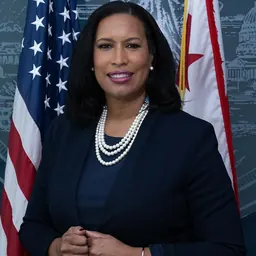


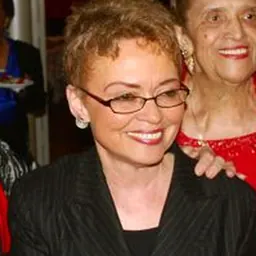
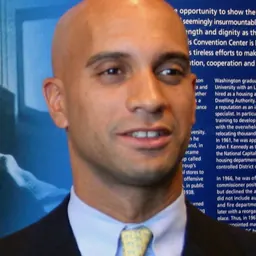


Related people
Same field, nearest in time


Contemporaries
People whose lives overlapped Vincent C. Gray's



Frequently asked questions
Who is Vincent C. Gray?
American politician and former mayor of the District of Columbia
When was Vincent C. Gray born?
Vincent C. Gray was born on 8 November 1942 in Washington, D.C..
What is Vincent C. Gray's occupation?
Vincent C. Gray is a psychologist and politician.
What nationality is Vincent C. Gray?
Vincent C. Gray is American.
Sources & further reading
Cite this page
APA: Biography.guide. (2026). Vincent C. Gray. https://biography.guide/vincent-c-gray/
MLA: "Vincent C. Gray." Biography.guide, https://biography.guide/vincent-c-gray/.
Chicago: "Vincent C. Gray." Biography.guide. https://biography.guide/vincent-c-gray/.
Data last updated: 2026-09-23 · Spot an error? Report a correction.
Portrait: Wikimedia Commons · author & licence
Page generated 2026-09-27 05:06 UTC