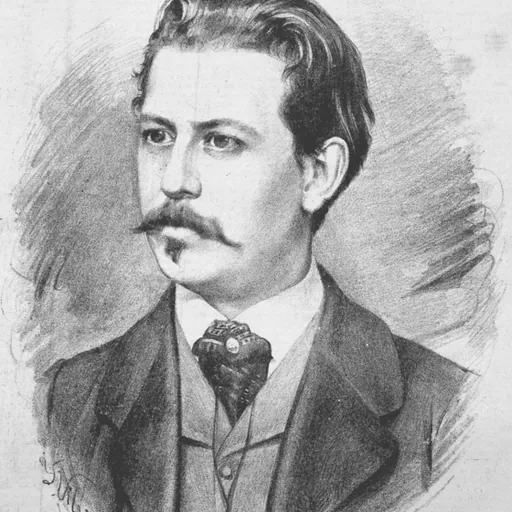
About Vilém Blodek
Lived 1834 – 1874 (aged 39). Vilém Blodek was a composer, pedagogue, choir director, pianist, university teacher and music educator.
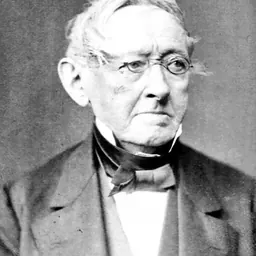
Vilém Blodek, born Vilém František Plodek (3 October 1834 – 1 May 1874), was a Czech composer, flautist and pianist.
Biography Blodek was born on 3 October 1834 in Prague, Bohemia, Austrian Empire into a poor family and was educated at a German Piarist school in Prague. After studying with Alexander Dreyschock (piano) and at the Prague Conservatory (1846–52) with Antonín Eiser (flute) and Johann Friedrich Kittl (composition), he became a music teacher in Lubycza, Galicia (1853–5). On returning to Prague, he worked as a concert pianist and music teacher and, briefly, as second conductor of the Prague Männergesangverein, for which he wrote a number of patriotic choruses.
In 1860 he succeeded Anton Eiser as professor of flute at the conservatory, and, as a basis for teaching, he wrote his own flute tutor (1861). He was active as a writer of incidental music for the German and Czech theatres: from 1858 onwards he wrote music for 60 plays and collaborated with Bedřich Smetana on music for the tableaux for the 1864 Shakespeare celebrations.
In 1865, Blodek married Marie Doudlebská, whom he had previously taught. In 1870, he became mentally ill, with this being ascribed to overwork, and stayed for four years in an asylum. He died in Prague on 1 May 1874, at the age of 39.
Style Blodek began composing at the conservatory at the age of 13 (wind sextet, 1847) in a style that owed much to his teacher Kittl, to Mendelssohn, and to the early German Romantics. His Symphony in D minor (1858–1859) was his most ambitious work at the time. His Flute Concerto (1862) is a brilliant and attractive flute work.
Blodek's best-known work is his one-act opera V studni (In the Well), first performed at the Provisional Theater in November 1867. One of several comic village operas written to Sabina librettos (The Bartered Bride is the most famous), it has a cast of four characters and is made up of a handful of closed numbers: five solos, two duets, one quartet, an overture and an intermezzo, and three brief ensembles for chorus and soloists. It was the first Czech comic opera to replace spoken dialogue with recitative. Blodek's opera is often considered to be one of the most 'Czech' operas after those of Smetana – it was written shortly after the première of The Bartered Bride. Blodek's next opera, Zítek, again to a Sabina libretto (a historical comedy set in the 14th century), was a more ambitious work both in its musical vocabulary and in its operatic form. A full-length three-act opera with a large cast, it made some attempt to break down the divisions between the closed numbers of its predecessor, using arioso and a chorus more integrated into the action. Blodek completed only one act and part of the second before his death; Smetana, already ill, declined to finish it, but it was eventually completed by F.X. Vaňa and was performed for the first time in 1934 on the 100th anniversary of Blodek's birth.
Works Principal publishers: Urbánek, Vilímek, E. Starý, J.A. Christophe & Kuhé, Český hudební fond Stage Mlhavé obrazy (Misty Pictures), Incidental music (Prague, 1859); music to the play by J. Brandeis; lost Clarissa, Opera (1861); unfinished; lost Choralista aneb Čtverákovský z Žertovic (The Chorister, or Čtverákovský from Žertovice), Vaudeville (1861, Prague, 22 March 1862); libretto by František Hainiš-Zdobnický; lost Suita perdita: Hudba k slavnosti Shakespeareově (Music for the Shakespeare Celebrations) (Prague, Novoměstské divadlo, 23 April 1864) V studni (In the Well), Comic Opera in 1 act (Prague, Provisional Theatre, 17 November 1867); libretto by Karel Sabina Svatojánská pouť (St John's Pilgrimage), Incidental music (Prague, 1868); music for the play by František Ferdinand Šamberk Zítek, Comic Opera in 3 acts (1868–1869); libretto by Karel Sabina; unfinished; completed by František Xaver Váňa (Prague, National Theatre, 3 October 1934) Incidental music to approximately 60 plays
Orchestral Concert Overture in C major, Op. 2 (1850) Overture in D major (1854) Symphony in D minor (1858–1859) Concert Overture in E major (1859) Overture in E minor (1862)
Concertante Flute Concerto in D major (1862); published by Jindřich Kàan (Prague, 1903) Skladba (Composition) in A major for 2 flutes and orchestra (?1862)
Chamber music Sextet in D major for flute, 2 violins, oboe, horn, and trombone (1847) Salon Piece in C major for violin and piano (1850) Grand solo in D major for flute and piano, Op. 1 (1851); lost Allegro bravour in D major for flute and piano (1852); lost Fantasie e capriccio in F major for flute and piano (1863) Andante cantabile for cello and piano (1863)
Piano Lípový lístek (Linden Leaf) for piano 4-hands Impromptu – Scherzo – Valčík – Barkarola (Fischerlied)
Vocal Die Kapelle, Songs for voice and piano (1951); words by Ludwig Uhland Písně milostné (Love Songs) for voice and piano (c.1860, Prague, 1909); Czech translation by Karel Hašler Hoře (Wehmut); words by Joseph Freiherr von Eichendorff Předsevzetí (Vorsatz); words by Robert Prutz Květy lotosu (Die Lotosblume); words by Heinrich Heine Jen Ty! (Nur Du); words by Ludwig Uhland Kdybych byl ptáčetem (Wann i a Vögerl wär); words by J. Körnlein Sladce spi! (Gute Nacht); words by Robert Reinick Návrat pocestného (Wanderers Heimkehr); anonymous words Znám jednu perlu krásnou (Ich kenne eine Perle); words by Eduard Maria Öttinger Ty v dálce dlíš (Du bist fern); words by Emanuel Geibel Ptáčku můj poslíčku (Vöglein mein Bote); words by Johann Gabriel Seidl Loučení (Abschied vom Walde); words by Joseph Freiherr von Eichendorff Krádež (Diebstahl); words by Robert Reinick Nocturno (Nachtgedanken); anonymous words Dvě písně ve snadném slohu (Two Songs in Easy Style)
Choral Abschied vom Walde for chorus (c.1855) Náš zpěv for chorus (1859); words by Vítězslav Hálek 6 mužských sborů (6 Male Choruses) (1859) K bratrům (To the Brothers) Ach ty Labe tiché (O Quiet Elbe) for male chorus (1865) Pijácká (Společná) (A Drinking-Song, A Social Song) for male chorus (1867) Pochod (March) for male chorus (1867) Starý ženich (The Old Groom) for male chorus; words by Karel Sabina Lovecká (Hunting), Hymn; words by Václav Jaromír Picek Festmesse ke cti Nejsvětější Trojice (Solemn Mass in Honor of the Holy Trinity) (1863) Mše D dur (Mass in D major) (1865) Ave Maria in C major for mixed chorus (1859, Prague 1888) Otče náš (Our Father) in F major for male chorus (1863) Veni creator for mixed chorus (1863) Adoramus in A minor (mužský sbor, hudba k Raffaelovu obrazu Sixtinská Madona). Offertorium; lost 20 choruses for male voices, some to German texts by Joseph von Eichendorff, Heinrich Heine, and Adalbert von Chamisso, and to Czech texts by Václav Hanka, Jiljí Vratislav Jahn, Václav Jaromír Picek, and Karel Sabina; several published
Don’t just read it —
keep it.
Full-length biographies made to live with: read them, listen on the way to work, watch them tonight.
- E-book
- Audio
- Video
Instant download · yours to keep · every purchase keeps this site free
Important facts
People in Vilém Blodek's life
Named in this biography and alive at the same time




Related people
Same field, nearest in time


Contemporaries
People whose lives overlapped Vilém Blodek's



Frequently asked questions
Who was Vilém Blodek?
Czech composer, flautist, and pianist (1834-1874)
When was Vilém Blodek born?
Vilém Blodek was born on 3 October 1834 in Prague.
When did Vilém Blodek die?
Vilém Blodek died on 1 May 1874 in Prague.
What was Vilém Blodek's occupation?
Vilém Blodek was a composer, pedagogue, choir director, pianist, university teacher and music educator.
What nationality was Vilém Blodek?
Vilém Blodek's recorded nationality: Kingdom of Bohemia.
Sources & further reading
Cite this page
APA: Biography.guide. (2026). Vilém Blodek. https://biography.guide/vilem-blodek/
MLA: "Vilém Blodek." Biography.guide, https://biography.guide/vilem-blodek/.
Chicago: "Vilém Blodek." Biography.guide. https://biography.guide/vilem-blodek/.
Data last updated: 2026-09-22 · Spot an error? Report a correction.
Portrait: Wikimedia Commons · author & licence
Page generated 2026-09-27 05:03 UTC