
About Viktor Baranov
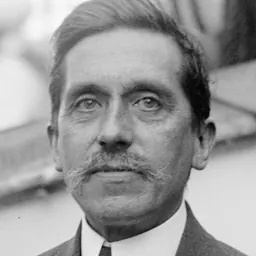
Lived 1906 – 1996 (aged 90). Viktor Baranov was a Russian military officer.
Viktor Ilyich Baranov (; 4 January 1906 – 26 October 1996) was a Soviet Army lieutenant general and a Hero of the Soviet Union.
Baranov joined the Red Army in the early 1920s, fighting in the suppression of uprisings in the North Caucasus. He transferred to the emerging mechanized forces in the early 1930s and was decorated for his command of tank units in the Spanish Civil War. For his leadership of the 13th Light Tank Brigade during the breakthrough of the Mannerheim Line during the Winter War, Baranov was made a Hero of the Soviet Union. He commanded the 1st Tank Division in the Leningrad Strategic Defensive Operation, and finished the war as commander of the armored and mechanized forces of the Leningrad Front. Baranov held the latter position at district and army level postwar and retired in the early 1960s.
Early life and prewar service Born to a working-class family on 4 January 1906 in Tula, Baranov graduated from primary school and the Tula Technical School before becoming a factory worker.
World War II
Winter War Baranov commanded the brigade during the Winter War. In February 1940, he commanded a mobile group of the 7th Army that included his brigade and the 15th Motor Rifle and Machine Gun Brigade during the Soviet breakthrough of the Mannerheim Line. The group, in cooperation with the 123rd Rifle Division, broke through Finnish defenses in the area of Kämärä. During the capture of the fortified position of Pienpiro, Baranov demonstrated "high organizational ability, courage and bravery." For his performance, he was awarded the title Hero of the Soviet Union and the Order of Lenin on 21 March 1940, receiving a simultaneous promotion to the rank of kombrig.
Eastern Front Baranov, who received the rank of major general on 4 June, was appointed commander of the 1st Tank Division of the 1st Mechanized Corps in June 1940. He underwent retraining at the Courses of Improvement for Higher Officers (KUVNAS) of the Frunze Military Academy between November 1940 and May 1941, then returned to his command. From the beginning of Operation Barbarossa, Baranov led the division as part of the 14th Army in the Kandalaksha sector. From 30 June it was attempting to halt the Finnish advance under the command of the Northern Front. After the German advance from Luga and Kingisepp the division was relocated to the Krasnogvardeysk area. Subsequently, the 1st Tank Division fought in defense of the line of Volosovo, Lake Ilmen, Krasnoye Selo, Taytsy, Gatchino, and Pushkin, temporarily halting the German advance. The German advance split the division into two parts, with one defending in the Pushkin area and the other at Oranienbaum. In late September, the division was reorganized into the 123rd Tank Brigade, which Baranov continued to command. He led it as part of the 54th Army during September and October in failed offensives in the area of Mga towards Nevskoy Dubrovki.
Appointed deputy commander-in-chief for armored forces of the 54th Army in April 1942, Baranov became deputy commander-in-chief for tank forces of the Leningrad Front in June 1942 and commander-in-chief of the Armored and Mechanized Forces of the front in January 1943. In this position, he participated in Operation Iskra, the Leningrad–Novgorod Offensive, Krasnoye Selo–Ropsha Offensive, Vyborg–Petrozavodsk Offensive, Baltic Offensive, Tartu Offensive, and Narva Offensive. Promoted to lieutenant general on 15 December 1943, Baranov was sent the study at the Voroshilov Higher Military Academy in April 1945.
Postwar After graduating from accelerated courses at the academy in January 1946, Baranov was placed at the disposal of the commander-in-chief of the Red Army armored and mechanized forces. Appointed commander-in-chief of the Armored and Mechanized Forces of the Leningrad Military District in June 1946, he transferred to hold the same position with the Far Eastern Military District in late May 1950 and the 15th Army in August 1953. Having completed the one-year Higher Academic Courses of the Voroshilov Academy in November 1954, Baranov became senior military advisor to the commander of the armored and mechanized forces of the Czechoslovak People's Army in February 1955. From January 1957, he was Inspector General for Armored and Mechanized Forces of the headquarters of the Unified Armed Forces of the Warsaw Treaty Organization and the 10th Directorate of the Soviet General Staff. Transferred to the reserve on 25 February 1961, Baranov lived in Moscow, where he died on 26 October 1996. He was buried in the Golovinskoye Cemetery.
Awards and honors Baranov was a recipient of the following awards and decorations:
Hero of the Soviet Union Order of Lenin (2) Order of the Red Banner (5) Order of Kutuzov, 1st class Order of the Patriotic War, 1st class (2) Order of the Red Star
Don’t just read it —
keep it.
Full-length biographies made to live with: read them, listen on the way to work, watch them tonight.
- E-book
- Audio
- Video
Instant download · yours to keep · every purchase keeps this site free
Important facts
Related people
Same field, nearest in time



Contemporaries
People whose lives overlapped Viktor Baranov's
Frequently asked questions
Who was Viktor Baranov?
Hero of USSR (1906–1996)
When was Viktor Baranov born?
Viktor Baranov was born on 4 January 1906 in Tula.
When did Viktor Baranov die?
Viktor Baranov died on 26 October 1996 in Moscow.
What was Viktor Baranov's occupation?
Viktor Baranov was a military officer.
What nationality was Viktor Baranov?
Viktor Baranov was Russian.
Sources & further reading
· DBpedia: Viktor Ilyich Baranov
Cite this page
APA: Biography.guide. (2026). Viktor Baranov. https://biography.guide/viktor-baranov/
MLA: "Viktor Baranov." Biography.guide, https://biography.guide/viktor-baranov/.
Chicago: "Viktor Baranov." Biography.guide. https://biography.guide/viktor-baranov/.
Data last updated: 2026-09-20 · Spot an error? Report a correction.
Page generated 2026-09-27 05:25 UTC