
About Viktor Astafyev
Lived 1924 – 2001 (aged 77). Viktor Astafyev was a Russian screenwriter, writer, essayist and playwright.
Viktor Petrovich Astafyev (; 1 May 1924 – 29 November 2001) was a Soviet and Russian writer, playwright and screenwriter. He was recognized with the title Hero of Socialist Labour in 1989.
Biography Viktor Astafyev was born in the village of Ovsyanka (then Krasnoyarsk Uyezd, Yeniseysk Governorate, Russian SFSR) on the bank of the Yenisei River. His father, Pyotr Pavlovich Astafyev, was the son of a relatively rich mill-owner and part-time hunter who spent most of his time at home, and his mother Lydia Ilyinichna Astafyeva (née Potylitsyna) came from a peasant family. In his 2000 autobiography Viktor Astafyev remembered his father's household as a place where the men, led by his grandfather Pavel Yakovlevich, were on continuous binge, while all the work was done by two women, Lydia and her mother-in-law, Maria Osipova, Pavel Yakovlevich's young second wife.
In 1931, two tragedies struck the Astafyev family. First, Viktor's father, grandfather, and great-grandfather were arrested as part of the Dekulakization campaign and sent to a Siberian labour camp. In July 1931, Viktor's mother drowned in the Yenisei after her rowboat capsized while she was going to Krasnoyarsk prison to bring food to her arrested husband. That year, Pyotr Astafyev received 5 years of prison as an "Enemy of the people" and was sent to the infamous Belomorkanal building-site. Seven-year-old Viktor found himself in the house of his maternal grandparents, Yekaterina Petrovna and Ilya Yevgrafovich Potylitsyn, who gave the boy all their love and care. In 1932, he began attending a local primary school. Astafyev later described his life in the early 1930s in his book of short stories Posledny poklon (The last bow, 1968). and on 25 November received his first award, the For Courage medal. In January 1944 he returned to action and took part in the Korsun-Shevchenko operation, then (in March and April) in the Kamenets-Podolsky assault and on 25 April was awarded the Order of the Red Star.
Literary career After his discharge in 1945 Astafyev settled for a while in his wife's parents' house in Chusovoy, then went to Krasnoyarsk, doing various jobs such as locksmith and smelter. In 1950 he started contributing to the Tchusovsky Rabochy (The Tchusovoy Worker) newspaper which in February 1951 published his debut short story "A Civil Man" (Grazhdansky tchelovek), which two years later was reprinted by the Perm-based Zvesda newspaper. In 1954 Astafyev was for the first time published by a Moscow magazine (short story "Splinter", in Smena). In 1955 he left the newspaper and started working upon his first novel Snows are Melting (Tayut Snega) which was published in 1958, as was his first book of short stories Warm Rain (Tyoply Dozhd), dedicated mostly to the experience of Russian soldiers and civilians during recent war. Also in the late 1950s Astafyev joined the regional Perm radio. Working there provided relatively good wages but involved too much blatant propaganda. "I decided to quit after one and a half years, feeling that otherwise I'd just stop respecting myself altogether," he remembered. On 1 October 1958 Astafyev became the member of the RSFSR Union of Writers. Viktor Astafyev died on 29 November 2001, in Krasnoyarsk. He was buried in his native Ovsyanka. At the 8th USSR Writers Union Congress in the summer of 1986, Georgian delegates urged the author to apologize publicly for his insult to the Georgian nation; when he refused, they walked out in protest. In October 1993, he signed the Letter of Forty-Two.
In 1999, his novel Jolly Soldier, which portrayed the horrors of the Soviet Army was met with extremely adverse reaction, which may have brought about a heart failure.
Legacy In the years when many Soviet war literature authors (like Fyodor Parfyonov or Ivan Stadnyuk) were singing paeans to an idealized, invincible Soviet war hero, crushing the enemy under the Communist Party leadership, Viktor Astafyev became one of the first to rebel against the officially-approved convention and reveal the darker, unglamorous side of what was happening in 1941–1945. He is credited with being one of the major proponents (alongside Viktor Nekrasov, Vasil Bykaŭ, Vladimir Bogomolov, Konstantin Vorobyov) of the so-called The Truth from the Trenches (okopnaya pravda) movement (the term was used originally in a derogatory sense by detractors who argued that former soldiers could not be trusted to write about the war objectively, being ignorant of its greater 'truths') which brought authenticity and harsh realism to the Soviet war literature.
David Gillespie summed up his career as follows:Astafyev has always been a highly individual writer who conforms to no movements or stereotypes.... He has always remained true to himself, and has retained a certain hard-edged integrity. His novel Prokliaty i ubity [The Damned and the Dead] is a gritty, typically uncompromising picture of war, with many naturalistic descriptions in a style the author has developed since the cathartic Pechal'nyi detektiv. Astafyev remains very much a writer who refuses to be easily categorized: he is neither a Village Prose Writer, nor a writer of "war prose", nor a writer who explores the mistakes of the recent Soviet past. At the same time, he is all of these. Capable of surprising and even shocking his reader, Astafyev maintains a deep lyrical sense that has produced what Eidel'man called "the best descriptions of nature for decades". More than any other writer living in Russia today (with the possible exception of Solzhenitsyn), he is a writer who examines man as subjected to and moulded by the total Soviet experience.
Honours and awards
Krasnoyarsk State Pedagogical University is named in his honour USSR State Prize (1978 – for the story "King Fish" (1976) and 1991 – for his novel "Sighted Staff" (1988)) Maxim Gorky RSFSR State Prize (1975) – for the story "The Pass" (1959), "Theft" (1966), "Last Bow" (1968), "Shepherd and Shepherdess" (1971) State Prize of the Russian Federation (1995 – for his novel "The Cursed and the Slain", 2003 – posthumously) Pushkin Prize (Germany, 1997) Hero of Socialist Labour (1989) Order of Lenin (1989) Order of the Red Banner of Labour, three times (1971, 1974, 1984) Order of Friendship of Peoples (1981) – the anniversary of the Union of Soviet Writers Order of the Patriotic War, 1st class (1985) Order of Friendship – 70th anniversary of his birth Order of the Red Star Order "For Merit to the Fatherland", 2nd class Medal "For Courage" (1943) Medal "For the Victory over Germany in the Great Patriotic War 1941–1945"
English translations The Horse with the Pink Mane, and Other Siberian Stories, Progress Publishers, 1970. Queen Fish: A Story in Two Parts and Twelve Episodes, Progress Publishers, 1982. To Live Your Life and Other Stories, Raduga Publishers, 1989.
Don’t just read it —
keep it.
Full-length biographies made to live with: read them, listen on the way to work, watch them tonight.
- E-book
- Audio
- Video
Instant download · yours to keep · every purchase keeps this site free
Important facts
People in Viktor Astafyev's life
Named in this biography and alive at the same time
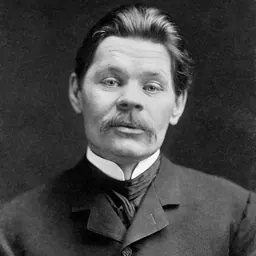




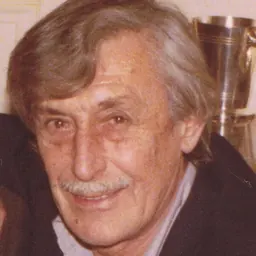
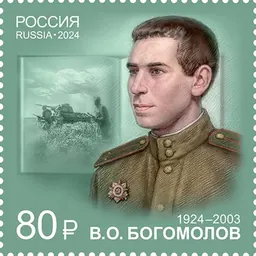

Related people
Same field, nearest in time
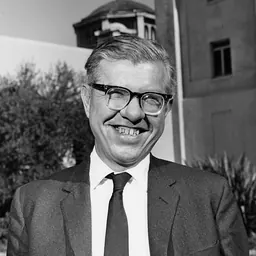



Contemporaries
People whose lives overlapped Viktor Astafyev's


Frequently asked questions
Who was Viktor Astafyev?
Russian-Soviet writer (1924-2001)
When was Viktor Astafyev born?
Viktor Astafyev was born on 1 May 1924 in Ovsyanka.
When did Viktor Astafyev die?
Viktor Astafyev died on 29 November 2001 in Krasnoyarsk.
What was Viktor Astafyev's occupation?
Viktor Astafyev was a screenwriter, writer, essayist and playwright.
What nationality was Viktor Astafyev?
Viktor Astafyev was Russian.
Sources & further reading
Cite this page
APA: Biography.guide. (2026). Viktor Astafyev. https://biography.guide/viktor-astafyev/
MLA: "Viktor Astafyev." Biography.guide, https://biography.guide/viktor-astafyev/.
Chicago: "Viktor Astafyev." Biography.guide. https://biography.guide/viktor-astafyev/.
Data last updated: 2026-09-20 · Spot an error? Report a correction.
Page generated 2026-09-27 05:23 UTC