
About Viktor Antonov
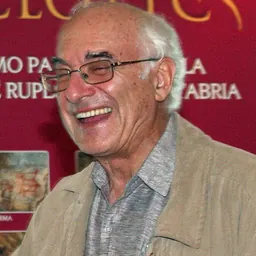
Lived 1972 – 2025 (aged 52–53). Viktor Antonov was a Bulgarian and French painter, author, designer, creative director, creator and television producer.
Viktor Antonov (; 5 February 1972 – 7 February 2025) was a Bulgarian artist, video game designer, writer, and worldbuilder who worked on numerous first-person shooter (FPS) games. In 2017, Blake Hester wrote for Vice that Antonov "has created disturbing, memorable, and unique worlds" which "conjure images of cyberpunk metropolises and grim London alleyways."
Antonov's first game credits were at Xatrix Entertainment, for Redneck Rampage (1997), Redneck Deer Huntin' (1998), Redneck Rampage Rides Again (1998), and Kingpin: Life of Crime (1999). At Valve, he worked on Counter-Strike: Source (2004), Half-Life 2 (2004), and Half-Life 2: Lost Coast (2005). As art director of Half-Life 2, he principally designed its dystopian setting of City 17: a decaying Eastern European city occupied by the Combine alien empire, featuring Soviet-era Brutalist buildings and alien structures similar to panopticons which constitute the Combine's surveillance state. Antonov was temporarily art director of Valve's Team Fortress 2 (2007).
While developing Dark Messiah of Might and Magic (2006) and Dishonored (2012) at Arkane Studios, Antonov worked on films and wrote a graphic novel. He principally designed Dishonored 's setting of Dunwall, a labyrinthine dystopian city with steampunk Victorian and Gothic buildings; it and City 17 are often considered some of the best worlds ever made for video games. Finally, he had design roles on many ZeniMax Media-owned games: Wolfenstein: The New Order (2014), Fallout 4 (2015), Doom (2016), Dishonored 2 (2016), The Elder Scrolls: Legends (2017), and Prey (2017).
Early life
Viktor Antonov was born in Sofia, Bulgaria, on 5 February 1972. He later stated his lifelong passion for architecture and worldbuilding—the creation of detailed fictional worlds—originated from his childhood living in Sofia whilst Bulgaria was a socialist state politically aligned with the Soviet Union. The country's poor economy meant large areas of the city were typically empty, letting him easily break into buildings and engage in "urban exploration" inside them; this gave him an appreciation of their designs. He received a degree in transportation design, and started working as an architect of concept cars. He also worked in TV commercial production, planning to enter the special effects industry in L.A. However, Antonov decided to follow video game design after getting a job at local developer Xatrix Entertainment (now Gray Matter Interactive).
1999—2006: Valve
Counter-Strike: Source and Half-Life 2 (2004) While at Xatrix, Antonov formed a creative partnership with fellow artist Aaron Barber. The latter was soon hired by Seattle-based developer Valve, and Antonov followed him there in 1999. The company hired Antonov after being impressed by his advanced level design for Kingpin. At his new job, he first worked on two FPS games which released in 2004: the online multiplayer tactical shooter Counter-Strike: Source, released for the PC; and the sequel to the 1998 sci-fi game Half-Life, Half-Life 2, which was a blockbuster success upon its release for PCs and consoles.
City 17 During the development of Half-Life 2, Antonov was promoted from a concept artist to being the game's art director. thumb City 17 is built like a series of panopticons: prisons in which a guard can monitor every inmate at once, but the inmates cannot tell if they are being watched. City 17 features numerous Soviet-era concrete buildings in the Brutalist style, as well as structures constituting the Combine's surveillance state which are built like a series of panopticons: a type of prison in which a single guard can monitor every prisoner simultaneously from a central tower, but each prisoner is not able to see whether they are being watched. Ted Litchfield writes for PC Gamer that the Combine's "invasive, angular, [and] alien" architecture "latch[es] onto the human architecture underneath like tumors".
In the middle of City 17 is the Combine's Citadel, a skyscraper far taller than any of its surroundings, at one to five miles high (according to fan estimates). The empire uses it as a stronghold, to expand its army, and to surveil the city's residents. Half-Life 2's player character Gordon Freeman must travel to and enter the Citadel to damage the Combine's infrastructure.
Antonov used Half-Life 2 as an opportunity to game explore an urban Eastern European setting. He felt that such a setting was underused in popular fiction, and that putting it in Half-Life 2 would lead to a "specific, as opposed to generic" aesthetic. He successfully pitched the idea to Valve president Gabe Newell and others on the team by telling them: "Let’s take video games outside of the bunkers and the corridors and the hallways, and let’s have a whole world that feels real and very intense. And then when any event happens in this world, the impact will be much stronger." TheGamer, and DualShockers. Konstantinos Dimopoulos, a game designer who produced an unofficial map of the city in 2018, claimed that it is "one of the most successful, coherent, economically designed, and memorable urban environments ever crafted". As an example, he notes that the Citadel's imposing height and reoccurring appearances in the game make it "act as a major landmark that keeps players both oriented [in the game world] and focused on their goal". His last credit at Valve was for the online multiplayer FPS Team Fortress 2 (2007), temporarily working as its art director until his friend Moby Francke joined the company, at which point Antonov handed the role to him.
2006—2012: Arkane Studios and independent projects
Dark Messiah of Might and Magic (2006) and cancelled projects Antonov joined French developer Arkane Studios. He was a level designer for their 2006 action role-playing game (RPG) Dark Messiah of Might And Magic, helping his team replicate Valve's process of making levels for Half-Life 2. Antonov was a level designer for the studio's next project, an FPS titled The Crossing, for which he created a sci-fi version of Paris. In 2009, this project was also cancelled, as Arkane was unable to secure financing for it, as well as a publisher that would let them retain the game's intellectual property rights in the future. However, elements of The Crossing later came to fruition in Arkane's 2021 FPS Deathloop. Development of Dishonored (2012) Starting in 2009, Antonov was the visual design director of Arkane Studios' Dishonored, a first-person stealth action-adventure game that released in 2012. The city features a mix of Victorian and Gothic architecture, In 2022, Levi Winslow wrote that it is the most "vivid and memorable" city they had ever explored in a game, "so environmentally and thematically intertwined that it gives me the creeps"; Dishonored makes significant usage of environmental storytelling, showing the effects of the plague on Dunwall by having most of its rooms be unoccupied, the presence of fresh food and burning fireplaces indicating they were abandoned by their occupants shortly prior to the events of the game. Much of the city is littered with corpses that the rats can be seen feasting on.
Antonov was the additional art director of MachineGames' Wolfenstein: The New Order (2014); a visual designer of Dire Wolf Digital's The Elder Scrolls: Legends (2017); and a consultant on Bethesda Game Studios' Fallout 4 (2015), id Software's Doom (2016), and Arkane's Dishonored 2 (2016) and Prey (2017).
2020s: Eschatology Entertainment In 2022, Antonov co-founded game developer Eschatology Entertainment alongside Boris Nikolaev, Dmytro Kostiukevych, and Fuad Kuliev. Upon Antonov's death, they were working on Guns of Eschaton (codenamed "Project DG"), a game about "a gunslinger exploring a world 'on the verge of destruction'".
Death and legacy On 7 February 2025, Antonov, at age 53, died in Paris from undisclosed causes. The news was first revealed on Marc Laidlaw's Instagram story a week later, and was confirmed in a statement from Eschatology Entertainment. Many of Antonov's former colleagues paid tribute to him on social media. Laidlaw and Raphaël Colantonio respectively wrote that he was a "visionary" who was "instrumental to the success of Arkane Studios". Ex-Valve writer Chet Faliszek said that he was a "breath of fresh air at Valve", and Arkane designer Harvey Smith praised his "dry, devastating wit". and for Rock Paper Shotgun, Edwin Evans-Thirlwell said that City 17 "continues to influence more pessimistic sci-fi game developers today". Quake II Mission Pack: The Reckoning|1998 Xatrix Entertainment Guns of Eschaton|Upcoming Eschatology Entertainment art director Untitled Half-Life'' game Canceled Arkane Studios level designer Films
Don’t just read it —
keep it.
Full-length biographies made to live with: read them, listen on the way to work, watch them tonight.
- E-book
- Audio
- Video
Instant download · yours to keep · every purchase keeps this site free
Important facts
People in Viktor Antonov's life
Named in this biography and alive at the same time
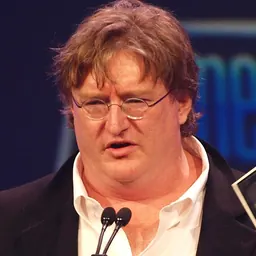
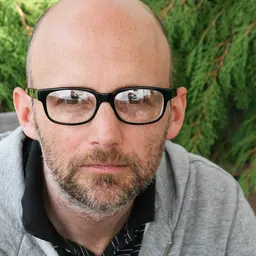
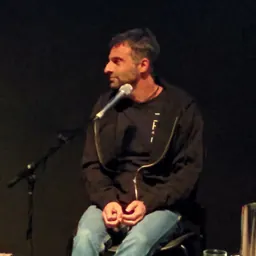
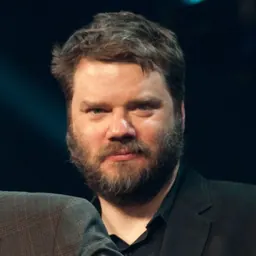

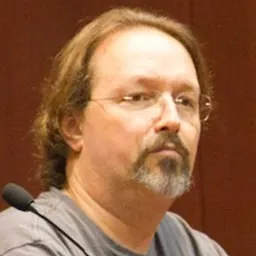
Related people
Same field, nearest in time


Contemporaries
People whose lives overlapped Viktor Antonov's


Frequently asked questions
Who was Viktor Antonov?
Bulgarian art director
When was Viktor Antonov born?
Viktor Antonov was born on 5 February 1972 in Sofia.
When did Viktor Antonov die?
Viktor Antonov died in 2025 in 5th arrondissement of Paris.
What was Viktor Antonov's occupation?
Viktor Antonov was a painter, author, designer, creative director, creator and television producer.
What nationality was Viktor Antonov?
Viktor Antonov was Bulgarian and French.
Sources & further reading
· DBpedia: Viktor Antonov (artist)
Cite this page
APA: Biography.guide. (2026). Viktor Antonov. https://biography.guide/viktor-antonov-painter/
MLA: "Viktor Antonov." Biography.guide, https://biography.guide/viktor-antonov-painter/.
Chicago: "Viktor Antonov." Biography.guide. https://biography.guide/viktor-antonov-painter/.
Data last updated: 2026-09-20 · Spot an error? Report a correction.
Page generated 2026-09-27 05:28 UTC