
About Vidal López
Lived 1918 – 1971 (aged 52). Vidal López was a Venezuelan baseball player.
Vidal López Ascanio (April 19, 1918 – February 20, 1971) was a Venezuelan professional baseball player and manager. He batted and threw right handed.
López starred as a starting pitcher and slugging outfielder in his homeland between the 1930s and 1950s. A long time member of the Navegantes del Magallanes in Venezuelan tournaments, his effort earned him a place in franchise lore.
In addition, López played in the professional leagues of Cuba, Mexico and Puerto Rico, overcoming color line prejudice throughout a career that lasted 21 years. He was well known for his solid batting, his long home runs and dominant pitching, while his popular nickname, El Muchachote de Barlovento (The Big Boy of Barlovento), was a testimony to his naive face and burly frame.
López was noted for his versatility as an outfielder, pitcher and manager.
Early life López was born in Río Chico, a small farming community located in the Barlovento coastal area of Miranda state in Venezuela.
He was a six-year-old boy when his father died in 1924. Three years later, his mother decided to move to Caracas in search of better economic livelihood. As a result, he had to work from an early age to help cover household expenses, working as an errand or courier, as well as serving as an altar boy to earn money for shoes and clothes. He had no formal education but taught himself to write through reading.
When he was nine, he especially liked watching his friends and relatives play baseball on a sandlot team that played Saturday afternoons. A friend taught him to throw a baseball, and they played catch almost every day, which turned out to be the key to his future. The circuit included other three teams, which resulted in a revised weekend schedule of 24 games in which each team played its three opponents four times apiece. López emerged as a dominant shutdown starter in his debut, pitching in seven of the 12 games of his team and going 5–0 with 28 strikeouts and a minuscule 0.65 earned run average in 55 innings, guiding his team to the championship pennant.
López was used sparingly in his second year, but enjoyed a superb all-around season with the Sabios de Vargas in 1937, as he topped the league in home runs (4) and RBIs (12), while posting a .312 batting average with a 2-1 pitching record and a 2.77 ERA in three pitching appearances. In addition, he etched his name in the records books by setting two marks in Venezuelan baseball history. On August 22, he smashed a grand slam off Centauros' pitcher Oscar Estrada, which became the first grand slam ever hit in a Venezuelan ballpark. Then, on September 26 he also became the first player ever to hit two home runs in a single game. playing in a highly competitive league that boasted such pitching stars as Martín Dihigo, Agapito Mayor, Gilberto Torres, Tomás de la Cruz and Luis Tiant, Sr., as well as noted hitters as Lázaro Salazar, Ray Dandridge, Sam Bankhead, Roberto Estalella, Alejandro Crespo and Santos Amaro. That season, López also was involved in the fastest game played in Cuban baseball history, as he won a complete-game pitching duel against René Monteagudo and the Leopardos de Santa Clara by a score of 2–1, which lasted one hour and nine minutes. Eventually, López played in the outfield corners during his lone season in Cuba, but was also notable as he made the All-Star team and was just the second Venezuelan to play in the Cuban league after fellow pitcher Alejandro Carrasquel, an MVP Award winner in the 1938–1939 season.
First Triple Crown The first and most important event in Venezuelan baseball history was the 1941 victory of the national selection over the Cuban squad in the Baseball World Cup tournament held in Havana. It served to consolidate baseball as the deporte rey –the dominant sport– in Venezuela in the years to come.
Even though López did not participate in the 1941 event, he had time to join the Venezuelan league after returning from Cuba. He was unquestionably the dominant pitcher in the circuit, fashioning a ledger of 9-4 with 55 strikeouts and a 0.67 ERA to win the pitching Triple Crown, while handling a 121-inning work in his first full season for Magallanes, allowing also only nine earned runs on 67 hits and 22 walks. As an ace pitcher and cleanup hitter, he also hurled two no-hitters, led in innings pitched, and smashed the only home run of the tournament. Although this was a wasted effort, because of the fact of his team lost the final and decisive game to the eventual champions Patriotas de Venezuela.
López had some pretty memorable moments while playing in Puerto Rico. In his debut, he struck out 11 Tiburones de Aguadilla batters, including the side in the fifth inning, but lost the game. He rebounded in his next start, pitching a shutout against the Leones de Ponce and also homering in that win. Then, López faced Negro league star Terris McDuffie and the Senadores de San Juan in game one of a crucial series. During the game, Cangrejeros fans roared when López struck out Monte Irvin with the bases loaded and forced McDuffie to hit into an eight inning double play to preserve a 2–1 lead. Previously, López had driven in both Santurce runs with a single. He was carried off the field by the Santurce fans after the victory, while the Cangrejeros swept the two games of the series.
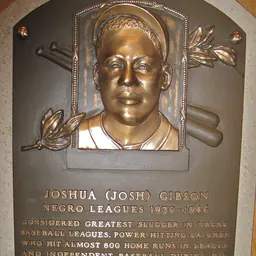
Nevertheless, Santurce lost several close games, being unable to match Ponce, the team that won both halves of the season led by slugger Francisco Coimbre. López was selected for the league All-Star games played on January 1, 1942. It had been three seasons since the league's first All-Star game took effect in 1938–1939. Besides López, both contests featured notable players as Barney, Raymond and Willard Brown (non-relatives), as well as Bill Byrd, Roy Campanella, Buster Clarkson, Ray Dandridge, Leon Day, Josh Gibson, Luis Olmo, Quincy Trouppe, Willie Wells, and Coimbre and Irvin, among others. There were just too many accomplished ballplayers, and not only from Mexico. The homegrown Mexican players included former Philadelphia Phillies and Washington Senators infielder Chile Gómez, as well as future American League champion bat Bobby Ávila, to name a few.
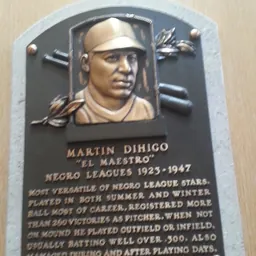
All Mexican league teams were also strengthened by an abundance of Cuban talent such as former Senators catcher Mike Guerra, who played and managed, while the versatile Martín Dihigo managed, pitched and excelled at second base. Ultimately, López improved at least from the perspective of his long term development as a two-way player, so he joined the league with the Industriales de Monterrey, where he formed a battery with future Hall of Fame catcher Roy Campanella.
López resulted victorious in his Mexican debut, compiling a 16-12 record with a 2.08 ERA and also hitting a .304 average in 78 games as an outfielder, while leading all pitchers in ERA and tying for fifth for the most wins.
López posted another strong offensive performance in 1949–1950, when he batted .355 and led the league with nine home runs and 43 RBIs in 49 games. He also led the hitters with a slugging of .645.009 points ahead teammate Jim Pendleton, and finished second in batting average.32 points shy of Pendleton.
In 1950–1951 López hit .359 with five homers and 36 RBIs in 35 games, helping Magallanes win a second consecutive pennant and a ticket to the 1951 Caribbean Series.
Then, in 2012 he became an inaugural inductee into the Navegantes del Magallanes Hall of Fame.
In addition, a baseball park in Caracas is named after him, and has a monument honouring him erected in his hometown of Rio Chico, Miranda.
Don’t just read it —
keep it.
Full-length biographies made to live with: read them, listen on the way to work, watch them tonight.
- E-book
- Audio
- Video
Instant download · yours to keep · every purchase keeps this site free
Important facts
People in Vidal López's life
Named in this biography and alive at the same time


Related people
Same field, nearest in time

Contemporaries
People whose lives overlapped Vidal López's


Frequently asked questions
Who was Vidal López?
Venezuelan baseball player and manager (1918–1971)
When was Vidal López born?
Vidal López was born on 19 April 1918 in Río Chico.
When did Vidal López die?
Vidal López died on 20 February 1971 in Caracas.
What was Vidal López's occupation?
Vidal López was a baseball player.
What nationality was Vidal López?
Vidal López was Venezuelan.
Sources & further reading
Cite this page
APA: Biography.guide. (2026). Vidal López. https://biography.guide/vidal-lopez/
MLA: "Vidal López." Biography.guide, https://biography.guide/vidal-lopez/.
Chicago: "Vidal López." Biography.guide. https://biography.guide/vidal-lopez/.
Data last updated: 2026-09-20 · Spot an error? Report a correction.
Page generated 2026-09-27 05:00 UTC